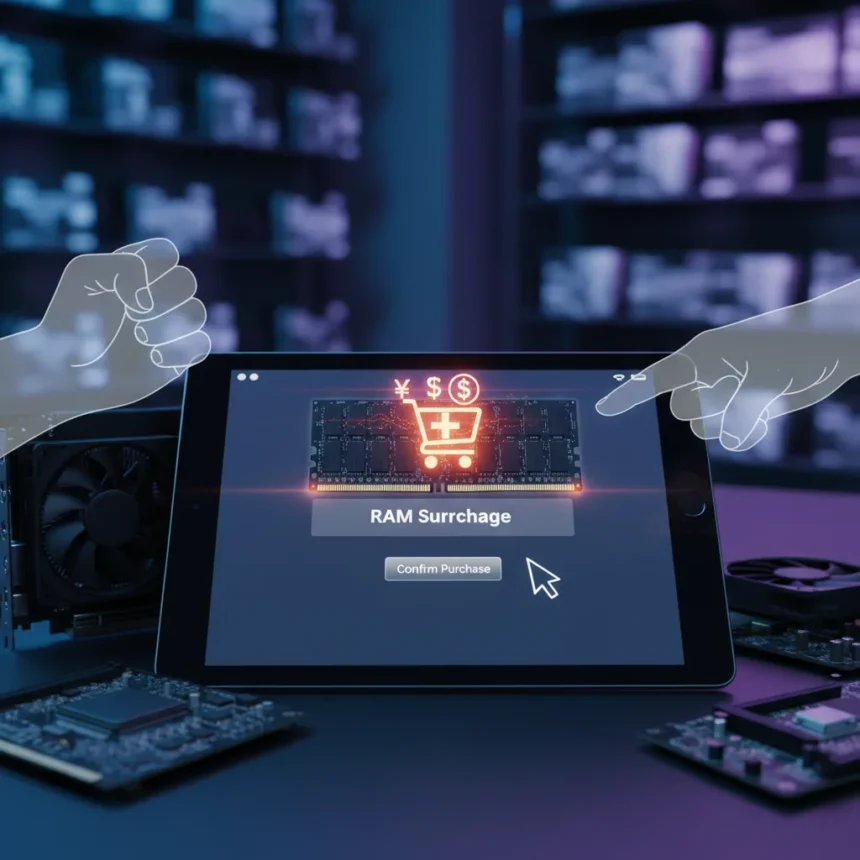
RAM surcharges at checkout are emerging as a contentious retail practice, with hardware sellers applying memory markups directly during the final purchase stage. The tactic has ignited debate: some buyers see it as a transparent way to break down pricing, while others view it as a deceptive last-minute hike that exploits the point-of-sale moment when customers are already committed to their purchase.
Key Takeaways
- Hardware sellers are implementing RAM surcharges applied directly at checkout for memory purchases.
- Buyer reactions split between viewing the practice as sneaky pricing or as transparent breakdown of costs.
- The trend emerges amid ongoing RAM price pressures affecting the broader hardware market.
- No widespread adoption data confirms this as an established trend, though questions about its prevalence are rising.
- The practice highlights tension between retail transparency and perceived manipulation in hardware sales.
Why RAM surcharges at checkout are sparking controversy
The core complaint centers on timing and psychology. When a surcharge appears at checkout rather than in the advertised base price, buyers feel blindsided even if the final total matches what they might have discovered through detailed spec sheets. The surcharge creates a moment of friction—a last-second cost reveal that feels designed to pressure customers into accepting an increase they did not anticipate when browsing. Critics argue RAM surcharges at checkout exploit the sunk-cost fallacy: by the time buyers reach the payment screen, they have already mentally committed to the purchase and are less likely to abandon their cart over an additional charge.
Defenders of the practice, however, contend that RAM surcharges at checkout offer granular transparency. Rather than embedding memory costs into a single inflated system price, the surcharge itemizes the actual cost of the upgrade. This breakdown allows buyers to see exactly what they are paying for RAM versus the base system. The argument hinges on whether transparency in pricing structure outweighs the psychological discomfort of a final-stage surprise.
RAM surcharges at checkout in the context of market pressures
The emergence of this pricing tactic coincides with sustained pressure on memory costs. RAM prices have remained volatile, driven by supply constraints and demand spikes. AMD has responded to these pressures by bundling Ryzen CPUs with DDR5 memory as a direct counter to price hikes, effectively absorbing memory costs into the processor bundle rather than exposing them at checkout. This contrasts sharply with the surcharge approach: one strategy hides memory costs within a bundle, the other isolates and highlights them at purchase completion.


Hardware retailers face a genuine dilemma. Rising RAM costs squeeze margins, yet aggressive upfront pricing on systems with memory included may deter buyers. RAM surcharges at checkout offer a middle path—advertise a lower base price to attract clicks, then reveal the memory cost when the buyer is already committed. Whether this becomes industry standard depends on whether retailers believe the conversion benefit of lower advertised prices outweighs the risk of cart abandonment when the surcharge appears.
Is this actually becoming a trend, or an outlier?
The article’s central question—whether RAM surcharges at checkout represent an emerging trend—remains unanswered by concrete data. No survey data, adoption statistics, or multi-retailer comparison confirms widespread implementation. The practice appears isolated to specific sellers, yet the question itself suggests growing awareness and concern among buyers. If only one or two retailers use the tactic, it is a novelty. If five or more major hardware sellers adopt it, the trend label becomes justified. Currently, the evidence sits in the middle ground: enough visibility to spark debate, not enough prevalence to declare a trend.



What is clear is that RAM surcharges at checkout exploit a real market condition—rising memory costs—and a real retail opportunity: the psychology of the checkout moment. Whether this remains a fringe tactic or spreads depends on whether it drives conversions and revenue for retailers who adopt it. If it does, expect competitors to follow. If buyers consistently abandon carts when the surcharge appears, the practice will fade.
How RAM surcharges at checkout compare to other hardware pricing tactics
Hardware pricing has always involved hidden costs and surprise fees. Shipping charges, assembly fees, warranty upsells, and thermal paste premiums all appear at checkout in various forms. RAM surcharges at checkout fit into this established ecosystem of final-stage monetization. The difference is psychological: memory is a core component, not an optional add-on, so charging for it separately feels more intrusive than, say, a thermal compound upgrade. Buyers expect RAM to be included in the system price; discovering a surcharge at checkout violates that expectation in a way that optional services do not.
Should you accept RAM surcharges at checkout?
The answer depends on your tolerance for checkout surprises and your trust in the retailer. If the final price is competitive compared to competitors, the surcharge is merely a presentation choice. If the surcharge inflates the total above market rates, it is a red flag. Before purchasing, compare the final all-in price across multiple retailers. If one retailer’s base price is lower but the surcharge brings the total above competitors, you are paying a premium for the illusion of a lower entry price. Conversely, if the final price matches or beats alternatives, the surcharge is transparent itemization, not a hidden hike.
Are RAM surcharges at checkout here to stay?
Adoption depends entirely on retailer profitability and buyer tolerance. If RAM surcharges at checkout increase conversion rates without driving significant cart abandonment, retailers will expand the practice. If buyers consistently reject systems with surprise memory charges, the tactic will remain niche. Currently, the trend is too nascent to predict. What matters now is vigilance: compare final prices across retailers, read the fine print at checkout, and do not let a lower advertised price distract you from the true cost of the system.



What is the difference between a RAM surcharge and a standard memory upgrade fee?
A standard memory upgrade fee is disclosed upfront in the system configurator, allowing buyers to see the cost before adding the system to their cart. A RAM surcharge at checkout appears only during payment, after the buyer has committed to the purchase. The timing is the critical difference. Both represent additional charges for memory, but one respects the buyer’s decision-making process while the other exploits it.
Can I avoid RAM surcharges at checkout by buying components separately?
Yes. Purchasing RAM independently and installing it yourself bypasses retailer surcharges entirely. This approach requires basic technical knowledge and involves slightly more effort, but it eliminates the markup. For buyers uncomfortable with installation, sourcing RAM from a different retailer than the system itself is another option, though this adds complexity to warranty and support claims.
RAM surcharges at checkout represent a flashpoint in the ongoing tension between retail transparency and consumer psychology. They are not inherently deceptive—the cost is disclosed, even if the timing feels manipulative. What matters is your awareness. Know the final price before committing to purchase, compare across retailers, and do not let an advertised base price fool you into thinking you have found a bargain. The real cost is always what you pay at checkout, surcharge included.
Edited by the All Things Geek team.
Source: TechRadar