






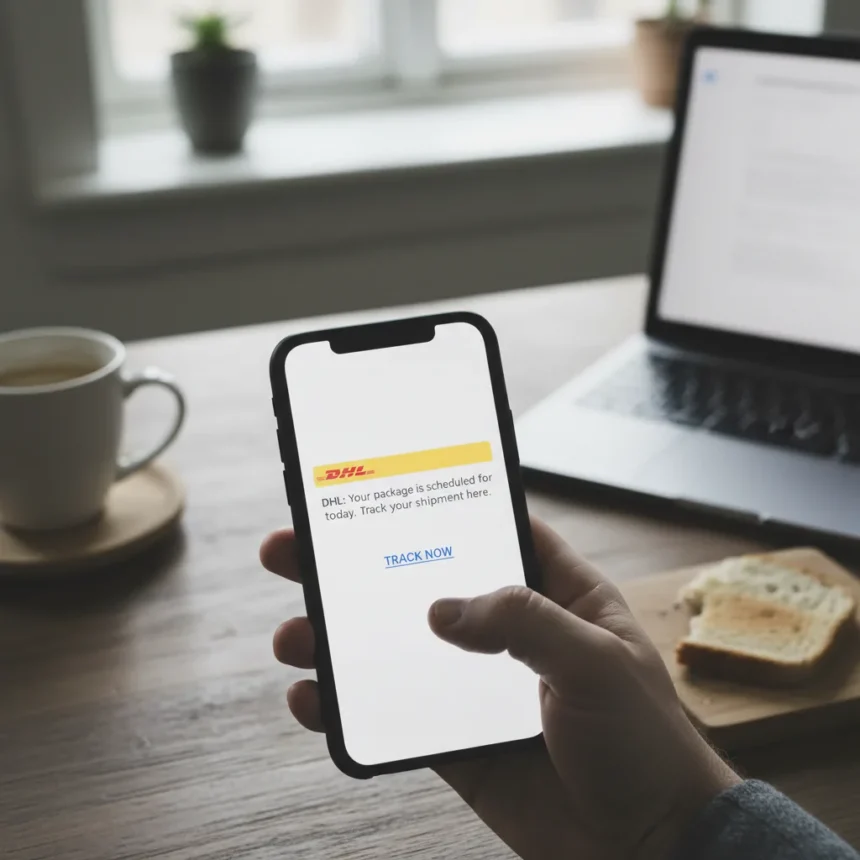
A fake DHL phishing campaign succeeds precisely because it feels ordinary. Security researchers at Forcepoint have analyzed how attackers leverage the mundane nature of delivery notifications to bypass user skepticism, exploiting the fact that most people expect regular shipping updates and rarely question their authenticity.
Key Takeaways
- Fake DHL phishing messages work by mimicking ordinary delivery notifications that users expect to receive.
- The campaign’s success relies on its unremarkable appearance, which evades traditional security detection.
- Forcepoint researchers uncovered where stolen credentials are being exfiltrated following successful phishing attacks.
- Attackers deliberately avoid flashy or suspicious design elements that might trigger user caution.
- The ordinary feel of these messages represents a shift in phishing tactics away from obvious red flags.
Why Ordinary Phishing Messages Succeed Where Obvious Ones Fail
The fake DHL phishing campaign works because it abandons the hallmarks of traditional phishing attempts. Instead of obvious typos, broken grammar, or urgent threats, attackers craft messages that blend smoothly into a user’s inbox as routine delivery notifications. This ordinariness is the entire strategy. A message that says “Your package is being delivered today” triggers no alarm because users receive hundreds of similar messages from legitimate couriers. The campaign exploits this familiarity, turning normalcy into a weapon.
Forcepoint’s analysis reveals that the phishing messages use DHL branding assets and messaging patterns that closely mirror authentic notifications. The attacker has invested effort in understanding how real delivery notifications read, what information they contain, and how they are formatted. This attention to detail matters enormously. A user scrolling through email quickly might not pause to verify a sender address if the message structure and tone match their expectations. The fake DHL phishing campaign succeeds because it asks users to do nothing unusual—simply click a link or enter credentials as they would for a legitimate shipment inquiry.
How Credential Theft Unfolds in This Campaign
Once a victim clicks a malicious link in the fake DHL message, they are directed to a phishing page designed to capture login credentials. The page mimics DHL’s legitimate interface, further reinforcing the illusion of normalcy. Users enter their credentials believing they are authenticating with DHL’s actual system. Forcepoint’s investigation traced where these stolen passwords are sent after exfiltration, identifying the attacker infrastructure behind the campaign. This data flow from victim to attacker is the core mechanism of the attack.
The fake DHL phishing campaign demonstrates how credential theft has become more sophisticated by becoming less theatrical. Attackers no longer need to create urgency or fear. They simply need to be forgettable enough that users do not stop to verify. A delivery notification is inherently low-stakes in the user’s mind—there is no financial account being accessed, no urgent action required beyond confirming receipt. This psychological angle makes the campaign effective at scale.
Why Traditional Security Tools Miss These Attacks
Email security systems rely on pattern detection and threat signatures to flag suspicious messages. A fake DHL phishing campaign that uses legitimate DHL branding, authentic-looking formatting, and no obvious malware attachments presents a challenge to automated systems. The message contains no screaming red flags—no requests for immediate action under threat of account closure, no requests for banking details, no urgency language. It simply looks like a notification about a package. Security tools designed to catch obvious phishing attempts may let these messages through because they do not match the behavioral patterns of traditional phishing.


This represents a real shift in attacker methodology. Rather than trying to evade detection through obfuscation or encryption, attackers are succeeding by simply being boring. A message that blends into the noise of legitimate business communication is harder for both automated systems and human eyes to catch. The ordinary feel of the fake DHL phishing campaign is not a side effect of the attack—it is the core design principle.
What Users Should Know About Delivery Notification Phishing
The fake DHL phishing campaign highlights a critical vulnerability in how users interact with delivery notifications. Few people verify the sender address before clicking links in shipping updates, and fewer still navigate directly to the courier’s website rather than clicking embedded links. Attackers exploit this trust in the delivery process itself. If you receive an unexpected delivery notification, particularly one that prompts you to click a link or enter credentials, verify the sender address carefully. Check whether the email domain actually belongs to DHL rather than a lookalike domain. When in doubt, navigate directly to DHL’s website in your browser rather than clicking any link in the message.
The success of this campaign also underscores why security awareness training often emphasizes scrutiny of unexpected messages. But the fake DHL phishing campaign is not unexpected—it is exactly what users expect to see. This makes it fundamentally different from obvious phishing attempts. The defense is not to look for red flags but to adopt a habit of verification, treating even ordinary-looking messages with a baseline level of caution when they ask you to authenticate or provide information.
How Does the Fake DHL Phishing Campaign Compare to Other Delivery Phishing Attempts?
Delivery-based phishing campaigns have existed for years, but the fake DHL phishing campaign stands out for its deliberate ordinariness. Earlier campaigns often included obvious errors or urgent language designed to pressure victims. This campaign strips away those elements entirely. By studying how legitimate DHL messages are written and formatted, attackers have created something that does not stand out as suspicious. The difference between this campaign and other delivery phishing attempts is strategic: rather than trying to create urgency, it creates familiarity.



Is the Fake DHL Phishing Campaign Still Active?
Forcepoint’s analysis revealed the infrastructure and methods behind the campaign, but this does not mean it has stopped. Phishing campaigns that work tend to persist as long as they remain profitable for attackers. The fake DHL phishing campaign has proven effective enough to warrant ongoing use. Users should assume that variants of this attack are still circulating and likely will continue to circulate as long as DHL remains a trusted delivery service that users interact with regularly.
What Should Companies Do to Protect Employees from This Attack?
Organizations should educate employees about the fake DHL phishing campaign and similar attacks that rely on ordinariness rather than obvious red flags. Traditional phishing training that focuses on spotting urgent language, poor grammar, and suspicious sender addresses may not catch these messages. Instead, training should emphasize verification habits: checking sender addresses, navigating directly to company websites rather than clicking links, and treating delivery notifications with appropriate caution even when they appear routine. Email filtering can also be configured to flag messages containing links to known phishing infrastructure, though this requires threat intelligence updates as attackers rotate their domains.
The fake DHL phishing campaign reveals a fundamental truth about modern phishing: the most effective attacks are the ones that do not feel like attacks at all. By abandoning obvious red flags and embracing the mundane appearance of legitimate business communication, attackers have found a way to succeed at scale. The defense requires both technology and human judgment, with an emphasis on verification rather than suspicion. In a world where ordinary messages can steal credentials, caution must become the default, even when nothing appears amiss.
This article was written with AI assistance and editorially reviewed.
Source: TechRadar