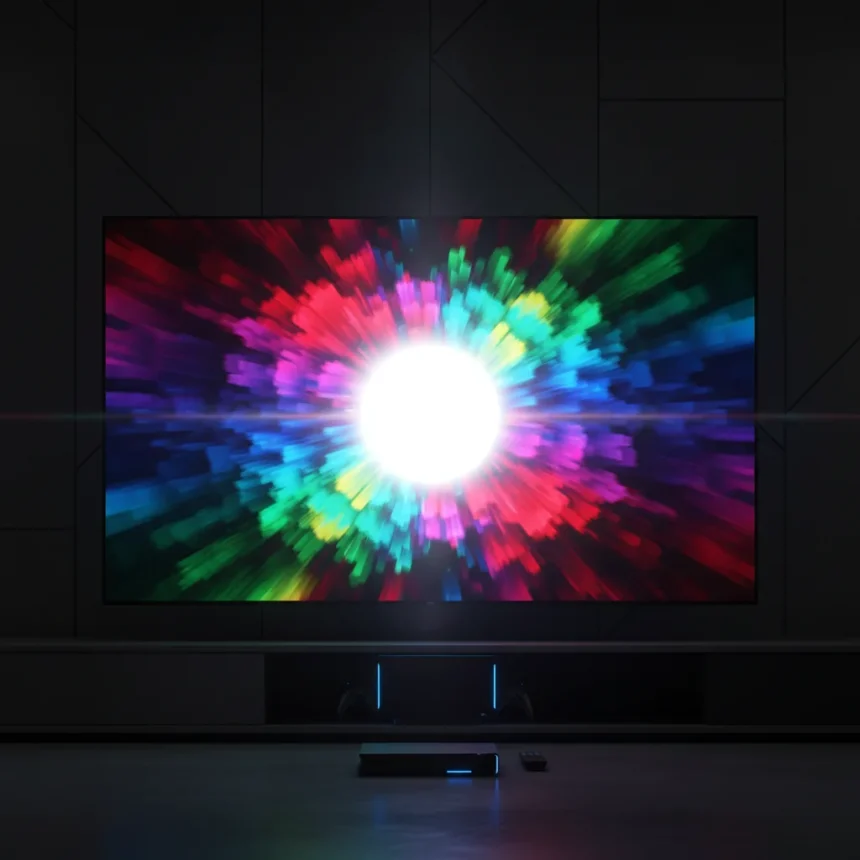
The Hisense UR9 RGB Mini-LED TV is Hisense’s flagship 2026 model, scaling second-generation RGB Mini-LED backlighting from massive 116-inch displays down to consumer sizes ranging from 55 to 100 inches. It covers 93.1% of the BT.2020 color space, the highest measurement Tom’s Guide has recorded across any tested TV, outpacing the Samsung S95F QD-OLED (90.26%), Sony Bravia 8 II QD-OLED (90.55%), and TCL X11L (91.77%). Yet the story of the Hisense UR9 RGB Mini-LED TV is not one of unqualified triumph—it is a lesson in how lab measurements and real-world viewing are fundamentally different things.
Key Takeaways
- UR9 achieves 93.1% BT.2020 color gamut, highest among tested TVs including OLED competitors
- Extremely bright for daytime viewing but whites are near-blinding and color depth remains lackluster
- Uses red-, green-, and blue-colored LEDs instead of standard quantum dot Mini-LED backlighting
- Gaming features are just-okay, failing to differentiate from mainstream alternatives
- Available in 55 to 100-inch sizes with Hi-View AI Engine RGB processor
Why the Hisense UR9 RGB Mini-LED TV’s Color Gamut Advantage Doesn’t Matter as Much as It Sounds
The headline number is undeniable: 93.1% BT.2020 coverage versus 91.77% on the TCL X11L is a measurable win. But here is the uncomfortable truth that reviewers rarely emphasize. The difference between 93% and 91% of the BT.2020 color space is often imperceptible to the average viewer, and the vast majority of content most people watch does not take advantage of the entire BT.2020 gamut anyway. The Hisense UR9 RGB Mini-LED TV achieves this color supremacy through its unique RGB backlighting architecture—using actual red, green, and blue LEDs rather than the quantum dot enhancement found on standard Mini-LED sets. This architectural shift is genuinely novel. Yet novelty in measurement does not always translate to novelty in experience.
Hisense claims this second-generation RGB Mini-LED technology improves on previous Mini-LED implementations by addressing red fringing and upscaling issues while boosting energy efficiency. The company scaled the approach down from its 116-inch 116UXS flagship, which had limited demo content available during testing. What works in a massive theater-like display may not deliver the same magic on a 65-inch living room screen. The color gamut victory feels more like a technical achievement for spec sheets than a practical advantage for everyday viewing.
Brightness Becomes a Liability When Whites Overwhelm the Picture
The Hisense UR9 RGB Mini-LED TV is extremely bright, making it genuinely well-suited for daytime viewing in rooms with significant ambient light. This is a real strength. But brightness without restraint becomes a weakness. The TV’s near-blinding whites create a viewing experience that feels harsh rather than refined. Color depth—the subtlety and nuance within darker tones and shadow detail—remains lackluster despite the color gamut achievement. This is the fundamental trade-off of Mini-LED technology. By distributing thousands of tiny backlight zones across the panel, Mini-LED TVs sacrifice the perfect blacks and precise contrast control that OLED displays deliver. The Hisense UR9 RGB Mini-LED TV does not escape this limitation. It simply papers over it with raw brightness.

Compared to the Samsung S95F QD-OLED and Sony Bravia 8 II QD-OLED, which both score lower on raw color gamut but deliver superior contrast and black levels, the UR9 makes a different bet. It prioritizes peak brightness and wide color coverage over the refined shadow detail that OLED viewers prize. For a living room with lots of windows, that trade-off makes sense. For a darkened viewing environment, it does not.
Gaming Features Fall Short of Expectations for a Flagship Display
Gaming on the Hisense UR9 RGB Mini-LED TV is just-okay—a disappointment for a model positioned at the top of Hisense’s 2026 lineup. The TV does not offer the gaming-specific features that enthusiasts expect from a flagship display. This matters because gaming content is one of the few areas where next-generation displays can shine, and the UR9 misses the opportunity to differentiate itself in this space. The TCL QM6K, a budget Mini-LED alternative, delivers 4K@120Hz gaming at a significantly lower price point, raising questions about where the UR9’s gaming value proposition truly lies.



How the Hisense UR9 RGB Mini-LED TV Stacks Against Actual Competition
The comparison that matters most is not between the UR9 and other Mini-LED sets, but between Mini-LED and Micro RGB technology more broadly. Micro RGB TVs like the Hisense UR9 and UR8 improve on standard Mini-LED but still lag true Micro-LED displays in black depth and blooming control, because their backlighting zones remain larger than ideal. Samsung’s Micro RGB offerings represent a competing approach to the same problem. Meanwhile, for viewers who prioritize picture-on-wall design over raw performance, the LG W6 Wallpaper OLED remains the recommendation. For those seeking anti-glare finishes, Samsung’s OLED TVs have stronger matte coatings than the UR9.
The TCL X11L, with 91.77% BT.2020 coverage, delivers nearly identical color gamut performance for less fanfare and presumably less cost. The difference is not visible to most viewers. The real question is whether you are buying the Hisense UR9 RGB Mini-LED TV for its technical achievements or for its picture quality in your specific room. Those are not the same thing.
Is the Hisense UR9 RGB Mini-LED TV Worth Buying?
If you watch television in a bright room and prioritize daytime visibility, the extreme brightness and wide color coverage make the UR9 a logical choice. If you spend evenings in a darkened space watching films and streaming content, the harsh whites and limited color depth will frustrate you. The TV is technically impressive but practically compromised—a distinction that matters more than the marketing suggests.
What sizes will the Hisense UR9 RGB Mini-LED TV come in?
The Hisense UR9 RGB Mini-LED TV is available in sizes from 55 to 100 inches, including the popular 65-inch configuration. The technology scales across this entire range, though performance characteristics may vary between sizes.



How does the Hisense UR9 RGB Mini-LED TV compare to OLED on color accuracy?
The UR9 covers 93.1% of the BT.2020 color space, outpacing OLED rivals like the Samsung S95F (90.26%) and Sony Bravia 8 II (90.55%). However, most content does not use the full color gamut, and the difference is often imperceptible to viewers. OLED still delivers superior black levels and contrast.
When will the Hisense UR9 RGB Mini-LED TV be available for purchase?
The Hisense UR9 RGB Mini-LED TV is imminent for 2026 across its full size range, but specific launch dates and pricing have not been announced. The technology represents Hisense’s push to compete at the premium TV tier, but the company has not disclosed retail availability or regional rollout details.
The Hisense UR9 RGB Mini-LED TV is a technical showcase that does not quite deliver the transformative viewing experience its color gamut numbers promise. It is bright, colorful, and novel—but those qualities do not automatically make it the TV most people should buy. In the premium display market, where OLED and Micro-LED alternatives exist, the UR9 is a strong option for a specific use case: bright rooms where daytime visibility matters more than cinematic blacks. For everyone else, the gap between a 93% and 91% color gamut is too small to justify the trade-offs in contrast and gaming performance.
Where to Buy
Edited by the All Things Geek team.
Source: Tom's Guide