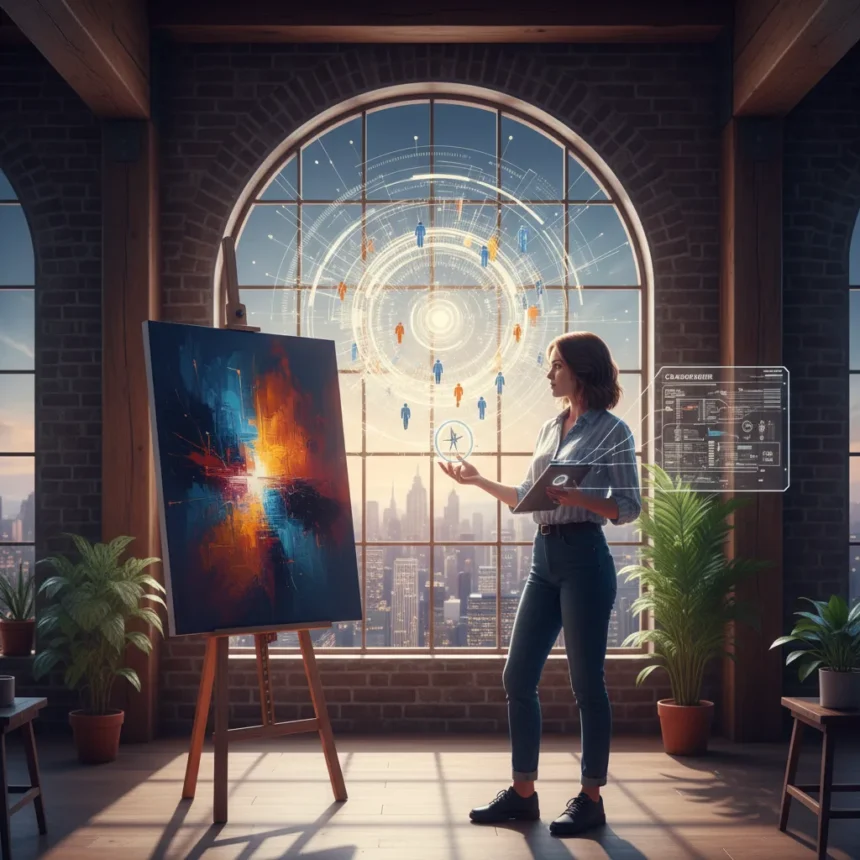
Why artists need to stay focused on their target is one of the most overlooked yet critical lessons in creative careers. Without a clear sense of direction and audience, even talented artists drift between projects, dilute their voice, and struggle to build sustainable work that matters.
Key Takeaways
- Focus sharpens your creative voice and makes your work more recognizable to audiences.
- Target clarity helps you make strategic career decisions instead of chasing every opportunity.
- Staying on target builds momentum—each project reinforces your expertise and reputation.
- Unfocused artists often experience creative burnout because they spread energy across conflicting goals.
- A defined target does not limit growth; it accelerates it by creating a foundation to build from.
The Cost of Creative Diffusion
Artists who jump between wildly different styles, mediums, and audiences often find themselves invisible. When your portfolio looks like five different artists worked on it, galleries, clients, and audiences struggle to understand what you actually do. This is not about rigid limitation—it is about intentional direction. An artist who works in portrait painting, sculpture, animation, and graphic design simultaneously sends a signal of indecision rather than versatility.
The problem compounds over time. Each project you pursue dilutes your reputation in any single area. A potential client looking for a specialist in your strongest discipline might scroll past your portfolio because it reads as unfocused. You become a generalist by accident rather than by choice, which is a different career path entirely and one that typically pays less.
Why Target Clarity Accelerates Growth
When artists define their target—whether that is a specific medium, audience, subject matter, or aesthetic—every decision becomes easier. Should you take that commission? Does it align with your target or pull you away from it? Should you learn that new software? Only if it serves your target work. Should you apply for that residency? Only if it deepens your practice in the direction you have chosen.

This clarity does not stifle creativity. It focuses it. A photographer who decides their target is environmental portraiture in urban settings can still experiment endlessly within that frame—different lighting, compositions, emotional tones, cultural contexts. The boundary is not a cage; it is a canvas. Within it, depth becomes possible.
Artists with clear targets also build reputation faster. When people think of your work, they think of something specific. This specificity is what gets you remembered, recommended, and hired. It is also what allows you to command better rates—specialists earn more than generalists because they are harder to replace.



Navigating Opportunity Without Losing Direction
The hardest part of staying focused is saying no to opportunities that seem good on the surface. A freelance illustrator might get offered a lucrative corporate branding project that has nothing to do with their target work in children’s book illustration. The money is real. The temptation is real. But taking it costs something invisible: momentum toward the career you actually want.
This does not mean never deviating. It means being intentional about when you do. If a detour genuinely serves your target—teaches you a skill you need, expands your audience in the right direction, or funds a passion project—then it is not a detour at all. It is strategy. But if it is purely financial or ego-driven, it is a tax on your focus.
The artists who build the most compelling careers are those who can articulate why they make what they make and who they make it for. This clarity becomes your north star when opportunities pull in different directions.
Building Momentum Through Consistency
Staying focused on your target creates a compounding effect. Each project you complete in your chosen direction adds to your body of work, deepens your skills, and strengthens your reputation. Other artists notice. Galleries and curators notice. Audiences notice. Over time, you become known for something real and substantive.



This momentum is invisible at first. Your first five portrait paintings do not suddenly make you a portrait painter in anyone’s eyes. But your fiftieth does. Your hundredth is undeniable. By then, opportunities start finding you instead of you chasing them. Curators approach you. Clients specifically request you. Collaborators want to work with you because they know exactly what you bring.
Without focus, you never build that momentum. You are always starting over, always explaining yourself, always competing on price rather than reputation.
When Should Artists Reconsider Their Target?
Staying focused does not mean being rigid forever. Artists evolve. What captivated you five years ago might feel limiting now. The question is whether you are choosing a new direction intentionally or simply scattering because you have lost interest.
A genuine shift in target comes from deep creative need, not restlessness. You have explored your current direction thoroughly. You understand its possibilities and limitations. You have a clear sense of what you want to explore next and why it matters to you. That is a real evolution. Quitting because something feels hard or boring is just avoidance in a different costume.
When you do shift targets, do it decisively. Do not try to maintain both simultaneously—that is how you end up unfocused again. Acknowledge the pivot, explain it to your audience if necessary, and commit to the new direction with the same intentionality you brought to the last one.
Does focusing on a target limit an artist’s growth?
No. Focus actually accelerates growth by concentrating your learning and practice in a specific direction. You develop deeper expertise faster when you are not spreading your effort across multiple unrelated areas. Depth and mastery come from sustained attention, not scattered experimentation.
How do I know what my target should be?
Your target usually emerges from the intersection of what you love making, what you are genuinely good at, and what an audience actually wants. Start with honest self-assessment: What do you make when no one is watching? What do people consistently ask you to create? What medium or subject matter energizes you rather than drains you? Your target is not something you impose on yourself—it is something you discover by paying attention to your own creative patterns.
Can an artist have more than one target?
Technically yes, but most artists find that maintaining two or more distinct targets weakens their position in each. If you genuinely want to work across multiple disciplines, consider how they connect thematically or aesthetically rather than treating them as completely separate practices. This way, your work still feels coherent even when the medium changes.
Why artists need to stay focused on their target ultimately comes down to this: focus is not about limitation, it is about intention. It is the difference between being pulled in every direction by external noise and moving deliberately toward work that matters to you. The artists who build lasting careers, who develop real mastery, and who create work they are proud of are almost always the ones who knew what they were aiming for and had the discipline to stay the course.
Where to Buy
34% OFFHuion Inspiroy H640p£28.47£42.99shop now | 20% OFFWacomIntuos Small$39.95$49.95shop now | 28% OFFXPPenArtist13.3 Pro$186.98$259.99shop now
Edited by the All Things Geek team.
Source: Creativebloq