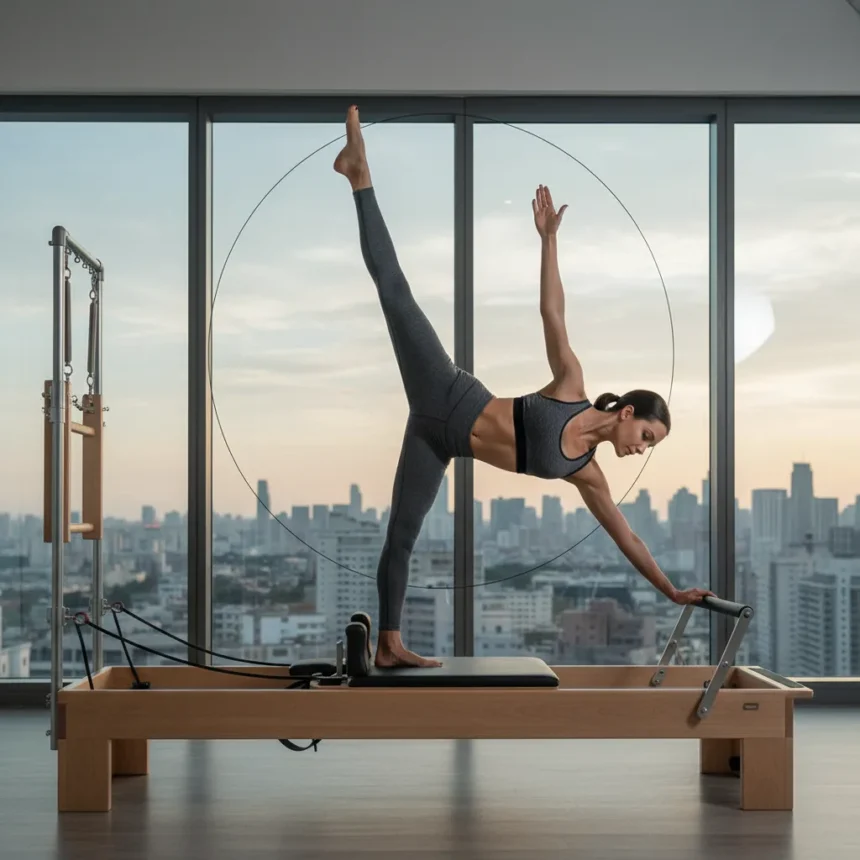
Leg circles hip mobility training is reshaping how fitness professionals approach core and hip work. Unlike leg raises, which move the leg in a single plane, leg circles engage the hip joint through multiple ranges of motion while keeping the spine stable and protected.
Key Takeaways
- Leg circles target deep core muscles (transverse abdominis and obliques) more effectively than leg raises
- The exercise improves hip external and internal rotation, reducing injury risk and boosting athletic performance
- Leg circles create less spinal stress than leg raises while maintaining neutral pelvis alignment
- Beginners can modify with smaller circles or bent knees; progression includes larger circles and ankle weights
- Perform 5-10 circles in each direction per leg, 2-3 sets, with focus on steady breathing and core engagement
Why Leg Circles Beat Leg Raises for Hip Mobility
Leg circles hip mobility work surpasses leg raises because they demand multi-directional movement. Leg raises force the leg up and down in a single plane of motion. Leg circles, by contrast, trace a complete path through the hip socket, engaging stabilizer muscles that leg raises never activate. A Pilates instructor notes that leg circles teach the hips to move independently of the spine, which is critical for everyday function and injury prevention.
The difference matters because your hip joint is built for rotational and circular movement, not just flexion. When you only perform single-plane exercises like leg raises, you miss the opportunity to strengthen the full range of motion your hips actually need. Leg circles address this gap directly.
How to Perform Leg Circles with Proper Form
Start by lying flat on your back with both legs extended and arms at your sides, palms facing down. Draw your navel toward your spine to engage your core. Extend one leg straight up toward the ceiling at a 90-degree angle, toes pointed. Press the opposite foot firmly into the floor to anchor your stability and keep your hips and pelvis neutral—no rocking side to side.

Begin with a small circle, about hip-width in diameter. Inhale as you start the circle, moving the raised leg forward, then across your body, down, and back. The motion comes from your hip joint, not your knee. Exhale as you gradually enlarge the circle while maintaining absolute core control. Complete 5 to 10 circles in one direction, then reverse for an equal number of repetitions. Lower that leg and repeat the entire sequence on the other side. Rest as needed between sets.
Form cues matter: keep your shoulders relaxed and your gaze fixed to the ceiling. Breathe steadily throughout—never hold your breath. Stop immediately if your lower back begins to arch, as this signals your core has lost engagement.



Core Engagement and Hip Stability Benefits
Leg circles hip mobility training fires up the transverse abdominis and obliques far more intensely than leg raises. These deep core muscles act as a corset around your midsection, stabilizing your spine during the circular motion. Because the leg is constantly changing direction, your core must work harder to keep your pelvis locked in place.
This engagement translates to real-world benefits. Better posture becomes natural when your deep core is strong. Lower back pain risk drops because your spine is no longer compensating for weak stabilizers. Athletic performance improves because your hips can move with greater control and range. Desk workers and runners alike benefit from the mobility gains and injury prevention this exercise delivers.
Progression and Modifications for All Levels
Beginners should start with smaller circles and focus on maintaining a neutral pelvis. If full extension feels uncomfortable, bend the raised knee slightly to reduce the lever arm. This modification makes the exercise more manageable while still building strength and mobility.
As you gain proficiency, expand your circle size gradually. Once large circles feel controlled, add resistance by wearing an ankle weight. This progression increases the demand on your core and hip stabilizers without changing the movement pattern. The key is never sacrificing form for size or speed—control always comes first.



Leg Circles vs. Leg Raises: The Core Difference
Leg raises create more spinal stress because the extended leg acts as a long lever that pulls on your lower back if your core isn’t perfectly engaged. Leg circles, by contrast, distribute the work across multiple muscle groups and planes of motion, reducing the shear force on your lumbar spine. This is why Pilates instructors recommend leg circles for clients with lower back sensitivity or those recovering from injury.
Leg raises also work primarily in one plane—hip flexion and extension. Leg circles work hip flexion, extension, abduction, adduction, and rotation all within a single exercise. This multi-plane approach builds functional strength that translates to everyday movement patterns like walking, climbing stairs, and reaching.
Frequently Asked Questions
How many leg circles should I do per session?
Perform 5 to 10 circles in each direction per leg, completing 2 to 3 sets total. This volume is sufficient to build strength and mobility without overworking the hip joint. Rest 30 to 60 seconds between sets.
Can I do leg circles every day?
Yes, leg circles are low-impact and can be performed daily. However, listen to your body—if your hips feel fatigued or your lower back tightens, take a rest day. Consistency matters more than intensity.
What should I do if my lower back hurts during leg circles?
Stop immediately and check your core engagement. Draw your navel to spine more deliberately, and reduce your circle size. If pain persists, consult a qualified fitness professional or physical therapist before continuing. Never push through sharp pain.
Leg circles hip mobility work represents a smarter approach to core and hip training than traditional leg raises. The exercise is simple, equipment-free, and accessible to anyone at any fitness level. By adding leg circles to your routine, you unlock hip mobility, strengthen your deep core, and reduce injury risk—all while keeping your spine safe and stable.
Edited by the All Things Geek team.
Source: Tom's Guide