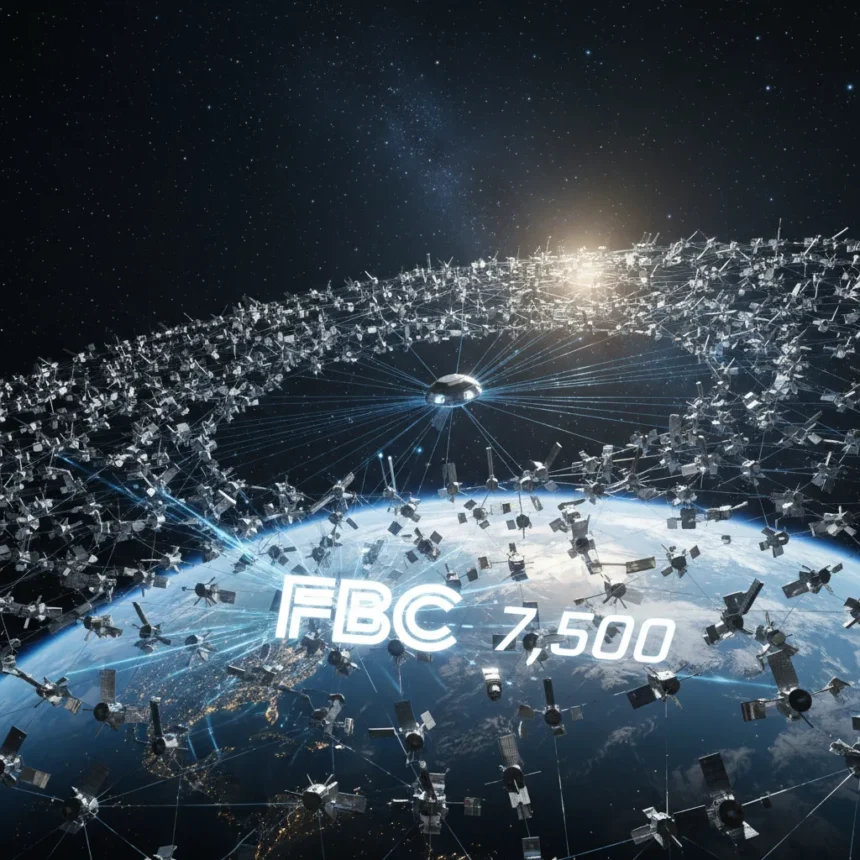
The next-gen Starlink satellites just cleared a major regulatory hurdle. The FCC approved SpaceX to launch another 7,500 Gen2 satellites into low-Earth orbit, a decision that reshapes the competitive landscape for satellite internet. These aren’t incremental upgrades—Gen2 satellites promise higher capacities and lower latencies compared to first-generation satellites when connected via a Starlink dish.
Key Takeaways
- FCC approved 7,500 next-gen Starlink satellites with higher capacity and lower latency performance
- SpaceX must launch 3,750 satellites by December 1, 2028, and the remaining 3,750 by December 2031
- Approval grants SpaceX wider frequency ranges and additional orbital configurations for improved reliability
- Direct-to-cell capability via T-Mobile partnership extends beyond US markets
- FCC Chairman Brendan Carr called the ruling essential for delivering advanced internet services
What the FCC Ruling Actually Changes
This approval fundamentally expands Starlink’s operational flexibility. The FCC granted SpaceX permission to operate satellites across a wider range of frequencies and in a greater number of orbital configurations, enabling more reliable and speedier service. That’s not just marketing speak—orbital diversity directly reduces latency and improves redundancy when one path experiences congestion or weather interference. Starlink’s first-generation constellation, while revolutionary for rural broadband, operated under tighter frequency constraints. The Gen2 satellites remove those handcuffs.
The deployment timeline matters. SpaceX must launch and position 3,750 satellites by December 1, 2028, with the remaining half operational by December 2031. That staggered schedule reflects regulatory caution, but it also gives SpaceX breathing room to integrate launches with other missions rather than burning through launch capacity in a sprint. For consumers, it means gradual service improvements starting in 2028, not overnight transformation.
How Next-Gen Starlink Satellites Compare to the Current Fleet
First-generation Starlink satellites work. They’ve brought broadband to remote ranches, offshore vessels, and disaster zones where fiber and terrestrial wireless simply don’t reach. But they have constraints. Gen2 satellites promise higher capacities and lower latencies, addressing the two pain points that plague any satellite internet service—throughput ceiling and the inherent delay of signals bouncing 550 kilometers into space and back. Higher capacity means more users per satellite without congestion; lower latency means video calls don’t feel like talking through a submarine cable.

Terrestrial competitors like Verizon and AT&T have decades of infrastructure advantage, but satellite internet’s appeal is geographic reach, not speed parity. Gen2 doesn’t aim to beat fiber in cities. It aims to make rural and underserved areas viable for video streaming, gaming, and work-from-anywhere use cases where latency under 50 milliseconds becomes the standard, not the exception.
The Direct-to-Cell Expansion and Market Implications
Beyond the satellite constellation upgrade, the FCC ruling enables next-gen Starlink satellites to support direct-to-cell connectivity outside the US via a partnership with T-Mobile. This transforms satellite internet from a fixed broadband service into a mobile backup layer. If your phone loses cellular signal in a remote area, it can still send emergency messages or low-bandwidth data via satellite. That capability doesn’t require new hardware on the user’s end—it works through existing phones, making it a genuine public safety multiplier.



For the satellite internet market, this approval signals regulatory appetite for more constellations, not fewer. SpaceX has previously applied to launch another million satellites into orbit, a staggering number that sparked concerns about space debris and orbital crowding. This FCC decision suggests the agency believes the benefits outweigh the risks, provided operators maintain safe practices and coordinate orbits responsibly.
Why This Matters Right Now
Satellite internet adoption is accelerating. Remote work normalized during the pandemic, and companies now expect broadband access everywhere. Starlink captured the early-mover advantage, but Amazon’s Project Kuiper and others are launching competing constellations. The FCC’s approval of next-gen Starlink satellites isn’t just a win for SpaceX—it’s a validation that the regulator is comfortable with high-capacity satellite mega-constellations as critical infrastructure. That opens the door for other operators to expand too, driving competition that benefits users.
FCC Chairman Brendan Carr framed the ruling as enabling even better, faster, and more advanced internet services in the country. That’s regulatory optimism backed by engineering reality. More satellites in more orbital slots with wider frequency access genuinely do improve service quality. Whether SpaceX’s pricing reflects those improvements is a separate question—but the technical foundation is now in place.
When Will Users Actually See These Improvements?
The next-gen Starlink satellites won’t materialize overnight. The first 3,750 must reach orbit by late 2028, meaning early adopters in dense coverage areas might see marginal latency and throughput gains by 2029. The second tranche arrives by 2031, at which point global coverage becomes genuinely robust. If you’re a current Starlink customer, expect gradual improvements over the next five to seven years, not a dramatic jump in your next billing cycle.



Could SpaceX’s ambitions get blocked later?
Regulatory approval isn’t permanent. The FCC could impose additional conditions if space debris becomes a crisis or if interference issues emerge. SpaceX’s track record on deorbiting satellites and coordinating with other operators will determine whether the agency greenlight even more aggressive constellation plans in the future. For now, this ruling represents the FCC’s confidence that SpaceX can operate responsibly at scale.
What does this mean for competing satellite internet services?
Amazon’s Project Kuiper, OneWeb, and other operators will benefit from a friendlier regulatory environment. The FCC’s willingness to approve next-gen Starlink satellites suggests the agency sees value in multiple constellations, not monopoly control. That competition should drive innovation and pricing pressure—though Starlink’s three-year head start in deployment gives it a structural advantage that new entrants will struggle to overcome.
The FCC’s approval of 7,500 next-gen Starlink satellites marks a turning point for satellite internet. It’s no longer a niche service for the unreachable few—it’s becoming infrastructure. Faster speeds, lower latency, and wider frequency ranges will make Starlink a genuine competitor to terrestrial broadband in rural markets. The timeline is long, but the direction is clear.
Edited by the All Things Geek team.
Source: TechRadar