





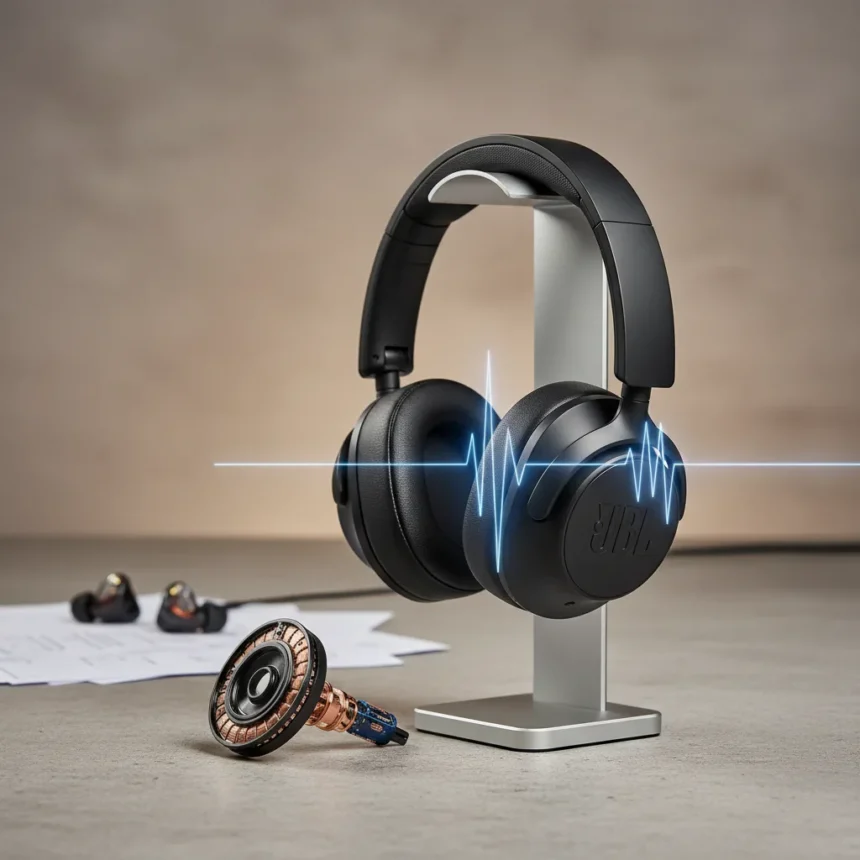
The JBL Tour One M3 sound tuning marks a deliberate pivot away from the bass-heavy signature that defined consumer audio for years. JBL’s flagship wireless over-ear headphones now emphasize neutral frequency response, a shift driven by research showing experienced listeners prefer less bass emphasis. According to JBL representatives, this change reflects a fundamental principle: “The more experienced listeners are, the less bass-heavy they want the sound.”
Key Takeaways
- JBL Tour One M3 adopts neutral sound tuning instead of bass-forward signature
- Change targets experienced listeners who prefer accurate, balanced audio
- Active noise cancellation remains a core feature of the flagship model
- Shift challenges industry norm of bass-heavy consumer headphone design
- JBL based tuning philosophy on listener preference data from experienced users
Why JBL Tour One M3 Sound Tuning Matters Now
The audio industry has long defaulted to bass-heavy tuning for consumer headphones, assuming that punch and impact drive sales. JBL’s decision to move the Tour One M3 toward neutral sound tuning contradicts this assumption. The company’s research indicates that as listeners develop experience with audio, their preference shifts dramatically—they want accuracy and balance, not exaggerated low frequencies. This is not a minor tweak; it represents a strategic acknowledgment that the most discerning users are tired of bloated bass.
Why does this matter? Because flagship headphones set the tone for an entire brand’s audio philosophy. When JBL changes how its most expensive, most visible model sounds, it signals confidence that neutral tuning is the future of premium audio. Experienced listeners have long gravitated toward audiophile-grade equipment specifically to escape the bass-forward compromises of mainstream products. Now, a major consumer brand is meeting them halfway.
How JBL Tour One M3 Sound Tuning Compares to Prior Models
JBL’s previous flagship models leaned into bass emphasis, delivering the kind of low-frequency punch that appeals to casual listeners and bass-focused genres. The Tour One M3 sound tuning changes this calculus entirely. Instead of prioritizing impact, the new model prioritizes clarity across the frequency spectrum. This shift does not eliminate low frequencies—it places them in proper proportion to midrange and treble, allowing vocals and instruments to sit naturally in the mix.

The practical effect is striking. Experienced listeners testing the Tour One M3 sound tuning report that the headphones now reveal details previously masked by bass bloat. Acoustic recordings sound more intimate. Vocal performances gain nuance. Classical music, jazz, and other genres that suffer under bass-heavy tuning finally sound as the artist intended. For casual listeners accustomed to bass-forward sound, the initial impression might feel thin—but that perception typically shifts once ears acclimate to accuracy.
What the JBL Tour One M3 Sound Tuning Reveals About Listener Preferences
JBL’s tuning shift is backed by data. The company observed that experienced listeners—those who have invested time and money into audio quality—consistently request less bass emphasis. This pattern appears across age groups, genres, and listening contexts. The insight challenges the assumption that louder bass always equals better sound. Instead, it suggests that once listeners understand what quality audio sounds like, they actively reject bass-heavy coloration.



The JBL Tour One M3 sound tuning also includes active noise cancellation, a feature that pairs well with neutral tuning. ANC works by analyzing ambient noise and generating inverse sound waves to cancel it out. Bass-heavy tuning can interfere with this process, creating an imbalance between the ANC signal and the music. Neutral tuning allows ANC and audio reproduction to coexist more cleanly, which may explain why JBL chose to redesign the signature alongside maintaining ANC as a flagship feature.
Should You Choose JBL Tour One M3 Sound Tuning Over Bass-Heavy Alternatives?
If you are an experienced listener frustrated by bass-forward headphones, the JBL Tour One M3 sound tuning will likely feel like relief. The headphones deliver the accuracy that audiophiles demand without requiring a five-figure investment in boutique equipment. If you are new to quality audio and love bass-heavy music, you may want to audition the Tour One M3 before committing—neutral tuning is a different experience, and preference is personal.
The broader question is whether the audio industry will follow JBL’s lead. If flagship models across brands begin prioritizing neutral tuning, the market will shift. Consumers shopping for premium headphones will expect accuracy as a baseline. Bass-heavy tuning will become a deliberate choice rather than an industry default. That shift benefits everyone who has ever felt trapped by the bass-forward compromises of mainstream audio.
Does JBL Tour One M3 sound tuning work for all music genres?
Neutral tuning excels with vocals, acoustic instruments, and genres like jazz, classical, and folk where detail matters. Electronic music and hip-hop, which often feature prominent bass, may feel less impactful on neutral-tuned headphones compared to bass-forward models. The JBL Tour One M3 sound tuning still reproduces bass accurately—it simply does not exaggerate it. Genre preference ultimately determines whether neutral tuning suits your listening habits.



How does JBL Tour One M3 sound tuning affect active noise cancellation?
Neutral tuning and active noise cancellation work together more effectively than bass-heavy tuning and ANC. Bass-heavy sound signatures can create conflicts with ANC processing, resulting in uneven noise cancellation or muddy low frequencies. The JBL Tour One M3 sound tuning’s neutral profile allows ANC to function cleanly across the entire frequency range, improving both noise isolation and audio fidelity.
Will experienced listeners finally get the headphones they deserve?
The JBL Tour One M3 sound tuning suggests yes. For too long, the audio industry assumed that more bass equals better sound, pushing experienced listeners toward expensive audiophile equipment or custom in-ears. JBL’s decision to redesign its flagship around neutral tuning acknowledges what discerning listeners have always known: accuracy beats exaggeration. If other brands follow suit, the premium headphone market will become a place where experienced listeners can find quality without compromise.
Where to Buy
JBL Tour One M3 | JBL Tour One M3 Smart Tx
This article was written with AI assistance and editorially reviewed.
Source: TechRadar