




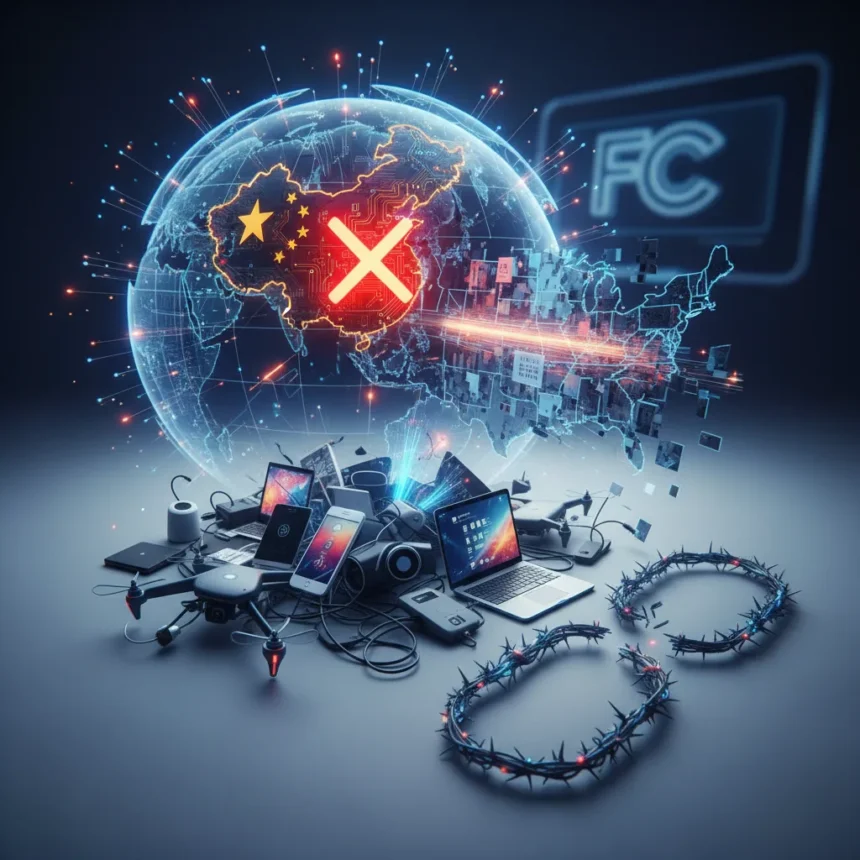
The FCC’s decision to ban Chinese electronics testing labs represents a seismic shift in how devices reach American consumers. On April 30, 2026, the FCC unanimously voted to advance a proposal that bars Chinese labs from certifying electronics sold in the United States, citing national security and privacy risks. The ruling affects approximately 75% of all electronics currently tested in Chinese facilities before entering the US market.
Key Takeaways
- The FCC voted April 30, 2026 to ban Chinese electronics testing labs from certifying US-bound devices
- About 75% of US electronics are currently tested in Chinese facilities
- Fewer than 10% of FCC-approved labs operate in the United States
- The ban applies to smartphones, computers, cameras, fitness trackers, network gear, baby monitors, and IoT devices
- Test labs controlled 10% or more by prohibited entities will lose FCC recognition
Chinese electronics testing labs have long served as the backbone of US device certification. The FCC requires all imported electronics that emit radio frequencies to undergo compliance testing at an authorized lab before being marketed or imported into the United States. This infrastructure evolved because testing costs are lower in China, and manufacturers have built decades-long relationships with Chinese certification bodies. Now that foundation is cracking.
Why the FCC Voted to Ban Chinese Electronics Testing Labs
FCC commissioners stated plainly that allowing foreign adversary governments to test and certify electronic devices poses serious security and privacy risks. The concern is not hypothetical. If a Chinese lab controls the certification process, it theoretically gains visibility into device specifications, security architecture, and firmware details before products reach consumers. That intelligence advantage matters when the devices in question include smartphones, network equipment, and IoT devices that touch sensitive personal and corporate data.
The new rules establish that any test lab, telecommunications certification body, or lab accreditation body that is controlled, directed, or owned (10% or more) by a prohibited entity will lose or be denied FCC recognition. This language is deliberately broad—it catches not just labs directly owned by the Chinese government, but also those with significant state-linked investment or control structures. The FCC is essentially saying: if Beijing has meaningful influence, the lab is out.

This is not a symbolic move. Three-quarters of US-bound devices currently rely on Chinese testing facilities. The scale of disruption is enormous. Manufacturers cannot simply flip a switch and move testing to American labs—there are fewer than 10% of FCC-approved labs based in the United States. The certification infrastructure in America is underdeveloped compared to China’s mature ecosystem.
What Devices Are Affected by the Ban on Chinese Electronics Testing Labs
The ban applies to a sweeping category of consumer electronics. Smartphones, computers, cameras, fitness trackers, network gear, baby monitors, and IoT devices all require FCC certification if they emit radio frequencies. That covers almost everything people use daily. A smartphone cannot be sold in the US without FCC approval. A WiFi router cannot reach store shelves without it. Even a simple Bluetooth speaker requires certification.



The rule also impacts countries without reciprocal testing agreements with the United States. This extends the ban beyond Chinese labs to create a broader framework around trusted testing partners. The FCC is essentially rebuilding its certification ecosystem around allies and trusted nations, not just blacklisting one country.
The Supply Chain Shock Ahead
Manufacturers now face a brutal choice: build or contract with US-based labs, find certified labs in allied nations, or accept delays and higher costs. None of these options is painless. Expanding US testing capacity takes years and significant capital investment. Shifting to labs in other countries means requalifying devices, renegotiating contracts, and potentially redesigning products to meet different technical standards. The transition will be messy.
Smaller manufacturers and startups will feel this most acutely. Large companies like Apple and Samsung have resources to navigate certification complexity. A startup launching its first IoT device may not. This could inadvertently entrench market dominance among established players who can absorb the friction of finding new testing partners and managing longer certification timelines.
Is the US Testing Infrastructure Ready for This Shift
No. The United States has fewer than 10% of FCC-approved labs compared to China’s mature testing ecosystem. American labs exist, but they are concentrated in a handful of locations and often operate at capacity. Adding 75% of global device testing volume to their workload overnight is not feasible. Backlogs will form. Manufacturers will wait months for certification slots. Prices may rise as testing costs increase in a supply-constrained market.


The FCC’s vote is the policy decision. The practical implementation will take years. During that transition, the electronics market will experience friction—delayed product launches, higher certification costs, and potential shortages as manufacturers struggle to navigate the new landscape. This is not a bug in the ruling; it is the intended cost of decoupling from Chinese testing infrastructure.
FAQ
When does the FCC ban on Chinese electronics testing labs take effect?
The FCC voted to advance the proposal on April 30, 2026. The research brief does not specify an implementation or transition date, so manufacturers should expect regulatory guidance in coming months. Typically, the FCC provides a grace period before enforcement begins, but the timeline has not been publicly detailed.
Can manufacturers use labs in other countries to test devices for the US market?
Yes, but only if those labs are recognized by the FCC and operate in countries with reciprocal testing agreements with the United States. The ban is specifically on Chinese labs and entities controlled by prohibited parties, not a blanket ban on foreign testing. Labs in allied nations remain viable alternatives.
Will this ban increase the price of electronics sold in the US?
Likely, at least in the short term. Testing costs will rise as US labs operate at capacity and manufacturers compete for limited certification slots. Higher certification costs will eventually be passed to consumers. Long-term, if US testing capacity expands significantly, prices may stabilize—but that expansion takes years and investment.
The FCC’s ban on Chinese electronics testing labs is a watershed moment for US technology policy. It prioritizes national security over supply chain efficiency and forces a reckoning with America’s underdeveloped testing infrastructure. Manufacturers, regulators, and consumers will all feel the friction of this transition. The decision is sound in principle—keeping adversary governments out of device certification matters. The execution will be painful, and the US testing industry must now prove it can scale up to meet the demand.
This article was written with AI assistance and editorially reviewed.
Source: Tom's Hardware