





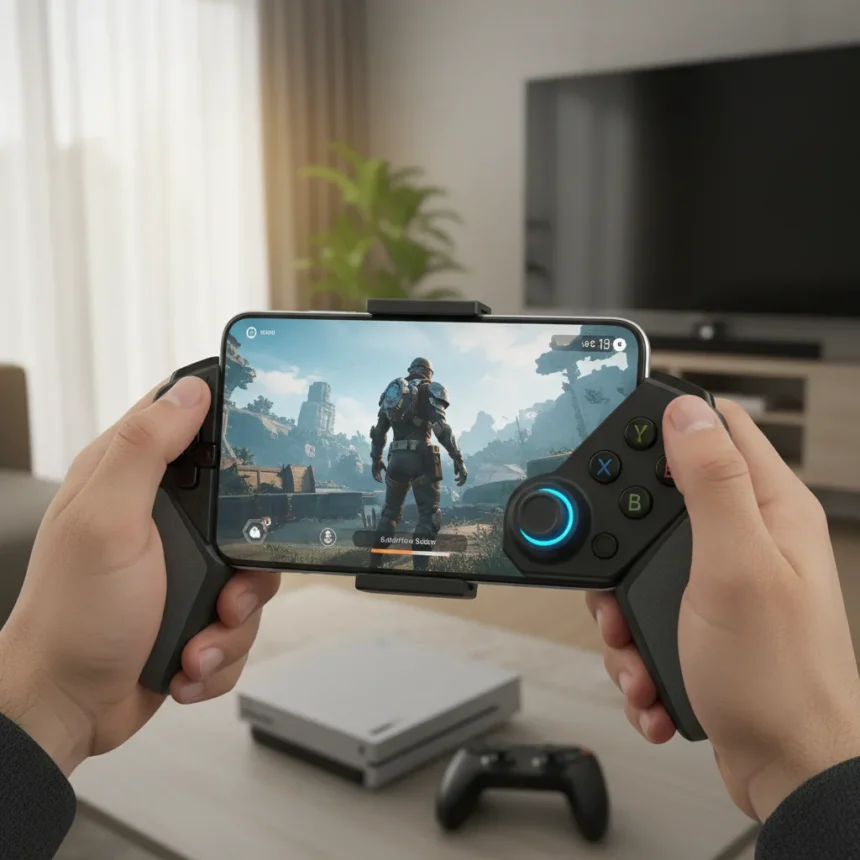
The GameSir G8 Galileo is a wired USB-C mobile controller with full-size grips, Hall effect joysticks and triggers, and two programmable back buttons, designed to deliver a console-like gaming experience on smartphones. After weeks with the device, it becomes clear why reviewers call it a “certified Backbone breaker”—it challenges pricier controllers by combining robust build quality with anti-drift technology at a significantly lower cost.
Key Takeaways
- Hall effect joysticks and triggers eliminate drift, a persistent problem in cheaper mobile controllers.
- Full-size grips and console-style layout make the G8 Galileo feel like a genuine handheld device, not a phone accessory.
- Wired USB-C connection limits compatibility with some games like Call of Duty Mobile without workarounds.
- Programmable back buttons add depth to games that support remapping, though native support varies.
- Costs significantly less than competitors like the Razer Kishi Ultra while delivering comparable comfort and control.
Why the GameSir G8 Galileo Matters for Mobile Gamers Right Now
Mobile gaming has exploded, but controllers haven’t kept pace. Most options either feel cheap and plasticky or demand console-level prices. The GameSir G8 Galileo splits the difference by delivering console-grade build quality without the premium price tag. The device passes as a genuine handheld controller—not a phone clipped to a frame. Its full-size grips and sturdy construction immediately signal that this is serious gaming hardware, not an afterthought accessory.
The real innovation lies in the Hall effect joysticks and triggers. These use contactless magnetic sensors instead of mechanical switches, eliminating the drift that plagues cheaper controllers within months of purchase. For anyone who has watched a joystick gradually fail mid-game, this is a significant shift. The tactile D-pad and snappy membrane buttons round out the input experience, delivering the tactile feedback console gamers expect.
GameSir G8 Galileo vs. Premium Alternatives
The Razer Kishi Ultra costs significantly more and offers similar size and comfort, but the GameSir G8 Galileo undercuts it on price while matching its core strengths. Both deliver full-size grips and premium feel. The real gap emerges when comparing to Backbone controllers, which the G8 Galileo outperforms in value and anti-drift durability. Where Backbone has built brand loyalty, the GameSir G8 Galileo competes on substance—better joysticks, programmable buttons, and a lower barrier to entry.

The GameSir G8 Plus, the newer sibling, adds Bluetooth connectivity and magnetic faceplates for customizable thumbstick and button layouts, plus support for foldable phones. For players who demand wireless freedom and broader compatibility, the Plus is worth the premium. But for wired-USB-C users, the G8 Galileo remains the smarter choice if price matters.
Where the GameSir G8 Galileo Stumbles
The wired USB-C connection is both a strength and a limitation. It powers the device directly from the phone, eliminating battery concerns, but it also creates compatibility gaps. Games like Call of Duty Mobile don’t natively support the controller, forcing players to rely on touchscreen mapping software instead of native button mapping. This is not a dealbreaker, but it is a friction point that the Bluetooth-equipped G8 Plus resolves.



The iPhone and Android compatibility is broad, but the USB-C requirement excludes older phones and creates cable management issues. Players who value wireless convenience or own foldable devices should consider the G8 Plus instead. For standard flagship phones released in the last few years, however, the G8 Galileo integrates smoothly.
GameSir G8 Galileo Performance in Real Games
In titles with native controller support, the G8 Galileo delivers. The programmable back buttons add depth for games that recognize them, letting players remap actions without touching the screen. The Hall effect joysticks feel responsive and precise, with no dead zones or creep. Grip comfort is exceptional—the device sits naturally in hands for hours without fatigue, something smaller clip-on controllers cannot claim.
The real test comes with unsupported games. Touchscreen mapping works, but it defeats the purpose of owning a premium controller. Call of Duty Mobile players will experience this frustration firsthand. This is why game compatibility matters more than raw controller quality—a perfect device is useless if the software won’t cooperate.
Is the GameSir G8 Galileo Worth Buying?
If you own an iPhone or Android phone with USB-C, play games with native controller support, and want console-like comfort without console-level prices, yes. The Hall effect joysticks alone justify the purchase—they represent technology that typically costs far more. The build quality and grip design are genuinely premium. For casual mobile gamers or those who play unsupported titles, the G8 Galileo is overkill. For serious players, it is the closest thing to replacing a console on a phone.



What games work best with the GameSir G8 Galileo?
Games with native controller support shine on the G8 Galileo. Titles designed for console controllers—think PUBG Mobile, Fortnite, or Genshin Impact—take full advantage of the joysticks, triggers, and programmable buttons. Games without native support require touchscreen mapping, which works but is suboptimal. Check a game’s controller compatibility before assuming the G8 Galileo will enhance it.
How does the GameSir G8 Galileo compare to the G8 Plus?
The G8 Plus adds Bluetooth wireless connectivity, magnetic faceplates for customizable button and thumbstick layouts, laser-etched grips, and foldable phone support. The G8 Galileo remains wired via USB-C, which eliminates battery concerns but creates game compatibility gaps that Bluetooth resolves. The G8 Plus is the better choice for players who demand wireless freedom; the G8 Galileo is better for those who prioritize affordability and wired reliability.
Does the GameSir G8 Galileo work with iPhones?
Yes. The GameSir G8 Galileo is compatible with iPhone and has been praised as delivering “slick sliding gaming goodness” and an “on-the-go gaming triumph” on Apple devices. USB-C compatibility covers modern iPhones, though older models with Lightning ports will not work. Android phones with USB-C also support it, making it a cross-platform option.
The GameSir G8 Galileo proves that mobile gaming hardware can challenge dedicated consoles without demanding dedicated-console prices. It is not perfect—USB-C limitations and game compatibility gaps are real. But for players who want console comfort, drift-free controls, and affordable entry into premium mobile gaming, it delivers. In a market flooded with cheap clip-on controllers, the G8 Galileo stands as the rare device that actually justifies its existence.
Where to Buy
8 Amazon customer reviews | Free trial | $79.99
This article was written with AI assistance and editorially reviewed.
Source: TechRadar