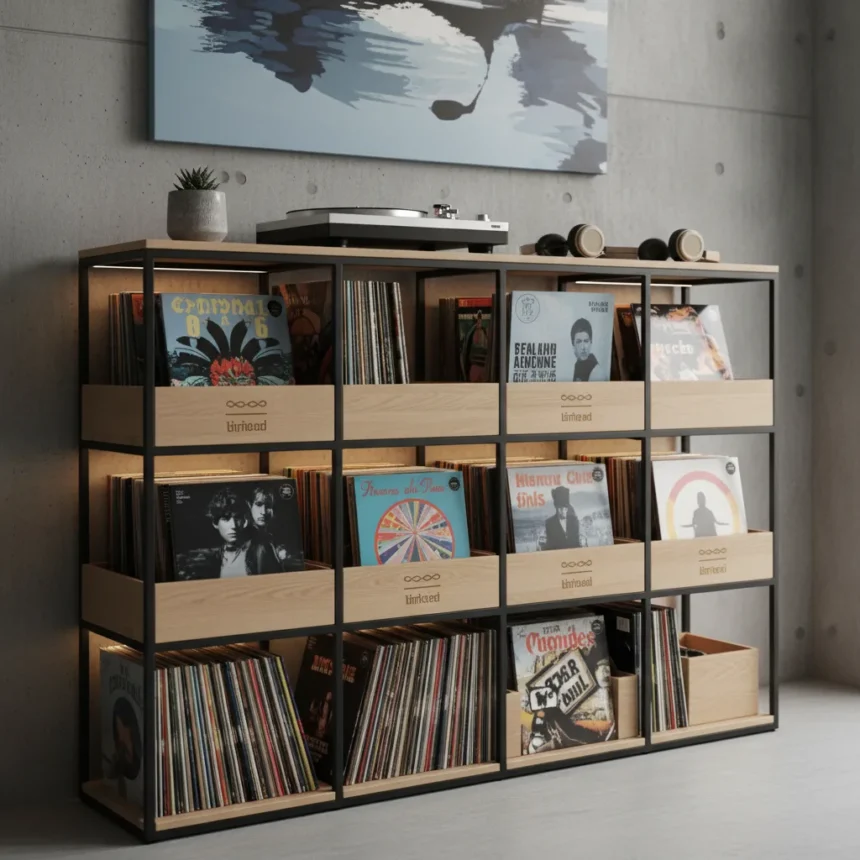
Vinyl storage solutions have undergone a quiet revolution. For decades, record collectors faced a grim choice: invest in expensive, purpose-built cabinets or accept that their vinyl would live in cardboard boxes or mismatched shelving. Today, vinyl storage solutions combine thoughtful design, clean aesthetics, and prices that won’t require a second mortgage.
Key Takeaways
- Modern vinyl storage prioritizes both form and function without premium pricing
- Smart design means records stay protected while remaining visually accessible
- Affordability has democratized quality vinyl storage for casual and serious collectors
- Clean aesthetics integrate vinyl collections into any room design
- Storage solutions now address dust protection and organization simultaneously
Why Vinyl Storage Design Matters Now
Vinyl has experienced a genuine resurgence. Collectors are buying records again, not as nostalgia objects but as primary listening formats. This revival created demand for storage that actually works—something that protects records from dust and light damage while making them easy to browse and display. The problem? Traditional record storage was either prohibitively expensive or visually terrible.
The shift toward affordable, aesthetically considered vinyl storage solutions reflects a broader change in how people view their collections. Records are no longer hidden away; they are part of home décor. Storage needs to deliver on both fronts simultaneously: practical protection and visual appeal.
What Makes Modern Vinyl Storage Solutions Stand Out
Contemporary vinyl storage solutions prioritize accessibility without sacrifice. Unlike closed storage, which protects records but hides them, and open shelving, which displays them but exposes them to dust, modern designs split the difference. Vertical storage with dust covers, modular systems that expand as collections grow, and materials that complement contemporary interiors have become standard rather than luxury features.



Smart design also means thinking about spine visibility. Collectors need to identify records at a glance. Shallow shelving depths, angled displays, and organized spacing make browsing intuitive. Price points have dropped as manufacturers realized that good design doesn’t require exotic materials or handcraftsmanship—it requires thoughtful proportions and honest construction.
Vinyl Storage Solutions vs. Generic Shelving
Generic shelving fails vinyl collections in specific ways. Standard bookcases have shelves too deep, forcing records to stand in clusters that are hard to search. Spacing is rarely optimized for record height, creating wasted vertical space. Materials often lack dust resistance, and the aesthetic rarely complements audio equipment or modern living spaces.



Purpose-built vinyl storage solutions address these problems directly. Shelves are dimensioned for record depth. Spacing accommodates standard album heights without excess. Materials—whether solid wood, metal frames, or high-quality composite—are chosen to resist dust and age gracefully. The visual language integrates with turntables and speakers rather than clashing with them.
Affordability Without Compromise
The most significant shift in vinyl storage solutions is price accessibility. Five years ago, quality record storage started around $400 and climbed steeply. Today, solid vinyl storage solutions exist at every price point. Budget options deliver clean design and functional protection. Mid-range solutions add durability and modularity. Premium options offer customization and premium materials—but they are no longer the only viable choice.
This democratization means collectors can match storage to their actual collection size rather than overbuying or settling for inadequate solutions. A casual collector with 50 records can invest modestly. Serious collectors can build systems that grow with their collections without starting with a five-figure commitment.
How to Choose Vinyl Storage Solutions for Your Space
Start by measuring your collection and projecting growth. Do you have 30 records or 300? Will you add to the collection? This determines whether you need compact solutions or expandable systems. Next, assess your space. Wall-mounted storage works in apartments and small rooms. Floor-standing units suit larger spaces and collections over 200 records. Consider dust exposure—if your turntable is in a living room with open windows, closed storage makes sense. If it is in a dedicated audio room, open shelving may suffice.



Aesthetics matter more than people admit. Your vinyl storage solutions should complement your turntable, speakers, and room design. Wood finishes suit warm, traditional spaces. Metal and glass work in modern environments. Neutral tones integrate anywhere. Finally, think about access patterns. Do you rotate through favorite records constantly, or do you browse occasionally? Frequent access demands easy visibility; occasional browsing tolerates deeper storage.
Can vinyl storage solutions protect records from damage?
Yes, when designed properly. Quality vinyl storage solutions minimize exposure to light, dust, and temperature fluctuations. Closed or semi-closed designs with dust covers provide protection comparable to archival storage. The key is avoiding prolonged direct sunlight and keeping records in stable environments. Most well-designed solutions achieve this without requiring climate control or special materials.
Are modular vinyl storage solutions worth the extra cost?
For growing collections, absolutely. Modular vinyl storage solutions let you expand incrementally rather than replacing the entire system. Initial cost may be slightly higher, but spreading purchases over time and avoiding waste makes them economical long-term. For stable collections under 100 records, fixed solutions are usually sufficient.
What materials work best for vinyl storage solutions?
Solid wood offers warmth and durability. Metal frames with wood shelves combine industrial aesthetics with protection. High-quality plywood and composite materials deliver affordability without compromising function. Avoid particle board and thin veneers—they sag under record weight and deteriorate quickly. The best vinyl storage solutions use materials that look intentional and age well.
Vinyl storage has finally caught up with the vinyl renaissance. Clean design, smart functionality, and reasonable pricing have converged to make quality record storage accessible to anyone serious about their collection. Whether you are a casual listener with a handful of albums or a dedicated collector with thousands, vinyl storage solutions now exist that protect your records, display them beautifully, and fit your budget. The era of ugly, expensive, or inadequate record storage is over.
Where to Buy
IKEA KALLAX shelving unit | Ikea's Kallax | 779 Amazon customer reviews | £41.49 | £47.99
Edited by the All Things Geek team.
Source: T3