





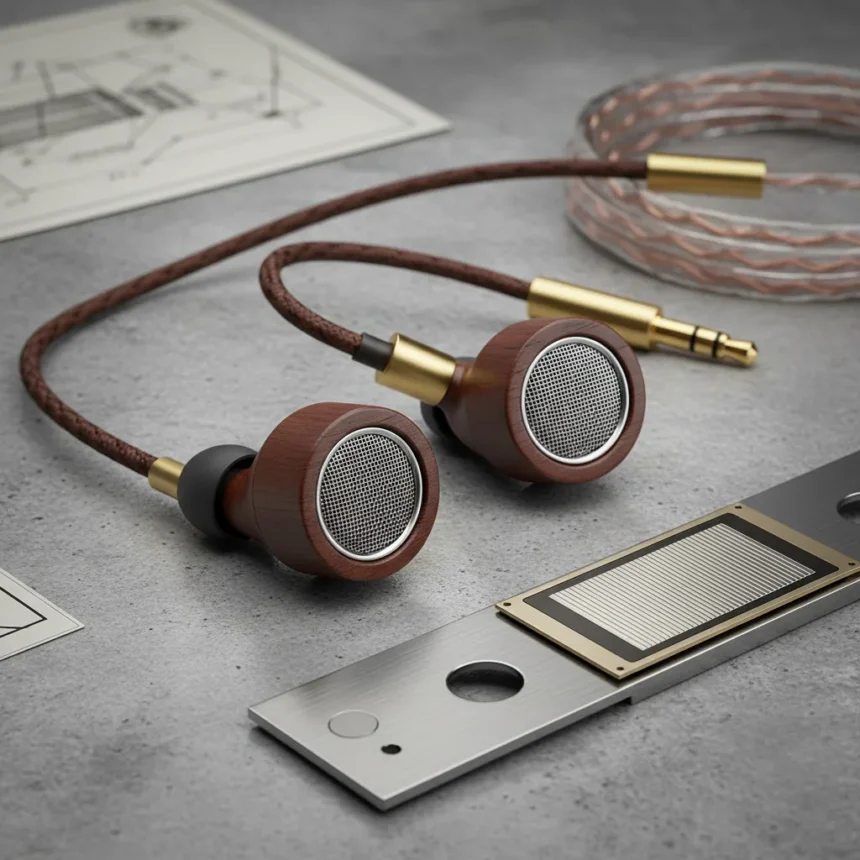
Sivga M260 wired earbuds represent the brand’s first venture into planar magnetic in-ear monitors, combining vintage wooden construction with high-frequency driver technology typically reserved for over-ear audiophile gear. Launching in November 2025, the M260 targets listeners willing to trade wireless convenience for sonic detail and tactile retro appeal.
Key Takeaways
- Sivga’s first planar magnetic IEMs, bringing high-end driver tech to affordable in-ears at $249
- Retro wooden shell design with detachable 0.78mm 2-pin cable for easy customization
- Frequency response spans 20Hz–40kHz with 126dB/Vrms sensitivity and 32Ω impedance
- Pre-orders available now with December 2025 shipping across UK, US, and Australia
- Positioned against wireless earbuds, emphasizing wired audio purity and vintage aesthetics
Planar Magnetic Technology Arrives in the Sivga M260
Planar magnetic drivers have dominated premium over-ear headphones for years, prized for their speed and detail retrieval across complex mixes. Sivga’s decision to miniaturize this technology into the M260 marks a significant shift for the brand, which previously focused on budget wired headphones and wireless models. The newly developed planar magnetic driver inside these earbuds promises the same precision and transient response that audiophiles expect from larger gear, but in a form factor small enough to fit in a shirt pocket.
The M260’s specifications underscore this ambition. A frequency response of 20Hz to 40kHz places these earbuds well above typical consumer in-ears, while a sensitivity rating of 126dB/Vrms means they’ll play loud without demanding excessive amplification from your source device. The 32Ω impedance sits in the sweet spot for portable audio—low enough for smartphones and DAPs, yet high enough to minimize noise floor issues with cheaper amplification.
This technical foundation distinguishes the M260 from entry-level wireless alternatives, which often prioritize convenience over measurable performance. Wired earbuds have seen a resurgence among audiophiles frustrated by Bluetooth’s inherent compression and latency, and Sivga is clearly betting that planar magnetic performance will accelerate this trend further into 2026.



Retro Design Meets Modern Cable Architecture
The M260’s wooden shell construction taps into a broader aesthetic revival in audio. Retro-inspired gear has become increasingly fashionable—brands like FiiO have capitalized on nostalgia with vintage-styled portable players and matching earbuds—and Sivga’s wooden earbuds fit this moment perfectly. The retro appeal is not merely cosmetic; wooden enclosures have genuine acoustic properties, dampening unwanted resonances and adding warmth to the midrange.
What elevates the M260 beyond pure nostalgia is its detachable cable system. Using a 0.78mm 2-pin connector, users can swap the included high-purity silver-plated copper cable for third-party alternatives, a feature rare in this price bracket. This modularity appeals to enthusiasts who want to experiment with different cable materials or simply replace a worn connector without discarding the entire earbuds. The included cable itself—silver-plated copper—signals Sivga’s commitment to signal purity, reducing oxidation and improving conductivity compared to standard copper.



Multiple ear tip sizes ship with the M260, addressing the universal challenge of in-ear fit across different ear shapes. This customization option is standard practice among serious IEM makers but often overlooked by mass-market wireless brands.
Pricing and Availability in a Competitive Wired Market
At £199 in the UK, $249 in the US, and AU$399 in Australia, the Sivga M260 wired earbuds occupy an interesting middle ground. They cost significantly less than flagship planar magnetic over-ears (which often exceed $500) yet price higher than mass-market wireless alternatives. For listeners already committed to wired audio, this pricing reflects genuine value: planar magnetic technology at a fraction of what you’d pay for a comparable over-ear system.
Pre-orders are open now through Sivga’s website and select retailers, with shipments beginning in December 2025. This timeline positions the M260 squarely in the holiday gifting window, when audiophiles and retro-design enthusiasts are most receptive to premium wired gear. Global availability across major markets suggests Sivga expects strong international demand.
The M260 enters a wired IEM market that has grown increasingly sophisticated. Competing brands have pushed planar and hybrid driver designs downmarket, but Sivga’s combination of planar magnetic technology, wooden construction, and modular cable architecture remains uncommon at this price point. For listeners fatigued by wireless hype and seeking tangible sonic improvement, the M260 presents a rare opportunity to experience high-end driver engineering without the over-ear commitment.



Should You Choose the Sivga M260 Over Wireless Earbuds?
The answer depends entirely on your priorities. If you value absolute sonic performance and don’t mind carrying a cable, the M260’s planar magnetic technology delivers measurable advantages in detail and transient response. If you prioritize convenience and don’t notice the difference between wired and wireless audio, wireless alternatives remain the better choice. The M260 is uncompromisingly wired—there is no Bluetooth fallback, no wireless charging case, no touch controls.
For vintage audio enthusiasts and detail-focused listeners, however, the M260 represents exactly what modern planar magnetic IEMs should be: technically advanced, aesthetically intentional, and priced to reward serious commitment rather than casual consumption.
What makes planar magnetic drivers different from traditional dynamic drivers?
Planar magnetic drivers use a thin diaphragm suspended between magnets, allowing the entire surface to vibrate uniformly. This design reduces distortion and improves transient response compared to traditional moving-coil dynamic drivers, which rely on a single suspension point. The result is faster, more detailed sound, though planar drivers typically require higher impedance to optimize their performance.
Can you replace the Sivga M260 cable with third-party options?
Yes. The M260 uses a standard 0.78mm 2-pin connector, making it compatible with countless third-party IEM cables available from specialty audio retailers. This modularity is one of the M260’s key advantages, allowing you to experiment with different materials and designs without replacing the entire earbuds.
Are the Sivga M260 wired earbuds suitable for portable use?
Portability depends on your tolerance for cables. The M260 is compact enough to fit in a pocket, and the included cable is manageable for on-the-go listening. However, you’ll need a wired source device—smartphone, DAP, or laptop—and will have to manage the cable during use. If wireless freedom is non-negotiable, these earbuds are not for you. If you value sonic purity over convenience, the M260 rewards the compromise.
The Sivga M260 wired earbuds represent a confident bet that planar magnetic technology and retro design will resonate with listeners tired of wireless compromises. Pre-orders open now for December 2025 delivery—a timely launch for holiday gifting and a clear signal that wired audio’s resurgence is far from over.
Edited by the All Things Geek team.
Source: What Hi-Fi?




