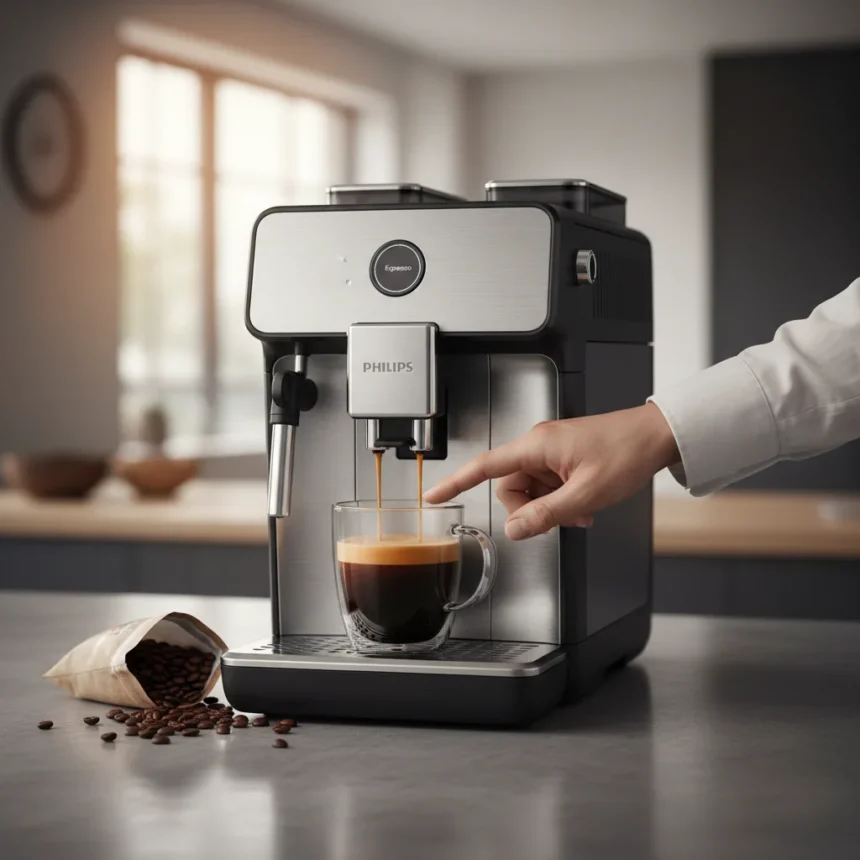
The Philips Café Aromis Series 8000 is a premium bean-to-cup coffee machine that proves high-end espresso equipment doesn’t need to be intimidating. Launched in 2024, this machine bridges the gap between beginner-friendly operation and professional-grade results—a rare combination at this price point.
Key Takeaways
- Philips Café Aromis Series 8000 delivers espresso, cappuccino, latte, and flat white with one-touch operation and automatic milk frothing.
- Built-in grinder with multiple settings, 1.8L water tank, and 275g bean hopper capacity support daily use without constant refilling.
- Silent operation during grinding and brewing, with heat-up under 30 seconds and drink preparation in 30-60 seconds depending on complexity.
- Touchscreen interface and automatic rinse cycles after milk drinks make maintenance straightforward for a machine of this caliber.
- Available in matte black or silver at £899 RRP, positioning it as a serious alternative to louder, pricier competitors like the Jura J8 Twin.
What Makes the Philips Café Aromis Series 8000 Stand Out
Most premium bean-to-cup machines force a choice: simplicity or control. The Philips Café Aromis Series 8000 refuses that trade-off. The touchscreen interface presents drink options as one-touch presets—select cappuccino, the machine grinds fresh beans, pre-infuses the grounds, extracts espresso, froths milk automatically, and dispenses the result in under a minute. No manual steam wand wrestling. No guessing grind levels. Just coffee.
The machine’s 1500W power and 15-bar pump pressure deliver extraction quality that matches machines costing significantly more. The automatic milk frothing system handles everything from thin microfoam cappuccinos to thick flat white texture without user intervention. For anyone who’s struggled with manual steam wands or inconsistent milk temperature, this is genuinely liberating.
What separates the Philips Café Aromis Series 8000 from cheaper bean-to-cup machines is the refinement. The built-in grinder offers multiple grind settings for beans ranging from light roasts to dark espresso blends. The 1.8L water tank and 275g bean hopper mean you’re not refilling every two drinks. Most importantly, the machine operates almost silently during grinding and brewing—a feature that becomes precious at 6 AM when you’re not ready to wake the household.


How the Philips Café Aromis Series 8000 Compares to Rivals
The Jura J8 Twin costs £2,100 and delivers similarly polished results, but it’s louder and more complex to navigate for beginners. The Sage Oracle Dual Boiler offers more manual control for espresso enthusiasts willing to accept a bulkier footprint and steeper learning curve. The Salter Espresso Machine is cheaper but slower to heat up and weaker at frothing milk. Against these alternatives, the Philips Café Aromis Series 8000 occupies a sweet spot: premium results without premium friction.
The De’Longhi Rivelia shares a similar bean-switching feature for variety, but the Philips edges ahead in silence and ease—two qualities that matter more in a home kitchen than they do in spec sheets. If you’re buying a machine to use daily, not just to show off, the quieter operation and faster heat-up make a tangible difference over months of ownership.

Maintenance and Real-World Living
Premium espresso machines often hide complexity in cleaning routines. The Philips Café Aromis Series 8000 sidesteps this with automatic rinse cycles after every milk drink, removing dried milk before it hardens inside the system. The milk carafe is dishwasher-safe, and all removable parts follow the same philosophy. The machine will prompt descaling via app integration when needed, so you’re never guessing when to run a cleaning cycle.
The compact footprint—25cm width, 37cm depth, 43cm height—fits most kitchen countertops without dominating the space. At approximately 10kg, it’s heavy enough to feel solid but light enough to reposition if needed. The choice between matte black or silver finishes means it won’t look out of place in contemporary or traditional kitchens.
Should You Buy the Philips Café Armis Series 8000?
Buy it if you want café-quality espresso without learning espresso. The touchscreen operation removes the barrier to entry that deters most home coffee enthusiasts. You’ll spend less time troubleshooting and more time enjoying actual coffee. At £899 RRP, it costs less than the Jura J8 Twin and delivers comparable quality with fewer complications. The silent operation and quick heat-up mean it integrates into real life rather than demanding accommodation. If your kitchen counter has room and your budget allows, this machine delivers on its core promise: professional results, genuinely easy.
Is the Philips Café Aromis Series 8000 worth the price?
Yes, if you drink espresso-based drinks daily and value silence and ease. The automatic milk frothing and one-touch presets save time and frustration compared to manual machines costing similar amounts. Versus cheaper bean-to-cup options, you’re paying for build quality, quieter operation, and faster heat-up—features that compound in value over years of daily use.



How long does the Philips Café Aromis Series 8000 take to make a coffee?
Heat-up takes under 30 seconds from cold. Drink preparation ranges from 30-60 seconds depending on complexity: espresso alone brews faster than a cappuccino requiring automatic milk frothing. Total time from decision to cup is typically under two minutes, making it practical for weekday mornings.
Can you use pre-ground coffee with the Philips Café Aromis Series 8000?
The machine is designed around fresh bean grinding via its built-in grinder. While the system accommodates pre-ground coffee through a separate inlet, fresh grinding is the intended workflow and delivers better flavor consistency. The automatic grind-to-brew sequence is where much of the machine’s ease comes from.
The Philips Café Aromis Series 8000 succeeds because it refuses to compromise. It’s powerful enough for espresso purists, simple enough for casual coffee drinkers, and quiet enough for morning routines. In a market where premium bean-to-cup machines often demand either technical knowledge or noise tolerance, this machine offers neither excuse. That rarity alone makes it worth serious consideration.
Where to Buy
Edited by the All Things Geek team.
Source: T3