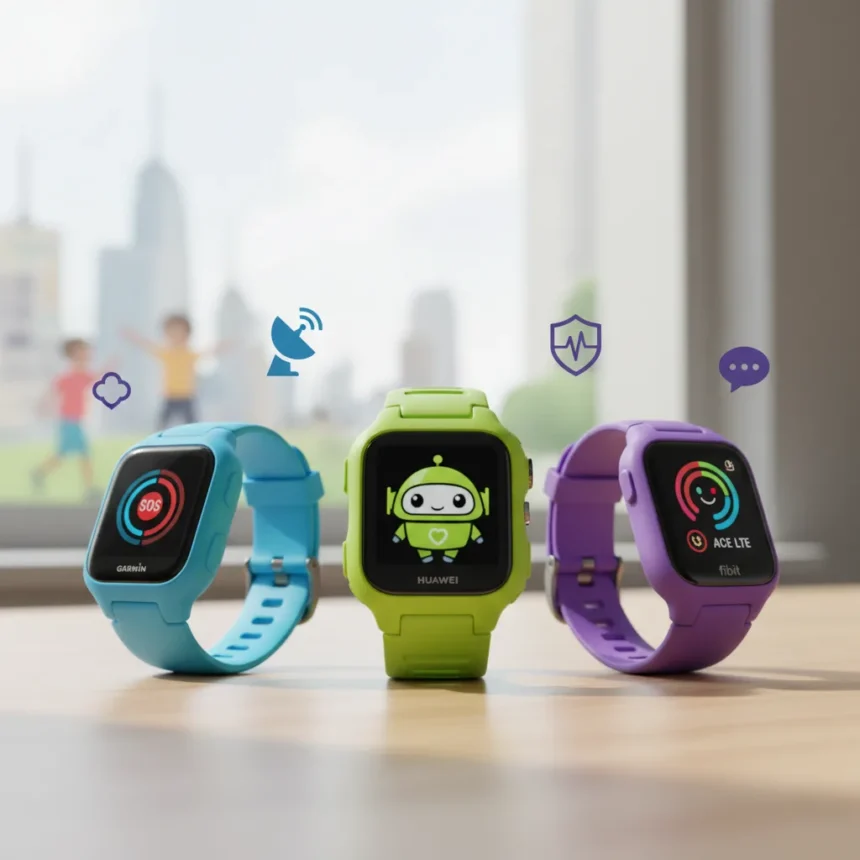
Huawei has entered the kids smartwatch market with the Watch Kids X1 Series, a two-device lineup designed to challenge established players like Garmin Bounce 2 and Fitbit Ace LTE. The announcement marks a significant push by the Chinese tech giant into child wearables, a segment increasingly popular as parents seek alternatives to smartphones for young users.
Key Takeaways
- Huawei Watch Kids X1 Series consists of two new devices targeting child safety and communication.
- Direct competition with Garmin Bounce 2 and Fitbit Ace LTE in the kids smartwatch market.
- Garmin Bounce 2 offers GPS tracking and calling with 1-2 day battery life and requires LTE subscription.
- Fitbit Ace LTE features more advanced specs including 1.61-inch OLED display and 5 ATM water resistance.
- Kids smartwatch market growing as parents seek safer alternatives to full smartphones.
What the Kids Smartwatch Market Demands
The kids smartwatch market has become fiercely competitive over the past two years. Parents want reliable communication with their children, robust safety tracking, and durability for active play. Garmin Bounce 2 has dominated this space by offering GPS tracking, calling and texting capabilities, and chore motivation tools, though it suffers from inconsistent rural GPS performance and a short 1-2 day battery window. Fitbit Ace LTE counters with a more modern 1.61-inch OLED display offering 333 ppi resolution and superior feature depth, including 5 ATM water resistance for swimming and fitness tracking integration.
Huawei’s entry suggests the company believes it can outmaneuver these established competitors through its safety-focused feature set. The Watch Kids X1 Series emphasizes child protection as its core value proposition, though Huawei has not yet disclosed specific technical specifications or pricing details that would clarify how it positions itself against Garmin and Fitbit’s existing offerings.
How Huawei Positions Against Garmin Bounce 2
The Garmin Bounce 2 remains the most popular choice for parents seeking a reliable, durable kids smartwatch. Its 1.3-inch LCD display with 240×240 resolution avoids glass to prevent breakage during rough play, and the device supports both Wi-Fi and LTE connectivity. At around $150, the Garmin Bounce sits at an accessible price point, though users must budget for ongoing LTE subscription costs. The Garmin Jr. app provides parents with location tracking and communication controls.


Huawei’s Watch Kids X1 Series lacks publicly available specs, making direct comparison difficult. However, the company’s broader smartwatch expertise suggests it could challenge Garmin’s battery performance and interface design. Garmin’s main weakness—the 1-2 day battery life—creates an opportunity for Huawei to differentiate by offering longer endurance between charges, a critical feature for parents who cannot charge their child’s device nightly.
The Fitbit Ace LTE Challenge
Fitbit Ace LTE represents the premium option in the kids smartwatch market, trading higher upfront cost for more advanced features. The 1.61-inch OLED display with 333 ppi offers superior clarity compared to Garmin’s LCD screen, and 5 ATM water resistance enables swimming without removing the device. Fitbit integrates fitness tracking more deeply than Garmin, appealing to parents who want their children to develop healthy activity habits. The trade-off is a closed ecosystem—Fitbit Ace LTE does not support third-party apps or media playback—and requires a monthly subscription alongside the higher purchase price.


Huawei’s positioning against Fitbit depends entirely on whether the Watch Kids X1 Series can match feature depth while undercutting price. If Huawei offers comparable water resistance, a modern display, and calling capabilities at a lower cost than Fitbit Ace LTE, it could capture price-conscious parents who value features over brand loyalty.
Safety Features as the Differentiator
Huawei emphasizes that the Watch Kids X1 Series is jam-packed with child safety features, though the company has not detailed what those features include. In the kids smartwatch market, safety typically encompasses GPS tracking, geofencing alerts, emergency calling, and parent-controlled app access. Both Garmin Bounce 2 and Fitbit Ace LTE offer these basics, but Huawei could differentiate through implementation—perhaps faster GPS lock times, more granular geofencing zones, or integration with Huawei’s broader ecosystem of devices.
The absence of detailed specifications is a weakness in Huawei’s launch strategy. Parents considering a kids smartwatch demand transparency about how a device tracks location, how quickly it connects to emergency services, and how waterproof it actually is. Vague promises of safety features will not overcome Garmin and Fitbit’s established track records and published specifications.
Pricing and Availability Remain Unknown
Huawei has not announced pricing or regional availability for the Watch Kids X1 Series. This is a critical gap. Garmin Bounce 2 commands a significant investment with ongoing LTE fees, while Fitbit Ace LTE costs even more upfront. If Huawei prices the Watch Kids X1 Series below both competitors, it could rapidly gain market share. If pricing is comparable, the company must justify its choice through superior features or design.

Without knowing where Huawei plans to sell the Watch Kids X1 Series, it is unclear whether the devices will reach Western markets where Garmin and Fitbit dominate. Huawei’s smartphone business has faced challenges in Europe and North America due to regulatory concerns, and those same headwinds could limit the Watch Kids X1 Series’ distribution.
Is the Huawei Watch Kids X1 Series Worth Waiting For?
Huawei’s entry into the kids smartwatch market signals confidence in the category’s growth potential. The company’s experience with consumer wearables and software integration could yield competitive advantages. However, until Huawei publishes detailed specifications, pricing, and availability information, parents should continue evaluating Garmin Bounce 2 and Fitbit Ace LTE based on proven performance. Garmin Bounce 2 remains the best overall choice for durability and value, while Fitbit Ace LTE suits families who prioritize advanced fitness tracking and display quality despite higher costs.
What specs should I expect from the Huawei Watch Kids X1 Series?
Huawei has not disclosed specifications for the Watch Kids X1 Series. Based on the company’s positioning against Garmin Bounce 2 and Fitbit Ace LTE, the devices likely include GPS tracking, calling and texting capabilities, water resistance for swimming, and multi-day battery life. Exact display size, resolution, and battery endurance remain unknown.
How does the Huawei Watch Kids X1 Series compare to the Apple Watch SE 3?
The Apple Watch SE 3 offers more features and longer software support than kids-specific smartwatches, but it requires an iPhone and Family Setup configuration. It costs significantly more than Garmin Bounce 2 and appeals to families already invested in Apple’s ecosystem. Huawei’s Watch Kids X1 Series, if priced lower, could attract Android families seeking a simpler, child-focused alternative.
Will the Huawei Watch Kids X1 Series support LTE calling?
Huawei has not confirmed whether the Watch Kids X1 Series includes LTE connectivity. Garmin Bounce 2 requires an LTE subscription, while Fitbit Ace LTE also supports cellular calling. If Huawei offers LTE as a standard feature without hidden subscription costs, it could be a major selling point—but the company must clarify pricing before making that claim.
Huawei’s Watch Kids X1 Series has the potential to reshape the kids smartwatch market if the company executes on safety, battery life, and pricing. For now, Garmin Bounce 2 remains the proven standard-bearer, and Fitbit Ace LTE leads for feature-hungry families. Huawei must move quickly from announcement to availability and transparency—vague promises will not dethrone established competitors in a market where parent trust is paramount.
Edited by the All Things Geek team.
Source: TechRadar