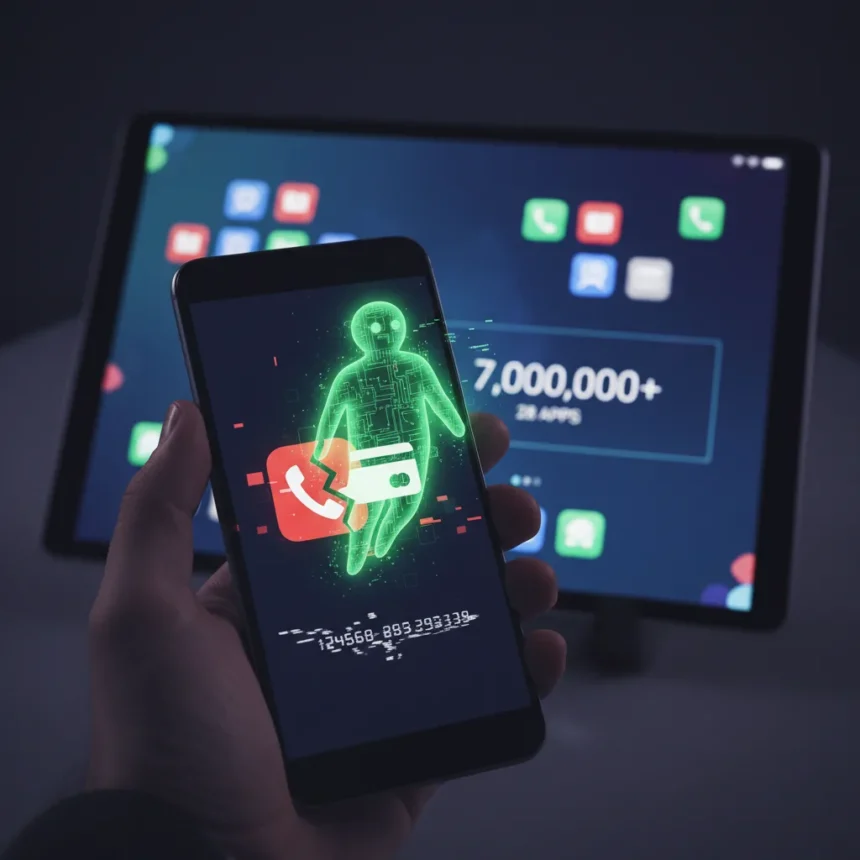
CallPhantom malware spread across 28 fake call history apps on Google Play, infecting over 7.3 million Android devices and stealing payment card details from users seeking access to deleted or hidden call logs. The scam operated by disguising malicious apps as legitimate call log viewers, tricking users into paying fake subscriptions that captured their credit card information in real-time.
Key Takeaways
- CallPhantom malware infected 28 Google Play apps with over 7.3 million combined downloads.
- Fake apps mimicked call log viewers and charged $9.99–$39.99 weekly or monthly for fake premium features.
- Malware captured card details, CVV, and billing information via phishing payment pages.
- ThreatFabric discovered the campaign in April 2026; Google removed 27 of 28 apps by May 2026.
- Top infected app, “Call History – Secret Call Log,” alone exceeded 1.2 million downloads before removal.
How CallPhantom Malware Operated
CallPhantom malware worked through a deceptively simple social engineering chain. Users downloaded what appeared to be a legitimate utility app promising access to deleted or secret call logs—a feature Android’s native system does not provide. Once installed, the app requested permissions for call logs, SMS messages, storage, and overlay access, which legitimate apps rarely need simultaneously. The malware then displayed fake call data to build user trust, creating the illusion that the tool actually worked.
The real trap came next. After showing the fake data, the app prompted users to upgrade to a premium subscription to unlock full functionality. This is where CallPhantom struck. Instead of using Google Play’s legitimate billing system, the malware redirected users to a fake payment page designed to mimic Stripe or Google Pay. Users entered their credit card details, CVV, and billing information directly into the attacker’s form, where JavaScript code captured everything in real-time. The malware then displayed a fake “subscription confirmed” screen, but no actual access was ever granted. Meanwhile, the stolen card data was exfiltrated to attacker command-and-control servers for unauthorized transactions or resale on dark web marketplaces.
The Scale of the CallPhantom Campaign
The scope of CallPhantom malware was staggering. Cybersecurity firm ThreatFabric identified 28 infected apps published between 2023 and 2026, with some still active when the campaign was disclosed in May 2026. The top offender, “Call History – Secret Call Log,” exceeded 1.2 million downloads alone. Other heavily downloaded apps included “Utility Call Log – History” with over 900,000 installs, followed by dozens of variants with 100,000 to 500,000 downloads each. Across all 28 apps, the total exceeded 7.3 million downloads, meaning millions of Android users potentially exposed their payment information to criminals.


The campaign primarily targeted English-language markets, with the United States, India, and Brazil accounting for the largest concentrations of infections. The fact that the malware operated for years before detection suggests it evaded Google’s automated scanning systems through obfuscated code and user interface designs that mimicked legitimate applications perfectly. Google ultimately removed 27 of the 28 apps following ThreatFabric’s public disclosure, though one app remained online as of the report’s publication.
Why CallPhantom Malware Succeeded Where Others Failed
CallPhantom malware exploited a genuine user need. Android users cannot natively access deleted call logs—a limitation that creates demand for third-party solutions. Scammers capitalized on this gap by offering what appeared to be a working tool. The fake subscription model added another layer of believability: legitimate apps do charge for premium features, so the paywall seemed normal. This psychological trick is far more effective than malware that immediately demands payment or displays obvious red flags.



The malware also bypassed Google Play’s payment verification by avoiding the Google Play Billing Library entirely. Instead of processing transactions through Google’s system, which would flag suspicious patterns, the fake apps redirected users to phishing gateways that looked authentic. This approach meant Google’s automated fraud detection systems saw no unusual activity within the Play Store itself—the malware operated entirely outside Google’s payment infrastructure.
Compared to other Android malware campaigns like Joker, which focuses on ad fraud and silent app installations, CallPhantom malware took a more direct approach: steal payment card data immediately. This made it simpler but also riskier for victims, who would likely notice unauthorized charges on their bank statements within days. Yet millions still fell for it, suggesting the scammers relied on volume and the fact that many victims might not immediately connect a fraudulent charge to an obscure app they downloaded weeks earlier.
What Victims Should Do Now
If you downloaded any call log app from Google Play between 2023 and 2026, check your bank and credit card statements immediately for unauthorized charges. Look for recurring weekly or monthly debits, which would indicate an active subscription was created without your consent. If you find fraudulent transactions, contact your bank to dispute the charges and request a new card. Most banks cover unauthorized transactions, but acting quickly protects your account from further abuse.
Beyond immediate damage control, uninstall any call log apps you do not recognize or trust. Legitimate alternatives like Truecaller or Google’s native Phone app do not require suspicious permissions or hidden subscriptions. If an app promises access to deleted data that Android does not support, it is almost certainly a scam. Be skeptical of any utility app that requires overlay permissions, which allow apps to display content on top of other screens—a common technique for phishing pages and fake payment forms.



How Google Play’s Defenses Failed
The CallPhantom malware campaign exposed significant gaps in Google Play’s security screening. Apps remained on the store for years despite stealing payment data from millions of users. Google’s automated scanning systems, which analyze apps for malware signatures and suspicious behavior, clearly missed the obfuscated code and legitimate-looking user interfaces that CallPhantom employed. The fact that ThreatFabric, a private cybersecurity firm, had to discover and publicly disclose the campaign before Google removed the apps raises questions about the Play Store’s real-time threat detection capabilities.
Google did respond once the threat was public, removing 27 of 28 apps by May 2026. However, this reactive approach means millions of users already exposed their payment information. A more proactive security model would have caught the pattern earlier: dozens of apps with nearly identical functionality, all requesting unusual permission combinations, all pushing users toward fake payment pages. These red flags should have triggered manual review long before the campaign reached 7 million downloads.
Is Your Android Device at Risk?
If you installed any of the 28 CallPhantom malware apps, your device is at risk of further exploitation. The malware captured not just payment data but also permissions to your call logs, SMS messages, and storage. Attackers could use this access to intercept two-factor authentication codes, harvest personal information, or install additional malware. Beyond the initial financial fraud, victims face potential identity theft or account compromise. Uninstalling the app removes the immediate threat, but if your card details were stolen, monitor your accounts for months, not just weeks.
Android users who never downloaded these specific apps are still at risk from similar scams. CallPhantom malware was not unique—it was simply one particularly successful campaign among many. New fake apps are uploaded to Google Play daily, and some will inevitably slip past security screening. The broader lesson is that Google Play, while generally safer than sideloading apps from untrusted sources, is not a guarantee of safety. User vigilance remains essential.
FAQ
What is CallPhantom malware and how does it spread?
CallPhantom malware is a scam campaign that spread through 28 fake call log apps on Google Play, targeting Android users seeking access to deleted or hidden call logs. The apps stole payment card details by redirecting users to phishing payment pages that mimicked legitimate payment processors.
Which apps were infected with CallPhantom malware?
The most notorious infected app was “Call History – Secret Call Log” with over 1.2 million downloads. Other heavily infected apps included “Utility Call Log – History” with 900,000+ downloads, plus 26 other variants with between 100,000 and 500,000 downloads each. Google removed 27 of the 28 apps following disclosure in May 2026.
How can I tell if I was affected by CallPhantom malware?
Check your bank and credit card statements for unauthorized recurring charges, typically $9.99 to $39.99 weekly or monthly. If you downloaded any call log app from Google Play and later noticed suspicious transactions, contact your bank immediately to dispute the charges and request a replacement card.
CallPhantom malware exposed millions of Android users to payment fraud and identity theft. While Google Play removed most infected apps, the campaign demonstrates that app store security screening remains imperfect. Users must take responsibility for vetting apps before installation—if an app promises access to data Android does not support, assume it is a scam. Legitimate call log tools do not require hidden subscriptions or suspicious permission combinations. Stay vigilant, monitor your accounts, and remember that the safest app is the one you never install.
Edited by the All Things Geek team.
Source: TechRadar