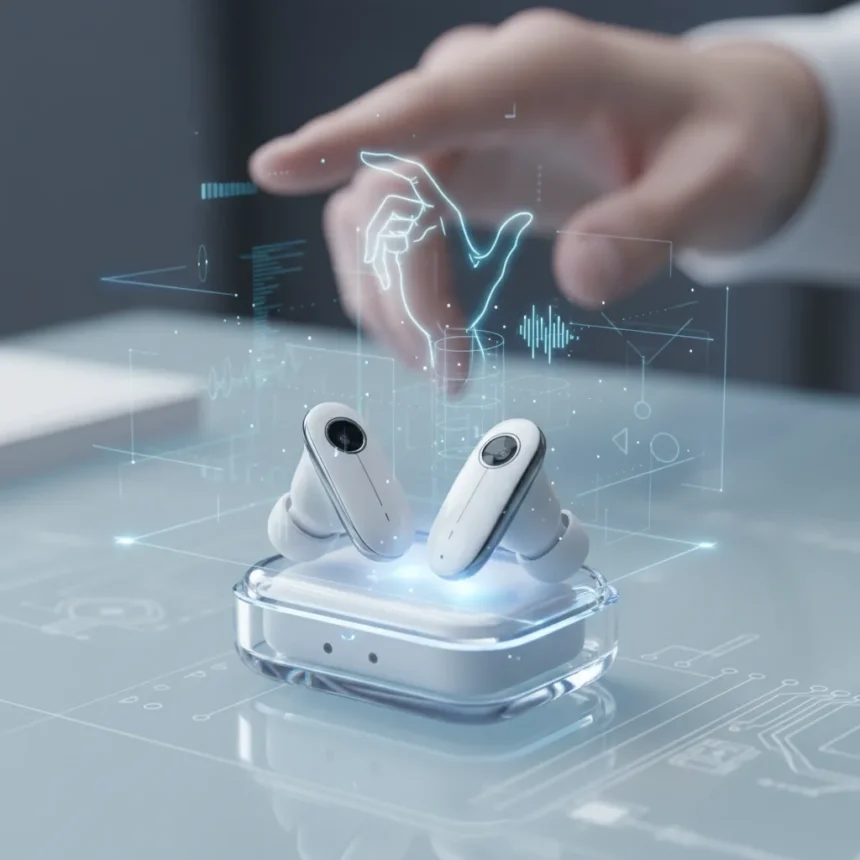
Apple camera earbuds represent a significant shift in how wearables interact with the world around you. The company is developing earbuds with integrated cameras, referred to as “eyeballs” for computer vision capabilities, according to patents filed in 2024 under “Earbud camera systems with optical gesture detection.” These prototypes feature tiny outward-facing cameras on each earbud, miniaturized versions of those found in modern smartphones, powered by Apple’s A-series or future M-series neural engines for on-device AI processing.
Key Takeaways
- Apple camera earbuds include tiny outward-facing cameras powered by A-series or M-series chips for edge computing
- Patented technology enables gesture recognition, spatial audio head-tracking, and real-time environmental scanning
- Expected launch rumored for late 2026 or 2027, possibly as AirPods Pro 4 or “AirPods Vision” model
- Privacy handled through on-device processing and user-toggleable camera controls
- Battery impact minimized via low-power imaging sensors and edge computing architecture
What Apple Camera Earbuds Can Actually Do
The potential applications for Apple camera earbuds extend far beyond simple audio enhancement. Real-time environmental scanning allows the earbuds to understand your surroundings and adjust audio contextually. Automatic head-tracking for spatial audio means the sound field could follow your movements more precisely than current implementations. Gesture recognition enables hands-free control through facial expressions or hand movements detected by the cameras. Live translation via visual cues could identify text or signs in the environment and provide audio translations. AR audio overlays could layer contextual information over real-world objects. Health monitoring features might detect falls or read room layouts for navigation assistance.
This represents a departure from how competitors approach wearable audio. Google Pixel Buds Pro 2 rely on beamforming microphones but depend on your phone for any visual intelligence. Sony WF-1000XM5 deliver advanced noise cancellation without visual sensors. Meta Ray-Bans offer wearable cameras but in a glasses form factor, not earbuds. Apple’s approach uniquely embeds vision directly into the ear, where it can track head position and environmental context simultaneously.
The Hardware and Processing Challenge
Fitting cameras into earbuds without draining the battery represents the core engineering challenge. Apple camera earbuds address this through low-power imaging sensors and edge computing, processing visual data locally rather than streaming to the cloud. This on-device approach also addresses privacy concerns—data stays on the device unless you explicitly opt into cloud features. The cameras themselves are miniaturized to smartphone scale but even smaller, requiring custom optical components and sensor arrays.


The neural engines handling this processing are critical. A-series chips have handled computational photography in iPhones for years, so Apple has proven experience with real-time vision processing at low power. The rumored M-series integration suggests Apple might push processing capabilities further, though this would require even more careful thermal and power management in a form factor with almost no room for heat dissipation.
Privacy, Regulatory, and Timeline Questions
Camera-equipped wearables face regulatory scrutiny globally. Apple camera earbuds will likely need approval from privacy authorities before launch, particularly in Europe and Asia. The company has built in user-toggleable camera controls, allowing you to disable vision features entirely when privacy matters most. On-device processing means Apple doesn’t need to transmit video to servers, a significant privacy advantage over cloud-dependent competitors.


The expected timeline points to late 2026 or 2027, possibly arriving as AirPods Pro 4 or a new “AirPods Vision” model with iOS 21 integration. Global availability through Apple Stores and carriers is anticipated, though regulatory approval timelines remain uncertain. Pricing is expected to follow AirPods Pro 2 positioning, likely in the premium segment, though no official figures have been confirmed.
Why This Matters Now
The 2026 AI hardware race is intensifying. Apple camera earbuds position the company to compete in wearable AI not just through audio and fitness tracking, but through genuine environmental understanding. This goes beyond the Vision Pro’s stationary computing model—it brings spatial awareness to a form factor you wear all day. The patents surfaced post-WWDC 2025 leaks, signaling Apple’s confidence in the technology’s readiness.
The real question isn’t whether Apple can build this—it’s whether users want cameras in their ears. Privacy concerns will dominate early reviews. Regulatory approval could delay launch. Battery life under real-world use remains unproven. But if Apple camera earbuds deliver even half the promised capabilities, they could fundamentally change how we interact with audio and spatial information throughout the day.
How would Apple camera earbuds compare to Vision Pro?
Vision Pro is a stationary or actively worn headset for immersive computing. Apple camera earbuds are designed for all-day wear during normal activities, providing contextual awareness without blocking your vision. Vision Pro competes with gaming and productivity; camera earbuds enhance audio and navigation. They serve different use cases entirely.



Will Apple camera earbuds work without an iPhone?
On-device processing means core features like gesture recognition and spatial audio should function independently. However, advanced features like live translation or AR overlays may require iPhone connectivity for full functionality. Apple hasn’t confirmed standalone capability, so assume iPhone integration is necessary for the full experience.
Could privacy concerns delay the launch?
Regulatory approval for camera-equipped wearables remains uncertain. Europe’s privacy framework and similar regulations in Asia could extend timelines significantly. User-toggleable cameras help, but regulators may impose additional restrictions before approval, potentially pushing launch beyond 2027.
Apple camera earbuds represent genuine innovation in wearable computing, not incremental improvement. The challenge isn’t engineering—it’s convincing the world that cameras in your ears are necessary. If Apple executes the privacy model correctly and delivers meaningful features, this could redefine what earbuds do. If privacy concerns or regulatory hurdles emerge, the launch could stall indefinitely. Either way, the technology signals where Apple believes wearables are headed.
Where to Buy
Edited by the All Things Geek team.
Source: T3