






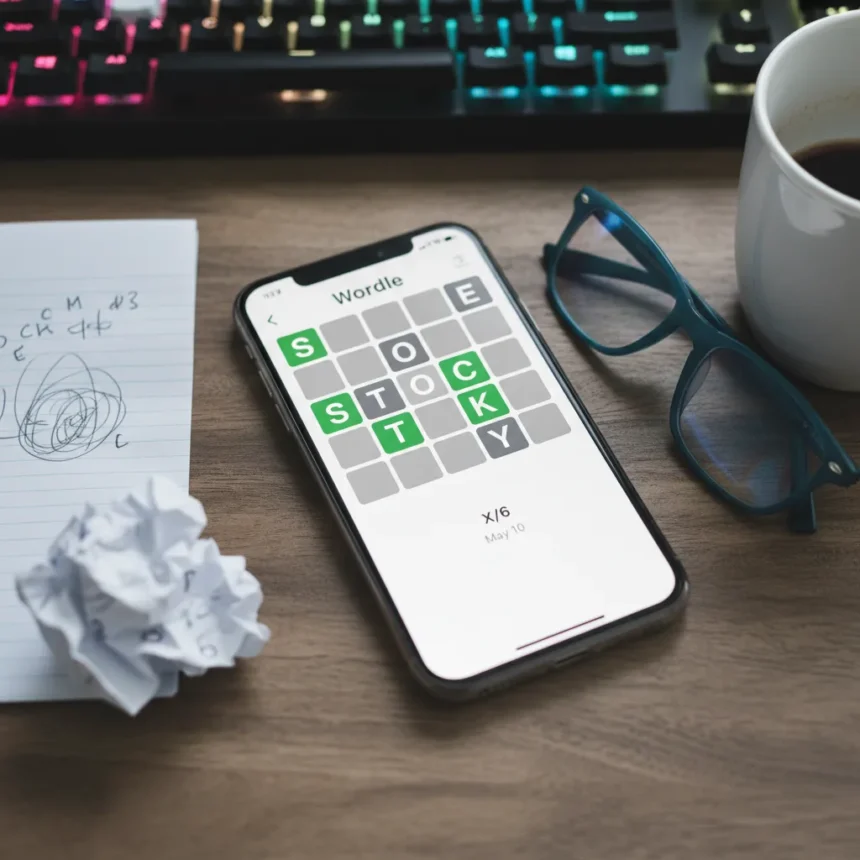
The Wordle May 10 puzzle is today’s streak-breaker, and you’re not imagining the difficulty. Players worldwide are reporting failures on a scale that mirrors some of the game’s most notorious challenges. Understanding what makes this puzzle so brutal—and how to approach it strategically—could save your winning streak.
Key Takeaways
- The May 10 Wordle puzzle is exceptionally difficult and breaking player streaks globally today.
- Wordle’s hardest puzzles typically feature uncommon letter combinations or obscure word choices.
- Past streak-killers like DOWEL and DRAMA showed that double letters and unusual vowel placement trip up most players.
- The New York Times refreshes Wordle daily at midnight local time.
- Wordle Bot and previous puzzle archives are available through New York Times Games subscription.
Why Wordle Puzzles Break Streaks
Wordle’s difficulty spikes when the puzzle uses uncommon words, tricky vowel patterns, or letter combinations that don’t follow typical English word structure. Past notorious puzzles reveal the pattern: DOWEL, identified as the hardest Wordle puzzle of 2025 nationally, stumped players with an unusual consonant-heavy structure. Similarly, DRAMA—which appeared as Wordle #1731 on March 16, 2026—achieved only a 66% solve rate by combining double vowels with deceptive letter placement. When the New York Times selects words from the deeper end of its vocabulary pool, casual players face a wall.
The May 10 puzzle follows this tradition of unexpected difficulty. Rather than using common five-letter words that most English speakers encounter daily, it likely features either an obscure word, an unconventional letter arrangement, or a combination of both. This is precisely why Wordle’s difficulty curve feels so unpredictable—the game rotates between accessible puzzles and genuine vocabulary challenges, keeping even experienced players off-balance.
Comparing Today’s Puzzle to Other Streak-Killers
To understand why the May 10 puzzle is so punishing, it helps to examine what made previous difficult puzzles memorable. JAZZY, which appeared as Wordle 712 on June 1, 2023, broke more than 20% of player streaks by centering its difficulty on the double ‘z’ combination—a letter pairing that most players never think to guess. GNOME and FUGUE similarly tripped up players by using less common words that native English speakers might recognize but would never think to guess under time pressure.



What separates today’s puzzle from easier ones is the absence of common letter patterns. Easy Wordles typically feature letters like E, A, R, O, and T in positions where players instinctively try them. The May 10 puzzle likely breaks this expectation, either by hiding common letters in unusual spots or by requiring knowledge of a word that simply doesn’t appear in everyday conversation. The result is the same: players exhaust their guesses without finding the answer.
Strategies to Protect Your Streak
If you haven’t solved the May 10 puzzle yet, a strategic approach matters more than luck. Start with a strong opening word that tests common consonants and vowels—letters like S, T, R, E, and A. Avoid words you suspect might be the answer; instead, use your first few guesses to eliminate possibilities. This information-gathering phase is crucial on difficult puzzles.



Once you’ve narrowed down which letters are in the word, think laterally about letter placement. Difficult Wordles often hide common letters in unexpected positions, or they use less frequent letters like Q, X, Z, or K. If you’re running out of guesses, consider whether the puzzle might use an uncommon word from a specific domain—nautical terms, medical vocabulary, or archaic English are fair game for the New York Times.
For players with active New York Times Games subscriptions, Wordle Bot offers analysis of your guesses and suggests optimal strategies based on information theory. The Bot can help you understand why certain guesses were more or less valuable, improving your approach for future difficult puzzles. Additionally, reviewing previous puzzles from the 1,700+ puzzle archive can familiarize you with the range of words the game uses.
Why the New York Times Chooses Hard Puzzles
Wordle refreshes daily at midnight local time, and the New York Times deliberately rotates between accessible and challenging puzzles. This variation keeps the game engaging for both casual players and word enthusiasts. A streak of easy puzzles would bore experienced players; a streak of hard puzzles would frustrate newcomers. The May 10 puzzle likely sits at the difficult end of this spectrum by design.
The game’s popularity depends partly on this unpredictability. Players return daily partly because they never know whether today’s puzzle will feel like a gift or a gauntlet. When a puzzle breaks your streak, it’s frustrating—but it’s also the reason you’ll open the app again tomorrow, hoping for redemption.



Should I use Wordle hints for the May 10 puzzle?
Yes, if your streak matters to you. Wordle hint searches reached 44.6 million times in 2025, showing that seeking help is normal and widespread. Using a hint or looking up the answer preserves your streak without diminishing the satisfaction of tomorrow’s puzzle. The game is meant to be fun, not a source of frustration.
What makes a Wordle puzzle harder than others?
Difficult Wordles use uncommon words, place common letters in unexpected positions, or feature rare letter combinations that don’t follow typical English patterns. Words like DOWEL and DRAMA stumped players because they either used unusual structures or combined letters in ways that contradicted players’ instincts.
How can I improve my Wordle strategy for hard puzzles?
Focus your early guesses on eliminating common letters rather than guessing the answer. Use information from each guess to narrow possibilities. On hard puzzles, think about less common words and consider whether the puzzle might use vocabulary from specific domains like science, art, or literature.
The May 10 Wordle puzzle is tough, but it’s also temporary. Tomorrow brings a fresh puzzle, and your streak—if it survives today—will reset to one. If it doesn’t, that’s the nature of a game that occasionally throws curveballs. The real win is returning tomorrow and playing again.
Edited by the All Things Geek team.
Source: Tom's Guide