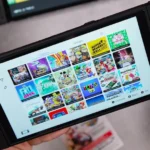
JBL Live 4 TWS earbuds represent a bold departure from the standard earbud-and-case formula that has dominated the market for years. These true wireless stereo earbuds ship with a charging case featuring an integrated touchscreen—a feature that lets you manage playback, adjust EQ settings, and switch connections without pulling out your phone.
Key Takeaways
- JBL Live 4 TWS include a touchscreen-equipped charging case for phone-free control.
- Case touchscreen manages media playback, EQ adjustments, and device connections.
- Active noise cancellation (ANC) is built into the earbuds.
- Case supports Auracast-enabled audio broadcasting to multiple devices.
- Positions JBL as a direct alternative to Apple AirPods and standard TWS competitors.
Why a Touchscreen Case Changes Everything
The touchscreen on the JBL Live 4 TWS charging case eliminates the friction of reaching for your phone every time you want to skip a track or tweak the sound. Instead of opening an app, you tap the case. This is not a gimmick—it is a genuine quality-of-life improvement for anyone who uses earbuds during commutes, workouts, or office sessions where phone access is inconvenient or impractical. The case becomes a control hub rather than just a battery pack.
Media playback control is the obvious use case, but JBL has extended the touchscreen’s functionality to EQ adjustments and connection management. Being able to switch between paired devices or fine-tune audio profile settings directly from the case means the earbuds themselves can stay smaller and lighter. This design philosophy prioritizes usability over minimalism—a refreshing stance in a market obsessed with shrinking everything down.
JBL Live 4 TWS vs. AirPods and the Competition
Apple AirPods rely entirely on your iPhone or connected device for control, forcing you to unlock your phone or use Siri voice commands. The JBL Live 4 TWS eliminate this dependency. While AirPods offer seamless ecosystem integration for Apple users, they lack any physical interface on the charging case itself. Standard TWS competitors from brands like Sony and Samsung also ship with conventional cases—touch-sensitive earbud stems or companion apps are the norm, not touchscreen cases.



JBL is not the first company to experiment with case-based controls, but the Live 4 TWS represent a more mature implementation of this approach. The touchscreen is responsive and intuitive, addressing a real gap in the market where users want faster, phone-free interaction. For Android users or anyone frustrated by app-dependent earbud management, this is a compelling differentiator.
Active Noise Cancellation and Auracast Support
Beyond the touchscreen case, the JBL Live 4 TWS include active noise cancellation, a feature now expected on premium earbuds. The ANC performs competently for commuting and office environments, though the real story here is the case’s ability to support Auracast-enabled audio broadcasting. This emerging standard allows the earbuds to receive audio from multiple compatible devices simultaneously—a feature that will matter more as Auracast adoption spreads across phones, tablets, and public spaces like airports and transit systems.



Auracast positions the Live 4 TWS as forward-looking rather than just a response to current market demands. JBL is betting on a future where personal audio devices can tap into broadcast audio streams, making these earbuds relevant beyond typical one-to-one Bluetooth pairing. Whether Auracast becomes mainstream or remains niche, the fact that JBL has built in this capability suggests confidence in the technology’s trajectory.
Who Should Buy the JBL Live 4 TWS?
The JBL Live 4 TWS appeal to users who spend significant time away from their phones or who are simply tired of app-dependent earbud management. If you commute by transit, work in environments where phone access is limited, or just prefer tactile control over voice commands or app navigation, the touchscreen case justifies the investment. They are also ideal for Android users who feel sidelined by Apple’s ecosystem dominance—here is a product that takes Android seriously as a primary platform.
If you are deeply embedded in the Apple ecosystem and value seamless integration above all else, AirPods remain the safer choice. But for anyone seeking an alternative that prioritizes control and independence from your phone, the JBL Live 4 TWS offer something genuinely different in a crowded market.
Can you control the JBL Live 4 TWS without the touchscreen case?
Yes. The earbuds themselves respond to touch controls, and you can also use a companion mobile app for full feature access. The touchscreen case is the standout feature—it simply offers a faster, more convenient way to manage playback and settings without reaching for your phone.



Do the JBL Live 4 TWS work with both Android and iOS?
Yes. The earbuds are compatible with both Android and iOS devices via standard Bluetooth pairing. The touchscreen case functions independently of your phone’s operating system, so Android and iPhone users get the same phone-free control experience.
What is Auracast and why does it matter for the JBL Live 4 TWS?
Auracast is an emerging Bluetooth audio broadcasting standard that allows compatible devices to transmit audio to multiple listeners simultaneously. The JBL Live 4 TWS support Auracast-enabled audio, meaning they can receive broadcast audio from compatible sources—useful in airports, public transit, and other shared spaces. As Auracast adoption grows, this feature will become more practical for everyday use.
The JBL Live 4 TWS prove that earbud innovation does not require reinventing the wheel—sometimes it just means rethinking the case. A touchscreen charging case sounds like a small thing, but it fundamentally changes how you interact with your earbuds. In a market where AirPods dominate through ecosystem lock-in and Samsung competes on specs, JBL has found a niche: earbuds for people who want control without compromise. That is a compelling enough reason to take a closer look.
Where to Buy
Edited by the All Things Geek team.
Source: T3