





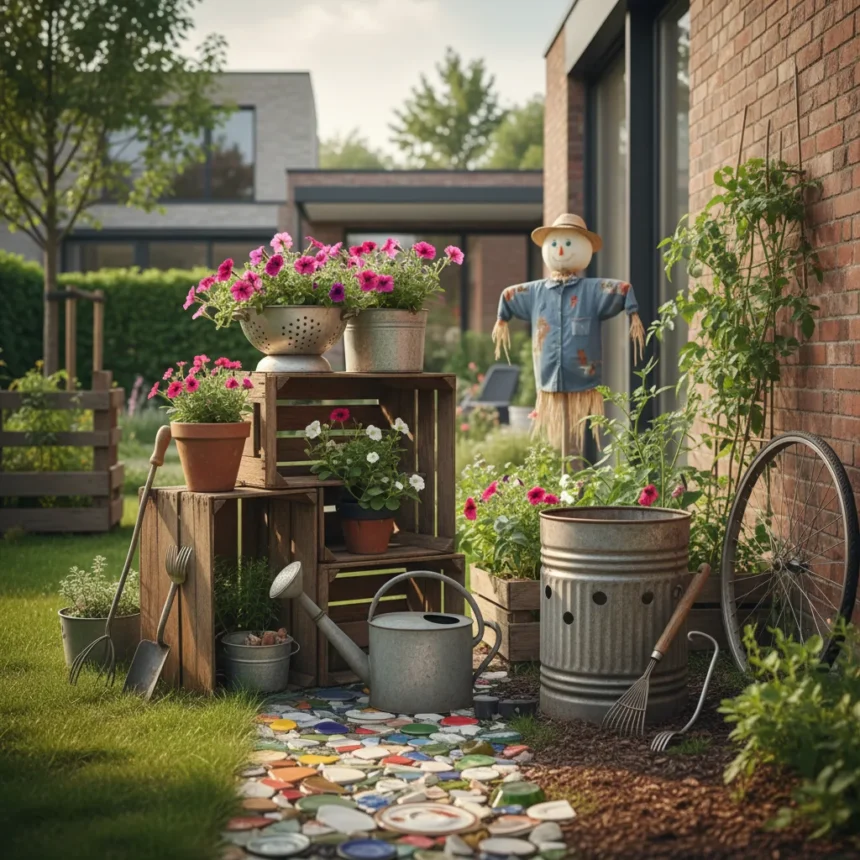
Repurposing household items yard projects have become increasingly popular among homeowners seeking cost-free landscaping solutions. The concept promises significant savings by transforming everyday objects into functional garden elements. However, specific guidance on which items work best and how to properly repurpose them remains scattered across various sources, leaving many gardeners uncertain about where to start.
Key Takeaways
- Repurposing household items yard work eliminates material costs entirely for budget-conscious gardeners
- Specific step-by-step instructions for repurposing projects are difficult to locate in comprehensive guides
- Safety considerations are essential when repurposing items not originally designed for outdoor use
- Success depends heavily on proper preparation and understanding structural integrity of repurposed materials
- Weather resistance and durability vary significantly depending on the original item’s composition
Why Repurposing Household Items Yard Projects Attract Gardeners
The appeal of repurposing household items yard improvements lies in the zero-cost approach combined with the satisfaction of reducing household waste. Gardeners face rising costs for traditional landscaping materials, making creative alternatives increasingly attractive. This trend reflects broader consumer interest in sustainability and budget-conscious home improvement.
Beyond financial incentives, repurposing projects encourage creative problem-solving. A broken wooden chair becomes a planter stand. Worn-out containers transform into drainage vessels. The concept appeals to DIY enthusiasts who enjoy the challenge of reimagining everyday objects. However, the gap between the concept’s appeal and practical execution remains significant for most homeowners attempting these projects without detailed instructions.
The Challenge: Finding Reliable Instructions for Repurposing Projects
Most articles promoting repurposing household items yard improvements lack step-by-step instructions, specific material requirements, or durability expectations. This creates a knowledge gap between the initial idea and successful implementation. Gardeners searching for guidance often encounter lists of suggested items without corresponding details about preparation, installation, or maintenance.


The absence of verified information creates practical problems. Without proper guidance, homeowners may attempt to repurpose items unsuitable for outdoor conditions. Untreated wood rots quickly. Certain plastics degrade under UV exposure. Metal components rust without proper coating. These failures discourage further DIY efforts and waste both time and the repurposed materials themselves.
Essential Safety Considerations Before Starting
Before repurposing any household item for yard use, inspect it thoroughly for hazards. Remove all sharp edges, splinters, or protruding fasteners. If the item previously contained chemicals or pesticides, ensure complete cleaning or avoid repurposing it entirely. Never repurpose items that held toxic substances without professional assessment of residue risks. Unplug any electrical items before disassembly or outdoor placement. Wear protective gloves when handling materials with unknown histories or sharp components.



Weather exposure creates additional concerns. Items not designed for outdoor use may deteriorate unpredictably, potentially creating hazards. Metal items require rust prevention treatment before yard placement. Wood items need weatherproofing to prevent rot and insect damage. Plastic items may become brittle or release particles under intense UV exposure. Understanding these limitations prevents costly mistakes and ensures safety for household members and pets who use the yard.
Comparing Repurposing to Traditional Yard Improvement Methods
Traditional yard improvements rely on materials specifically engineered for outdoor conditions. Commercial planters, raised beds, and garden structures undergo durability testing and come with warranty protection. Repurposed items offer zero cost but variable longevity. A repurposed container might last one season or five, depending on material quality and weatherproofing efforts. Commercial alternatives guarantee consistent performance across multiple seasons, though at significantly higher upfront cost.
The trade-off between cost and reliability shapes which approach suits different gardeners. Budget-conscious homeowners with flexible timelines may embrace repurposing despite uncertainty. Those prioritizing long-term results typically invest in purpose-built materials. Many gardeners adopt a hybrid approach, combining a few repurposed items with commercial elements to balance cost and durability.
Frequently Asked Questions
What household items work best for yard repurposing?
Common suggestions include wooden pallets for raised beds, plastic containers for planters, old tires for edging, and metal objects for garden accents. However, detailed success rates and specific preparation requirements for each item type remain unavailable in current comprehensive guides. Research the specific item’s material composition and weather resistance before committing to a project.



How long do repurposed items typically last outdoors?
Durability depends entirely on the original material, weatherproofing applied, and local climate conditions. Some repurposed items may function for several seasons, while others deteriorate within months. Without detailed case studies or long-term testing data, predicting lifespan remains speculative. Inspect repurposed items regularly and replace them when structural integrity declines.
Are there environmental benefits to repurposing household items for yard use?
Repurposing diverts household waste from landfills and reduces demand for new manufacturing, both environmentally positive outcomes. However, the environmental cost of treating and weatherproofing items not designed for outdoor exposure remains unclear. A balanced approach considers both waste reduction and the resources required to make items weather-resistant.
The trend toward repurposing household items yard projects reflects genuine consumer interest in cost-saving and sustainable practices. However, the lack of detailed, verified guidance creates a significant barrier to successful implementation. Gardeners pursuing these projects should approach them as experiments rather than guaranteed solutions, invest time in proper preparation and weatherproofing, and remain flexible about replacing items that underperform. The satisfaction of creative problem-solving often justifies the effort, even when results prove temporary.
Where to Buy
17% OFFFelco F2 Pruning Shears$71$86shop now | Amazing StuffGarden Gloves$9.99shop now | 11% OFFGrampa's Weeder$39$44shop now
Edited by the All Things Geek team.
Source: Tom's Guide




