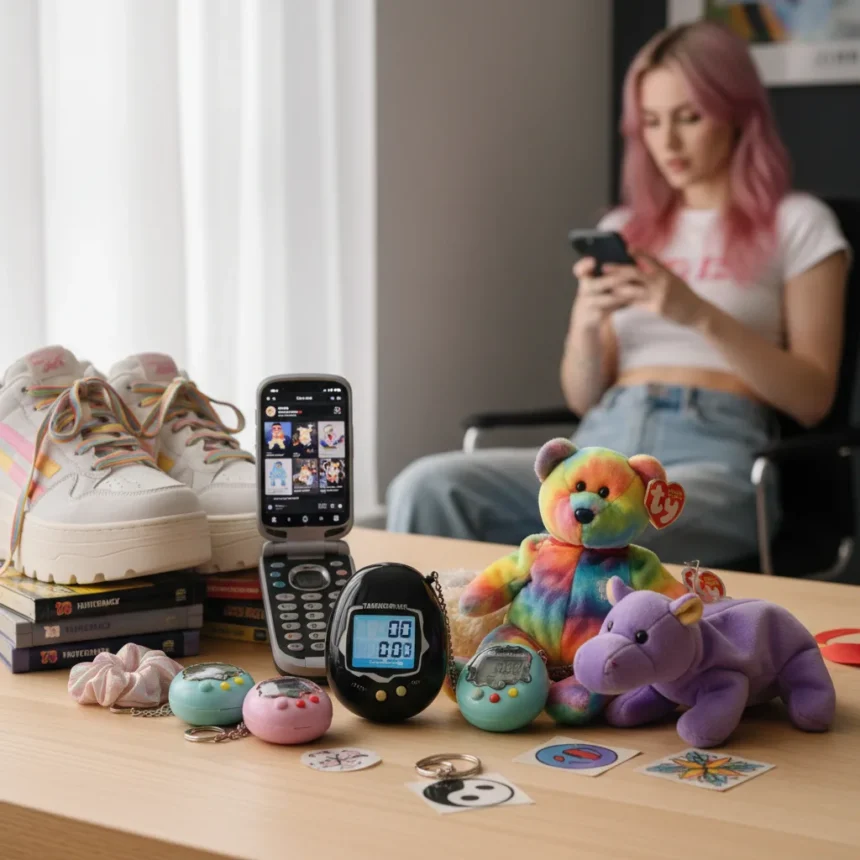
90s nostalgia trends are flooding social media, and Gen Z is leading the charge. From pixelated virtual pets to collectible cards, the decade that gave us dial-up internet and frosted tips is experiencing a full-scale cultural resurrection—and it is not just a passing phase.
Key Takeaways
- Tamagotchi, the 1996 digital pet, has sold over 91 million units globally and is now surging with Gen Z via TikTok.
- Nine iconic 90s trends defined the era: Tamagotchi, Furbies, Pokémon cards, Beanie Babies, Pogs, Silly Putty, Skip-Its, Magic Eye books, and slap bracelets.
- Modern Tamagotchi Uni ($50–$60) and Pix ($45–$55) models feature app connectivity and AR, bridging retro appeal with contemporary tech.
- Tamagotchi content on TikTok has accumulated over 500 million views, driven by unboxing videos and virtual pet-raising challenges.
- The broader 90s revival reflects wider retro tech trends, including wired earbuds and analog formats resurging in 2026.
The Nine Trends That Defined 1990s Pop Culture
The 1990s produced a specific breed of collectible and toy that captured childhood imagination in ways that digital entertainment alone could never replicate. Nine distinct trends emerged during this decade, each creating its own fervent fan base and market frenzy. These were not just products—they were cultural moments that defined an entire generation’s relationship with play, collecting, and social status among peers.
Tamagotchi launched in 1996 as a handheld digital pet requiring constant feeding, cleaning, and care. Furbies arrived in 1998 as bilingual robotic creatures that claimed to learn English as they interacted with owners. Pokémon Trading Cards debuted in 1996, sparking a collectible card game phenomenon that persists today. Beanie Babies, introduced by Ty Inc. in 1993, became a speculative investment craze with rare editions commanding steep resale prices. Pogs—stacked milk caps played as a flipping game—dominated schoolyards in the mid-1990s. Silly Putty, despite originating in the 1940s, remained a 90s staple for copying comic strips and bouncing around classrooms. Skip-Its were weighted hula hoops tethered to the ankle for jumping games. Magic Eye books, peaking in 1993, promised hidden 3D images visible only through special viewing techniques. Slap bracelets—curved metal bands that snapped onto wrists—completed the list as a simple but ubiquitous accessory.
Why Tamagotchi Is Winning the 90s Nostalgia Comeback
Of all nine trends, Tamagotchi has emerged as the clear victor in the Gen Z nostalgia race. The original device sold over 91 million units worldwide by 2023, establishing a foundation of cultural recognition that newer competitors simply cannot match. Modern revivals like Tamagotchi Uni and Tamagotchi Pix have reignited interest by combining retro aesthetics with contemporary features—app connectivity, augmented reality, and social features that appeal to digital natives.

Tamagotchi’s resurgence is primarily driven by TikTok, where content tagged #Tamagotchi has accumulated over 500 million views. Gen Z creators film unboxing videos, document their pet-raising journeys, and share care tips, transforming a solitary childhood toy into a social media phenomenon. The device’s simplicity—feed your digital pet, clean up after it, watch it evolve—translates perfectly into short-form video content that algorithms favor. Unlike Beanie Babies or Pokémon cards, which require passive collecting, Tamagotchi demands active daily engagement, creating a continuous content stream.
The modern Tamagotchi Uni retails for $50–$60, while the Tamagotchi Pix model costs $45–$55 and connects to a smartphone app for photo integration. Original 90s reprints sell for $20–$30, making entry points accessible across price ranges. This pricing strategy has allowed Bandai to capture both nostalgic adults and curious Gen Z consumers discovering the toy for the first time.



The Broader Context: Retro Tech Resurging in 2026
Tamagotchi’s comeback is not isolated. The 90s nostalgia trend sits within a larger cultural movement toward analog and retro technology. Wired earbuds and headphones are making a comeback in 2026, reversing years of wireless dominance. CD players and vinyl records continue gaining shelf space in retail environments. This suggests that Gen Z is not simply chasing their parents’ childhoods—they are actively rejecting the always-connected, algorithmically-mediated digital experience in favor of tangible, friction-filled interactions.
Tamagotchi epitomizes this shift. The device demands attention without notifications. It cannot be optimized or hacked. It simply exists, requires care, and occasionally dies if neglected. In an era of infinite digital choice and algorithmic overwhelm, a toy that forces you to choose between feeding a pixel and scrolling TikTok offers something genuinely rare: intentional simplicity.
Which Other 90s Trends Could Make a Comeback?
Beanie Babies remain collectible but lack Tamagotchi’s interactive appeal. Pokémon cards have maintained steady collector interest, but the market is mature and exclusionary for newcomers. Pogs, Skip-Its, and slap bracelets seem unlikely to resurge—they lack the narrative depth and social media mechanics that drive modern trends. Magic Eye books and Silly Putty occupy nostalgic niches but have no clear path to mainstream revival.
Furbies present the most intriguing alternative. The talking robotic pets were universally mocked in retrospect, yet that very absurdity could fuel an ironic revival. A modern Furby with updated AI and social features could theoretically compete with Tamagotchi, but no such product currently exists in the mainstream market. For now, Tamagotchi stands alone as the 90s nostalgia trend that successfully bridged past and present.



Is Tamagotchi’s comeback just nostalgia, or is it here to stay?
Tamagotchi’s sustained engagement on TikTok and consistent product releases suggest this is more than a fleeting trend. The device taps into genuine psychological needs—the desire for responsibility, the satisfaction of nurturing something, the appeal of a simple feedback loop. Unlike fashion trends or dance crazes, Tamagotchi offers functional value. You are not just wearing or watching it; you are actively caring for it.
Can you still buy original 90s Tamagotchi devices?
Yes. Original reprints of the 1996 Tamagotchi sell for $20–$30 on retro retailers and secondary markets. Modern versions like Tamagotchi Uni ($50–$60) and Tamagotchi Pix ($45–$55) are widely available through major retailers and Bandai’s official site, with global availability. The choice depends on whether you prioritize authenticity or features.
Why don’t other 90s toys have the same comeback potential as Tamagotchi?
Tamagotchi’s advantage lies in its interactive, ongoing gameplay. Beanie Babies are static collectibles requiring no engagement beyond owning them. Pokémon cards demand expertise and financial investment. Pogs and Skip-Its offer one-time play value. Tamagotchi, by contrast, creates a daily ritual that naturally generates social media content and peer discussion. It is the only 90s toy that remains functionally relevant in the age of smartphones.
The 90s nostalgia wave will likely continue, but Tamagotchi has already claimed the crown. Its combination of retro charm, modern features, and built-in social media appeal positions it as the defining toy of Gen Z’s backward-looking moment. Whether other trends follow remains to be seen, but for now, Tamagotchi proves that sometimes the simplest ideas—a digital pet that needs feeding—transcend decades of technological change.
Where to Buy
Funny Guy MugsCrochet Hacky Sacks$23.95shop now | FiterocWeighted Fitness Hoop for Adults$33.99shop now | DuncanLED Light-Up Yo-Yo$14.99shop now | DPKLADSoccer-themed Hacky Sacks$6.29shop now
Edited by the All Things Geek team.
Source: Tom's Guide