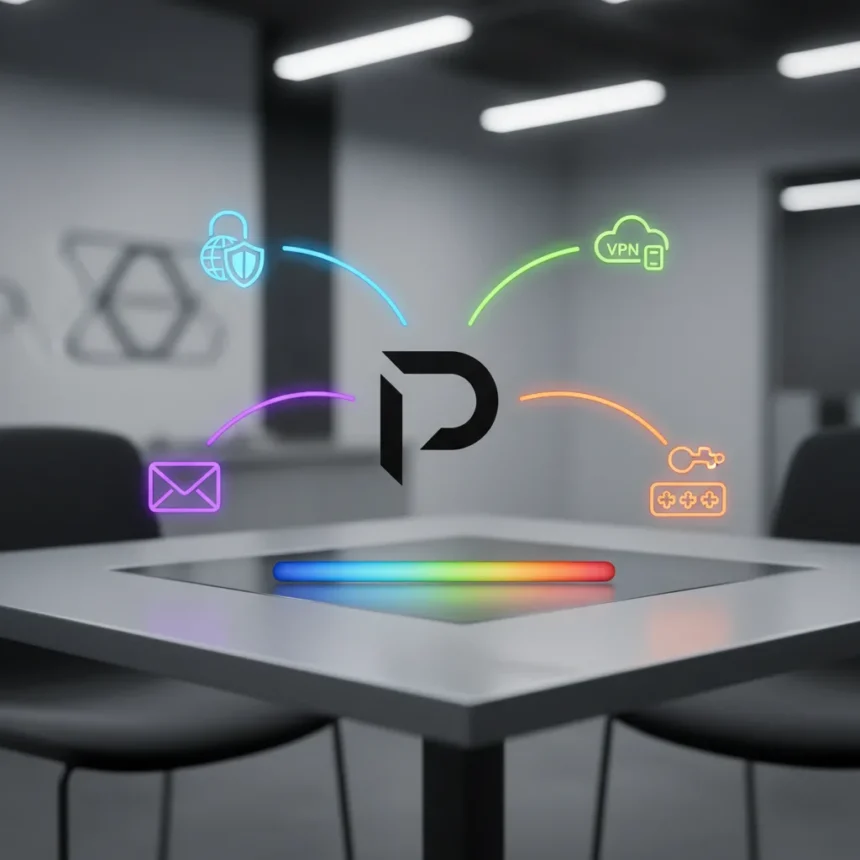
Proton Unlimited bundle is a privacy-focused subscription service combining encrypted email, a VPN client, cloud storage, and a password manager into a single integrated platform, all designed around zero-knowledge encryption and ad-free operation.
Key Takeaways
- Proton Unlimited bundles four privacy tools—email, VPN, storage, and password manager—in one subscription
- All components use end-to-end encryption with zero-knowledge architecture
- No ads, no tracking, no data harvesting across any bundled service
- Integrated ecosystem means seamless switching between email, secure messaging, and VPN protection
- Standalone tools available separately if you only need specific features
What Makes Proton Unlimited Stand Out
The Proton Unlimited bundle addresses a real problem: most privacy-conscious users end up juggling separate vendors for email, VPN, storage, and passwords, each adding cost and complexity. Proton’s approach consolidates these into one ecosystem where every component shares the same encryption foundation. You don’t get a VPN bolted onto an email service—you get four tools built on the same zero-knowledge infrastructure, meaning Proton itself cannot access your data even if compelled.
The email component handles encrypted messaging with end-to-end encryption for communications with other Proton users, plus PGP support for external recipients. Cloud storage arrives with client-side encryption, so files are encrypted before they leave your device. The VPN masks your IP address and encrypts traffic, while the password manager stores credentials in encrypted vaults. This isn’t a collection of compromises; it’s a coherent privacy strategy where each tool reinforces the others.
Unlike competitors who treat privacy features as add-ons to free or ad-supported services, Proton runs on a paid subscription model with no advertising layer. That changes the incentive structure entirely. There’s no temptation to monetize user data because the revenue comes from subscriptions, not ad networks.


Proton Unlimited vs. Piecing Together Alternatives
The bundling advantage becomes obvious when you compare total cost and friction. Building an equivalent setup from separate vendors typically means paying for Tutanota or ProtonMail for email, ExpressVPN or Mullvad for VPN, Sync.com or Tresorit for encrypted storage, and Bitwarden or 1Password for passwords. That’s four subscriptions, four separate apps, four different interfaces, and four separate privacy policies to trust. Proton Unlimited consolidates this into one bill and one unified experience.
The integration matters practically too. If you’re composing an email and need to attach a large file, you can pull it directly from Proton Drive without leaving the email interface. Your passwords sync across all Proton apps automatically. The VPN activates with a single toggle, protecting all traffic from your device regardless of which Proton service you’re using. This seamlessness is hard to replicate when tools come from different vendors with different philosophies and release cycles.



For users who only need one or two components—say, just encrypted email or just a VPN—Proton also sells these separately, so you’re not forced into the bundle. But if you want multiple privacy tools, bundling saves money and eliminates the overhead of managing separate accounts and logins.
Is Proton Unlimited Right for You?
The bundle makes the most sense for users who prioritize privacy across multiple categories and want a single trusted vendor rather than a patchwork of services. If you’re already using Gmail with Google Drive and Chrome’s password sync, switching to Proton requires accepting some friction—you’ll need to migrate email, update contacts, and change how you store files. That’s a real cost, and it’s worth being honest about it.
For professionals handling sensitive communications, journalists, activists, or anyone in a high-surveillance environment, the encryption guarantees justify the switch. For casual users who don’t expect to be targeted, the privacy features may feel like overkill. The right choice depends on your threat model, not on whether privacy is theoretically good.
The ad-free experience is worth noting separately. Every component of Proton Unlimited operates without tracking pixels, behavioral profiling, or ad networks. This means faster load times, less clutter, and no algorithmic manipulation. If you’ve grown tired of ads following you across the web, this alone justifies trying the service.



Frequently Asked Questions
Can I use Proton Unlimited on multiple devices?
Yes. Proton Unlimited works across desktop, mobile, and web browsers. Your email, passwords, and vault sync across all devices automatically. The VPN client runs on Windows, macOS, iOS, and Android, allowing you to protect multiple devices under one subscription.
What happens if Proton gets hacked or seized by authorities?
Because Proton uses zero-knowledge encryption, even Proton cannot decrypt your data without your password. If authorities seize Proton’s servers, they get encrypted data they cannot read. This architectural choice means your security doesn’t depend on trusting Proton’s infrastructure—it depends on the strength of your password and the integrity of the encryption algorithm itself.
Is Proton Unlimited cheaper than buying each tool separately?
In most cases, yes. Bundling reduces the per-tool cost compared to standalone subscriptions for all four components, though exact pricing varies by region and promotional periods. If you only need one or two tools, buying them separately may be cheaper than the bundle.
Proton Unlimited works best for users who want privacy across email, browsing, storage, and passwords without the friction of managing multiple vendors. The bundle removes the temptation to compromise on one tool to save money on another. Whether it’s the right choice depends on how seriously you take privacy and how much switching friction you’re willing to accept. For anyone already convinced they need encrypted email and a VPN, consolidating into Proton’s ecosystem eliminates redundant costs and simplifies your security posture.
Edited by the All Things Geek team.
Source: TechRadar