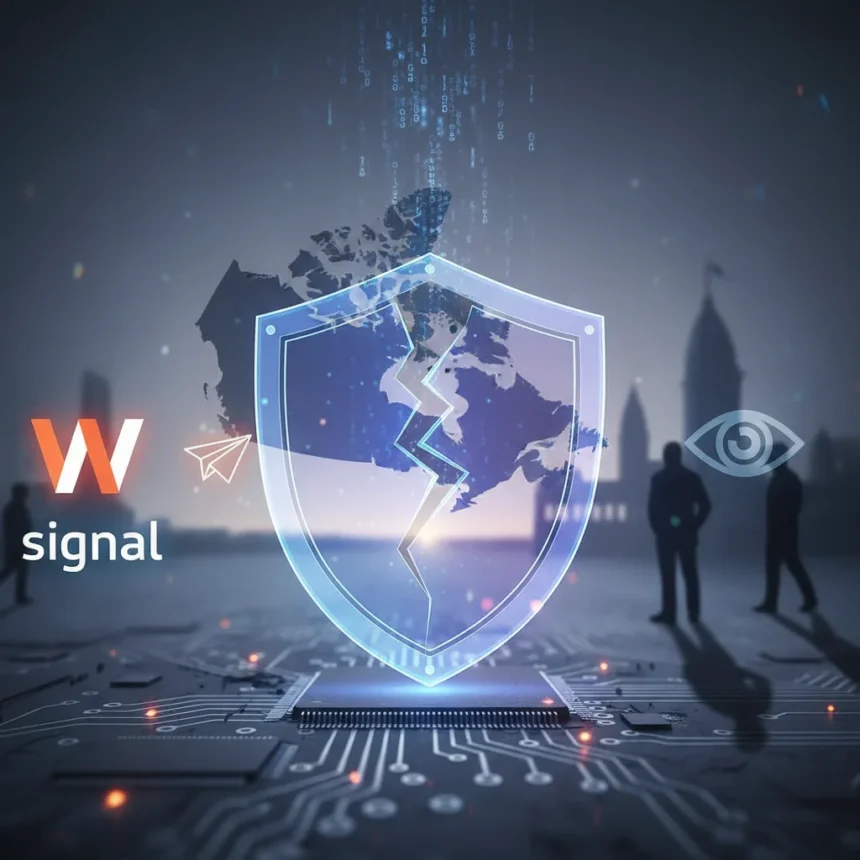
Bill C-22 Canada privacy concerns have escalated sharply as Windscribe, a Canada-based VPN provider, joined Signal in threatening to abandon the country if the controversial surveillance bill becomes law. The proposed legislation would grant authorities new powers to demand access to encrypted communications and user data, forcing privacy-focused tech companies into an impossible choice: comply with backdoor requirements or relocate their operations entirely.
Key Takeaways
- Windscribe and Signal both threaten to exit Canada if Bill C-22 passes into law.
- The bill would create new lawful access powers affecting encrypted communications and user privacy.
- Privacy-focused tech companies argue the legislation threatens the core mission of protecting user data.
- The standoff mirrors broader global tensions between government surveillance demands and encryption advocates.
- Multiple tech firms have now publicly warned of business consequences tied to the bill’s passage.
What Bill C-22 Actually Proposes
Bill C-22 is Canada’s latest attempt at lawful access legislation, designed to give law enforcement and intelligence agencies new tools to access encrypted communications during criminal investigations. The bill represents a repackaging of earlier surveillance proposals that have faced sustained opposition from privacy advocates, security researchers, and tech companies operating in Canada. The core mechanism remains controversial: it would require technology providers to build compliance pathways into their systems, effectively weakening the encryption that protects user communications from unauthorized access.
The legislation frames these access powers as necessary for law enforcement and national security, but privacy advocates and tech companies argue the bill conflates two incompatible goals. You cannot simultaneously guarantee strong encryption to all users while maintaining backdoors for government access. Any deliberate weakness in a system’s security architecture becomes a vulnerability that bad actors can exploit. This fundamental technical reality underpins the entire opposition movement, including Windscribe’s warning.
Why Windscribe and Signal Are Serious About Leaving
Windscribe operates its VPN service from Canadian headquarters, and Signal provides encrypted messaging to millions globally, including Canadian users. Both companies have built their entire business model around the principle that user privacy is non-negotiable. Windscribe argues that Bill C-22 threatens the entire essence of user privacy by forcing providers to weaken encryption or comply with surveillance demands. For companies built on privacy guarantees, such legislation makes it impossible to operate ethically within the jurisdiction.


Signal’s position is equally uncompromising. The encrypted messaging platform has stated it would rather pull out of Canada entirely than weaken the privacy protections that define its service. This is not posturing—Signal has demonstrated this commitment in other markets where governments demanded access. For Windscribe, relocation would mean moving its infrastructure and corporate structure to a jurisdiction without lawful access requirements, a costly but feasible option for a privacy-focused VPN provider. The threat carries real weight because both companies have shown they will sacrifice market access rather than compromise user privacy.
The Broader Privacy Backlash Against Bill C-22
Windscribe and Signal are not isolated voices. The Electronic Frontier Foundation, security researchers, and tech policy experts have all raised alarms about Bill C-22’s implications for privacy, security, and innovation in Canada. The bill represents a repackaged version of earlier surveillance proposals that failed to gain traction, suggesting the government is attempting to resurrect controversial legislation under a slightly different framing. This pattern frustrates privacy advocates who argue the government is ignoring sustained, credible opposition from the tech community and civil society.



The stakes extend beyond individual companies. If Canada passes Bill C-22, other privacy-focused services may follow Windscribe and Signal out the door. This would effectively partition Canada’s internet from global encryption infrastructure, forcing Canadian users to rely on weaker or government-compliant alternatives. The business consequences are real: companies would lose revenue, Canadian tech talent would migrate to jurisdictions with stronger privacy protections, and Canada’s reputation as a tech-friendly jurisdiction would suffer. These downstream effects explain why the threat of corporate exodus is more than rhetorical—it reflects genuine structural incompatibility between the bill’s requirements and the business model of privacy-preserving technology.
How Bill C-22 Differs From Global Encryption Debates
Canada’s struggle over lawful access mirrors similar battles in the United States, European Union, and United Kingdom, where governments have pushed for backdoor access to encrypted systems. What makes the Canadian case distinctive is the willingness of major tech companies to explicitly threaten departure rather than negotiate. Most companies in other jurisdictions have sought compromise positions or lobbied for exemptions. Windscribe and Signal’s approach is more absolutist: the bill is incompatible with their core mission, so operating under it is not an option.
This stance reflects a broader shift in tech company positioning around privacy. Rather than treating privacy as a feature to be negotiated away, companies like Signal and Windscribe treat it as a fundamental principle. The threat to leave Canada sends a signal to other governments considering similar legislation: privacy-first companies will not compromise, and attempting to force them to do so will result in market exit and loss of local expertise.
What Happens If Bill C-22 Passes?
If the legislation becomes law without major amendments, Windscribe and Signal would face a genuine dilemma. Both have stated they would rather leave Canada than comply with backdoor requirements. Windscribe would need to relocate its headquarters and infrastructure to a privacy-friendly jurisdiction, a process that would take months and cost significant resources. Signal, which operates globally, would simply geofence Canadian users out of its service or cease operations in the country entirely. Either outcome would be disruptive for Canadian users and embarrassing for the government, which would be seen as driving out legitimate privacy-focused companies.



The political cost of such an exodus might be substantial enough to give policymakers pause. Public backlash against losing Signal and Windscribe could reshape the legislative debate, especially if users mobilize to oppose the bill. Alternatively, the government might proceed regardless, betting that the privacy concerns are overblown or that companies will ultimately comply despite their threats. This is where the standoff remains unresolved: both sides have stated their positions clearly, but the outcome depends on political will and public opinion.
Could There Be a Compromise?
In theory, yes, but the technical and philosophical gaps are substantial. A compromise might involve narrow carve-outs for specific crimes, exemptions for certain types of communications, or requirements for judicial oversight rather than warrantless access. However, Windscribe and Signal have suggested that any backdoor mechanism—no matter how narrow—is unacceptable because it weakens the system for all users. This absolutist position leaves little room for negotiation, though it does reflect the genuine technical reality that encryption either works for everyone or works for no one.
The more likely outcome is that the bill either passes with companies following through on their exit threats, or the bill stalls due to sustained opposition and the political cost of losing major tech companies. Canada’s government faces a choice between privacy-focused governance and surveillance powers, and so far, the tech community has made clear which way it will go if forced to choose.
Is Windscribe really going to leave Canada?
Windscribe has stated it may relocate its headquarters or exit the Canadian market if Bill C-22 becomes law. Whether the company follows through depends on whether the bill passes and in what form. If the legislation includes exemptions or narrower language, Windscribe might stay. If the bill passes with broad backdoor requirements, Windscribe’s threat to leave is credible given the company’s stated commitment to user privacy.
What does Bill C-22 actually require companies to do?
Bill C-22 would grant law enforcement and intelligence agencies new powers to demand access to encrypted communications and user data. The exact mechanisms remain subject to legislative debate, but the core proposal involves requiring technology providers to build compliance pathways into their systems, effectively creating backdoors for authorized government access. Privacy companies argue this is incompatible with strong encryption.
Why do Signal and Windscribe care about a Canadian law?
Both companies operate in Canada and serve Canadian users. Bill C-22 would apply to any service operating within Canadian jurisdiction, forcing them to either comply with backdoor requirements or stop serving Canadian users. For privacy-focused companies, complying would undermine their core mission of protecting user privacy, making exit the only ethical option.
The standoff between Bill C-22 and Canada’s privacy tech companies represents a critical moment in the global encryption debate. Windscribe and Signal have drawn a line: they will not build backdoors, and they will not operate under regimes that demand them. If Canada passes the bill, it risks losing legitimate privacy-focused companies and signaling to the tech community that the country is hostile to privacy innovation. The outcome will likely influence how other governments approach similar legislation, making this a test case for the future of encryption policy worldwide.
Edited by the All Things Geek team.
Source: TechRadar