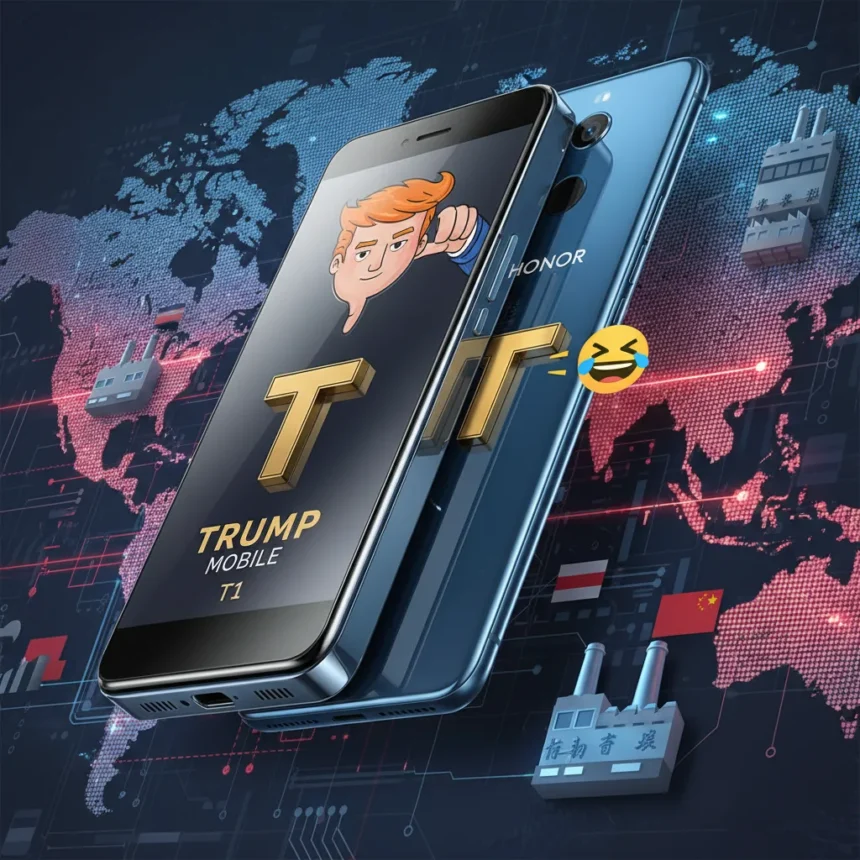
Honor’s recent social media jab at the Trump Mobile T1 Chinese manufacturing story cuts to the heart of a contradiction reshaping the global smartphone market: how do you sell patriotic hardware when the supply chain runs through Beijing?
Key Takeaways
- Honor took a playful social media shot at the Trump Mobile T1, implying it is a Chinese-made gold phone.
- The jibe highlights the tension between nationalist branding and manufacturing realities in consumer electronics.
- Trump Mobile T1 Chinese manufacturing represents a wider industry problem: sourcing conflicts between political messaging and production logistics.
- Honor’s post signals how competitors exploit the contradiction when rivals claim American values but offshore production.
- The exchange underscores growing skepticism toward “made in America” claims in premium smartphone markets.
Why Honor’s Jab Matters Right Now
Honor did not invent the contradiction—it simply made it visible. When a phone is marketed with nationalist branding but manufactured abroad, competitors have an easy target. Honor’s playful dig at Trump Mobile T1 Chinese manufacturing is not really about gold plating or design aesthetics. It is about exposing the gap between political promise and industrial reality. In an era where supply chain nationalism has become a selling point, that gap is widening and attracting more scrutiny.
The timing is significant. Smartphone makers increasingly use manufacturing location as a brand differentiator. Some highlight local assembly, others tout advanced factories in allied nations. The Trump Mobile T1 Chinese manufacturing angle creates a narrative vulnerability that Honor, as a Chinese company, can exploit without contradiction. Honor manufactures in China and sells globally—there is no pretense to undermine.
The Broader Geopolitical Pattern
Honor’s social media post taps into a real market anxiety. Consumers in Western markets increasingly care where their devices are made, particularly in premium segments where price justifies scrutiny. The Trump Mobile T1 Chinese manufacturing story becomes problematic precisely because it conflicts with the brand positioning many buyers expect. A device marketed around American values but produced in China creates cognitive dissonance that competitors can weaponize.


This is not unique to Trump Mobile. Many Western tech brands face the same tension. The difference is scale and visibility. A playful social media jab from Honor—a company with global reach and a growing reputation for quality—amplifies the contradiction in ways that reach millions of potential buyers. The jibe works because it contains a kernel of truth that audiences already suspect.
What This Reveals About Tech Marketing
Honor’s move signals a shift in how tech companies compete on values rather than specs alone. For years, smartphone marketing focused on camera megapixels, processor speed, and battery life. Now, manufacturing origin, environmental practices, and geopolitical alignment matter as much as raw performance. The Trump Mobile T1 Chinese manufacturing fact becomes a liability because it undermines the brand’s core narrative.


The playful tone of Honor’s post is strategic. By framing it as a lighthearted jab rather than a serious accusation, Honor avoids appearing aggressive while still planting doubt in consumer minds. This is sophisticated brand warfare. A competitor that directly attacks another product’s manufacturing practices risks looking desperate. A playful social media post that lets the audience draw its own conclusions is far more effective and harder to dismiss as jealousy.
Can Brands Escape This Trap?
For smartphone makers caught between nationalist branding and global supply chains, the options are limited. Full reshoring is economically unfeasible for most premium devices. Partial local assembly satisfies some regulatory requirements but does not eliminate the core contradiction. Transparency about sourcing might help, but it requires admitting that patriotic messaging and manufacturing realities do not align—a confession few brands are willing to make publicly.
Honor’s jab suggests that competitors will increasingly exploit this vulnerability. As consumers become more conscious of where their devices originate, brands cannot ignore manufacturing origin in their marketing calculus. The Trump Mobile T1 Chinese manufacturing story will not disappear because the underlying fact cannot change easily. What changes is how visible that fact becomes and how much it undermines brand positioning.
Is the Trump Mobile T1 actually made in China?
The Trump Mobile T1 Chinese manufacturing claim comes from Honor’s social media post, which implied the device is produced in China despite its nationalist branding. Honor did not cite specific supply chain documentation, but the jab reflects industry knowledge that most premium smartphones, regardless of brand, rely on Chinese manufacturing or assembly.



Why would Honor mock a competitor’s manufacturing location?
Honor highlighted Trump Mobile T1 Chinese manufacturing to expose a contradiction between the device’s patriotic positioning and its actual production origin. By making the contradiction visible, Honor creates doubt about the brand’s authenticity and appeals to consumers who care about where their devices are made.
Does manufacturing location actually matter to smartphone buyers?
For a growing segment of consumers, yes. Premium smartphone buyers increasingly factor in supply chain ethics, geopolitical alignment, and manufacturing origin when making purchasing decisions. A device marketed with nationalist values but made elsewhere creates skepticism that competitors can exploit, as Honor’s post demonstrates.
Honor’s playful jab at the Trump Mobile T1 Chinese manufacturing story reveals something important about modern tech competition: the battle for consumer trust now happens as much in the supply chain as in the spec sheet. When brand promise and manufacturing reality diverge, someone will point it out. The question is no longer whether the contradiction exists, but how loudly competitors will broadcast it.
Edited by the All Things Geek team.
Source: TechRadar