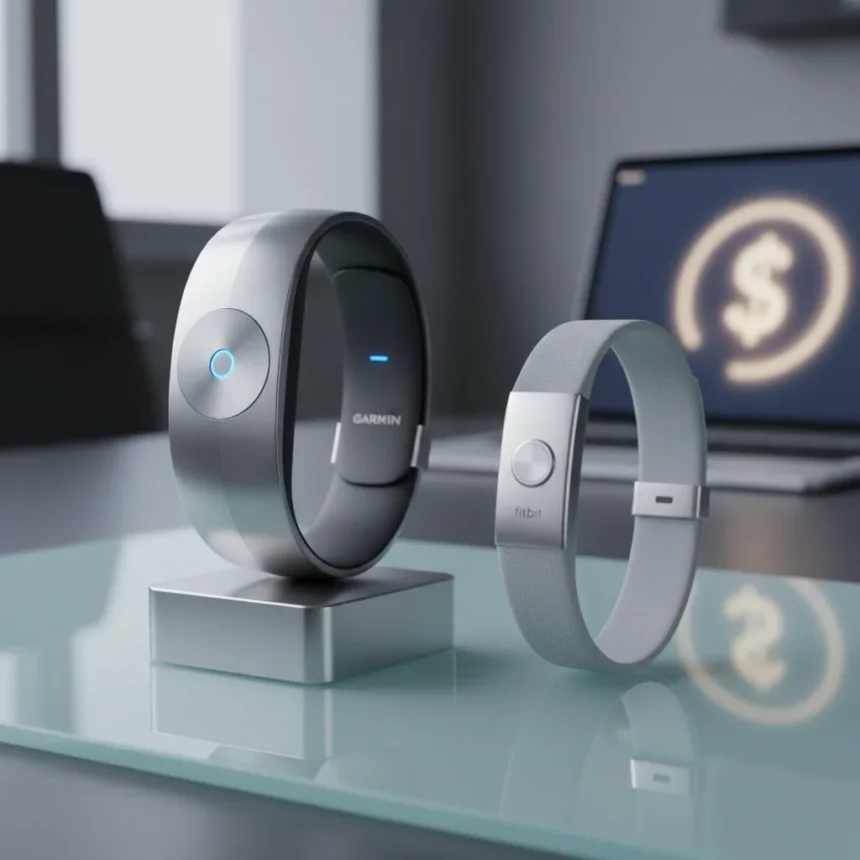
Garmin’s rumored screen-less fitness tracker could arrive as early as spring or summer 2026, and if leaked pricing proves accurate, it will be a starkly different value proposition than its competitors. The device, identified as Cirqa in FCC filings and trademark applications, is expected to cost around $510, making it roughly five times the starting price of Fitbit Air and positioning Garmin as a premium entrant in the growing screen-less wearables category.
Key Takeaways
- Garmin’s rumored Cirqa screen-less tracker could launch at approximately $510, based on leaked pricing information.
- Fitbit Air starts at around $100, making Garmin’s device significantly more expensive at five times the price.
- The Cirqa is expected to be subscription-free, unlike Whoop, which charges recurring fees for its service.
- Garmin already offers extensive fitness tracking for free on its existing watches, raising questions about the premium price justification.
- An FCC filing for the Cirqa device adds credibility to the rumor, though no official launch date has been confirmed.
The Price Problem That Garmin Must Solve
A screen-less fitness tracker at $510 sounds objectively expensive when Fitbit Air delivers similar core functionality starting at around $100. That five-fold price difference demands explanation, and Garmin‘s track record with free fitness tracking on its existing watches makes the premium even harder to justify. Garmin already provides most wellness metrics—heart rate, sleep tracking, training load, recovery status—at no cost to users of its smartwatches and fitness devices. Adding a $6.99 monthly Garmin Connect+ subscription unlocks premium features like nutrition tracking and an AI training coach, but the base experience is generous. For Cirqa to command $510, Garmin would need to offer something fundamentally different from what its current ecosystem provides.
The subscription-free model is Cirqa’s strongest selling point. Whoop, the market leader in screen-less tracking, operates entirely on recurring fees—users pay for access to proprietary algorithms and personalized coaching. If Garmin can deliver comparable insights without forcing a monthly commitment, that competitive advantage alone might justify a higher upfront cost to consumers tired of subscription fatigue. However, $510 is a steep ask for a device with no screen, limited user interface, and no proven track record in this specific form factor.
How Garmin Cirqa Stacks Against Fitbit Air and Whoop
The screen-less fitness tracker market is fragmenting into distinct tiers. Fitbit Air represents the affordable entry point, Whoop occupies the premium subscription space, and Garmin’s Cirqa appears positioned as a premium one-time purchase. This creates an unusual triangle: Fitbit Air is accessible but lacks Whoop’s proprietary algorithms; Whoop is powerful but demands recurring payment; Cirqa could be powerful and free but costs nearly as much as buying five Fitbit Air units upfront. The logic only works if Garmin’s tracking accuracy, battery life, or ecosystem integration offers measurable advantages over both competitors. Garmin’s strength in endurance sports and multi-sport tracking gives it credibility here—the company understands athlete needs better than most consumer brands—but that expertise alone may not bridge a $410 price gap against Fitbit Air.


Whoop’s subscription model has frustrated many users who resent paying $30 per month for insights they could theoretically get elsewhere. A subscription-free alternative from Garmin directly addresses this pain point, which explains why the rumor has generated interest despite the high price. However, Garmin would be betting that users value brand trust and ecosystem integration enough to pay a premium upfront rather than spread costs over time through Whoop’s subscription.
Garmin’s Free Fitness Tracking Advantage Works Against Cirqa
Here lies Garmin’s core problem: the company has trained its customer base to expect comprehensive fitness tracking at no extra cost. Garmin watches already deliver training load, recovery status, sleep analysis, and detailed workout metrics without premium subscriptions. Cirqa would need to justify its $510 price by offering something those watches cannot—perhaps superior battery life, a smaller form factor for all-day wear comfort, or proprietary algorithms unavailable elsewhere. Generic fitness tracking, no matter how accurate, will not command that price when Garmin’s own ecosystem already provides it for free. The company’s existing strength in the wearables market becomes a liability if Cirqa cannot clearly differentiate itself.



Garmin Connect+, priced at $6.99 monthly, shows that Garmin understands the subscription resistance among its users. The optional tier keeps premium features behind a paywall while protecting the free experience. If Cirqa is truly subscription-free, Garmin is making a bold bet that the all-in-one, no-recurring-fees pitch outweighs the price shock. That is a risky gamble in a market where Fitbit Air proves you can deliver solid tracking for $100.
The FCC Filing Adds Credibility—But Not Certainty
The appearance of Cirqa in FCC filings and trademark applications gives the rumor more weight than typical leaks. Regulatory filings are harder to fabricate than anonymous pricing tips, and they suggest Garmin is serious about bringing a screen-less device to market. The spring or summer 2026 launch window aligns with typical product development timelines, making the rumor plausible. However, FCC approval does not guarantee a product will launch as planned, at the rumored price, or at all. Garmin could cancel, delay, or significantly revise Cirqa before release. The leaked $510 price could be an early estimate that changes during development. Until Garmin makes an official announcement, treat this as credible speculation, not confirmed fact.
Why Garmin Is Entering the Screen-Less Market Now
The screen-less fitness tracker category is growing because users increasingly prefer passive monitoring over constant interaction. A device you wear and forget about, which silently collects data and delivers insights through a companion app, appeals to people fatigued by smartwatch notifications and screen time. Garmin’s entry signals that the market has matured enough to support premium players beyond Whoop. Google is also rumored to be developing a screen-less Fitbit-branded wearable, suggesting multiple tech giants see opportunity here. Garmin’s move makes strategic sense—the company has the expertise, the brand trust, and the ecosystem to compete. The question is whether the company can price Cirqa competitively while maintaining margins on a niche product.
Can Garmin Justify $510 for a Screen-Less Tracker?
Garmin needs to justify that price with something much more than just better fitness tracking. Superior accuracy alone will not move the needle when Fitbit Air is already highly accurate and costs one-fifth as much. Garmin could differentiate through exceptional battery life—if Cirqa lasts two or three weeks per charge while Whoop manages only five to seven days, that longevity becomes a selling point. Integration with Garmin’s broader ecosystem, seamless data sync with existing Garmin devices, or exclusive training algorithms could also justify the premium. However, none of these advantages are confirmed, and Garmin has not publicly discussed Cirqa at all. The company must make a compelling case during launch, or Cirqa risks becoming an expensive niche product for Garmin superfans rather than a Whoop killer.



Is Garmin’s screen-less fitness tracker launching in 2026?
The rumored spring or summer 2026 launch window is based on FCC filing analysis and trademark applications, not an official Garmin announcement. While regulatory approvals suggest the device is real and in development, Garmin has not confirmed a launch date. Product timelines frequently slip, and companies sometimes file FCC paperwork for devices that never reach consumers. Treat 2026 as a plausible estimate, not a guarantee.
How much will Garmin’s screen-less tracker cost compared to Whoop?
Garmin’s Cirqa is rumored to cost around $510 upfront with no subscription fees. Whoop requires no upfront payment but charges recurring monthly fees—roughly $30 per month for ongoing access. Over two years, Whoop users spend around $720 in subscription costs alone, making Cirqa potentially cheaper in the long run if the leaked price holds and the device delivers comparable insights. However, Whoop’s subscription model spreads costs over time, while Cirqa demands a large initial investment.
What makes Garmin’s screen-less tracker different from Fitbit Air?
The key difference is pricing and ecosystem positioning. Fitbit Air starts at around $100 and focuses on accessible fitness tracking for mainstream users. Garmin’s Cirqa is rumored to cost $510 and emphasizes a subscription-free model with deeper integration into Garmin’s existing wearables ecosystem. If the leaked price is accurate, Garmin is targeting premium users willing to pay upfront to avoid recurring fees, while Fitbit Air targets budget-conscious users seeking basic tracking without commitment.
Garmin’s screen-less fitness tracker rumor reveals a company confident enough to enter a niche market dominated by Whoop, but the $510 price tag raises a critical question: can Garmin convince consumers that a screen-less device justifies a five-fold premium over Fitbit Air? The subscription-free model is compelling, and Garmin’s fitness expertise is undeniable, but the company must deliver something tangibly better than what it already offers for free on its existing watches. Without a clear differentiation story, Cirqa risks becoming an expensive experiment in a market where value for money still matters.
Edited by the All Things Geek team.
Source: Tom's Guide