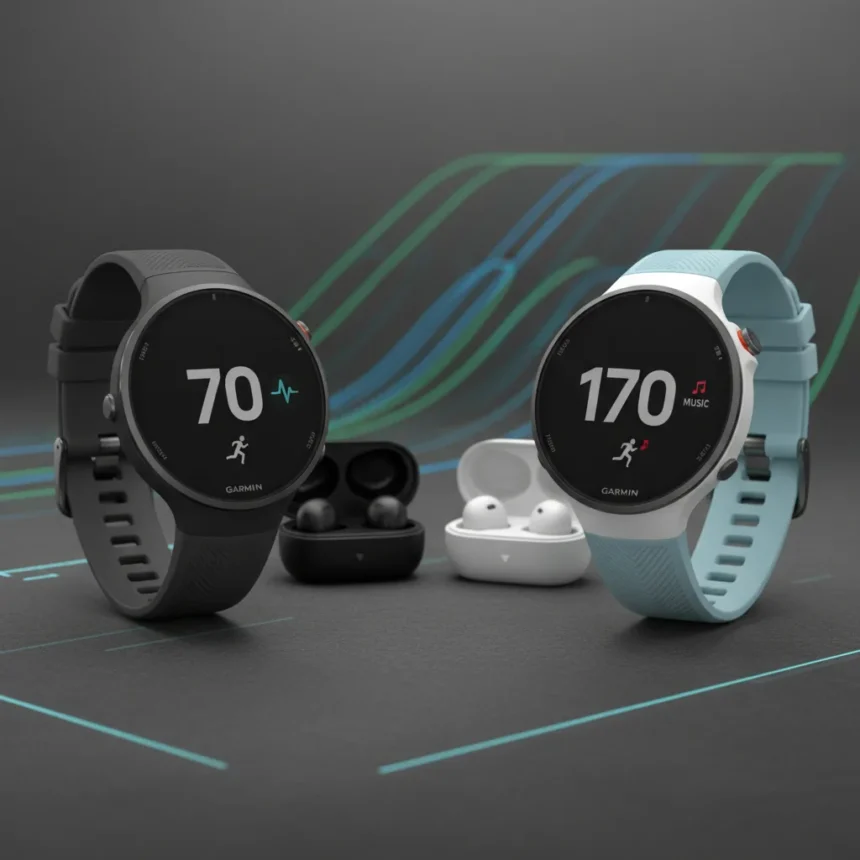
The Garmin Forerunner 70 vs 170 showdown matters because Garmin just packed advanced running metrics into three new affordable watches that previously belonged only to expensive models. All three watches—the Forerunner 70, Forerunner 170, and Forerunner 170 Music—share a 1.2-inch AMOLED display and Garmin’s five-button control system, but they diverge sharply on price, music support, and which runners should buy which model.
Key Takeaways
- The Forerunner 70 costs £219.99, the 170 at £259.99, and 170 Music at £299.99—all three include advanced running metrics like Training Readiness and Running Power.
- Only the Forerunner 170 Music includes 4GB of storage for downloading music and connecting wireless headphones.
- All three watches use the same 1.2-inch AMOLED screen and five-button interface designed for ease of use.
- Running Dynamics on all models calculates stride length, cadence, and other biomechanical data without requiring a chest strap.
- The Forerunner 70 is the direct successor to the Forerunner 55, bringing premium features down to entry-level pricing.
Garmin Forerunner 70 vs 170: Core Hardware and Display
Both the Garmin Forerunner 70 vs 170 start with identical display technology: a 1.2-inch AMOLED screen that delivers sharp text and vibrant colors for outdoor running. The five-button control layout is also the same across all three models, making navigation intuitive for runners who want simplicity over touchscreen complexity. Neither watch forces you to learn a steep menu hierarchy—just five physical buttons you can operate with gloved hands or while sweating.
The hardware parity here is intentional. Garmin designed these watches to be accessible, and that means no premium penalty for choosing the 70 over the 170 when it comes to how the watch looks or responds to your input. The real differences emerge in pricing, music support, and the software features that unlock different levels of training insight.
Music Support: The Forerunner 170 Music Stands Apart
The Forerunner 170 Music is the only model in this trio with 4GB of onboard storage, letting you download tracks directly to the watch and pair wireless headphones for phone-free listening during runs. If you train outdoors without carrying a phone and want your music with you, this is the model that justifies its £299.99 price tag. The standard Forerunner 170 and Forerunner 70 lack this feature entirely, so you would need to carry your phone or rely on streaming via a connected device.


For runners who use podcasts or music as a training tool, this 4GB capacity makes a meaningful difference. You can load a week’s worth of running playlists without worrying about storage constraints or needing a phone tethered to your wrist. If music is not part of your running routine, however, the extra £40 over the standard 170 is wasted.
Training Features: Premium Metrics at Budget Prices
This is where the Garmin Forerunner 70 vs 170 comparison gets interesting. Both watches include Training Readiness scores, wrist-based Running Power, and Running Dynamics—features that typically appear on Garmin’s more expensive Forerunner models. Running Dynamics calculates stride length, cadence, ground contact time, and vertical oscillation without requiring a separate chest strap, giving you real-time biomechanical feedback during every run.



Training Readiness uses your sleep, recovery, and recent training load to tell you whether today is a good day to push hard or dial back intensity. This kind of adaptive guidance usually costs extra, but Garmin bundled it into these entry-level watches to help new runners avoid overtraining. For serious runners looking for a budget second watch or a gift for someone starting out, this feature set is unusually generous.
One detail remains unclear: whether these watches use Garmin’s older Elevate V4 or newer Elevate V5 heart-rate sensor. This matters because the V5 sensor is more accurate during high-intensity efforts and in cold conditions. Until Garmin confirms which sensor is inside, you cannot assume V5-level performance, though the V4 remains reliable for most training scenarios.
Pricing and Which Model to Buy
The Forerunner 70 at £219.99 (approximately $300) is the entry point for runners who want Garmin’s ecosystem without breaking the bank. You get the core running metrics, the clean interface, and access to Garmin’s training platform—all for less than many smartwatches. If you are new to running watches or upgrading from a basic fitness tracker, this is the model that delivers the most value per pound.
The Forerunner 170 at £259.99 ($350) sits in the awkward middle. It offers no new features over the 70, just the same training metrics and display. The price bump exists mainly to segment the market; if you want a Garmin running watch and do not need music, the 70 makes more financial sense. The 170 only becomes the right choice if Garmin later releases exclusive features that differentiate it from the 70—something the current specs do not show.



The Forerunner 170 Music at £299.99 ($400) is the clear choice if music matters to you. The 4GB storage and wireless headphone support justify the premium, and you are still paying less than many mid-range sports watches. For runners in Australia, these convert to approximately AU$410, AU$485, and AU$560 respectively, maintaining the same value hierarchy across regions.
How These Watches Compare to Garmin’s Older Lineup
The Forerunner 70 is the direct successor to the Forerunner 55, and the upgrade is substantial. You are getting Training Readiness and Running Dynamics on the 70 that the 55 never had, plus the sharper AMOLED display instead of an older LCD. If you own a Forerunner 55, upgrading makes sense only if you actively want those advanced metrics; the 55 still works fine for basic run tracking.
Garmin positioned these three watches as the entry point to its running-watch lineup, designed to give runners everything needed to start their running journey. That positioning matters because it signals that Garmin is no longer forcing beginners to choose between a basic fitness tracker and a $400+ sports watch. These three models fill that gap.
Should You Buy the Garmin Forerunner 70?
Yes, if you want an affordable Garmin running watch with advanced training metrics and do not need music storage. The Forerunner 70 delivers premium features at a budget price, and the five-button interface is genuinely easier to use than touchscreen alternatives when you are sweating or wearing gloves. For new runners and experienced athletes looking for a lightweight second watch, this model is the best value in the trio.
Is the Forerunner 170 Music worth the extra cost?
The Forerunner 170 Music is worth it only if you regularly run without your phone and want music or podcasts on your wrist. The 4GB storage capacity is sufficient for a week of training content, and wireless headphone support removes the cable clutter. If you never listen to audio during runs, skip it and save £80 by choosing the Forerunner 70.
What is the difference between the Forerunner 70 and standard 170?
The Forerunner 70 and Forerunner 170 offer identical training features, display, and controls. The 170 costs £40 more with no additional capability, making the 70 the smarter buy unless you specifically prefer the 170 model name or Garmin later adds exclusive software features to the 170 that differentiate it from the 70.
Garmin’s new budget running watches represent a genuine shift in the market: premium training tools no longer require premium pricing. The Garmin Forerunner 70 vs 170 choice comes down to music support and personal preference, but either watch delivers serious training insight for runners who want to improve without spending a fortune. For most people, the Forerunner 70 is the smarter choice—unless you need the Forerunner 170 Music’s on-board audio capability.
Edited by the All Things Geek team.
Source: TechRadar