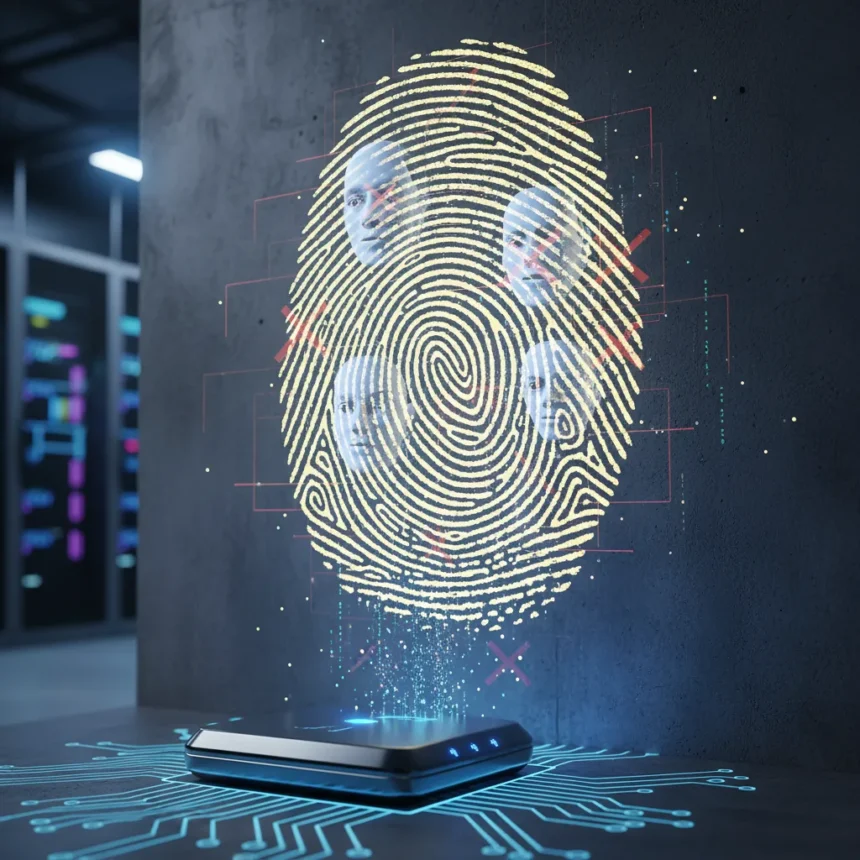
Light fingerprinting deepfake detection represents a fundamental shift in how the industry might verify video authenticity. Rather than analyzing digital artifacts after filming, a UK startup is proposing to capture the unique light signature of a physical filming location itself, creating a hardware-based proof of authenticity that could reshape how we combat synthetic media.
Key Takeaways
- Light fingerprinting captures unique light characteristics of a physical filming location to verify video authenticity.
- This hardware-based approach differs from traditional software-only deepfake detection tools.
- The technology targets both global misinformation and the estimated 75 billion dollar video piracy market.
- Physical location fingerprints could serve as tamper-evident markers for video content.
- The method addresses limitations of post-production detection software that struggles with increasingly sophisticated synthetic media.
How Light Fingerprinting Differs From Software Detection
Current deepfake detection relies primarily on analyzing video files after production, searching for digital inconsistencies that reveal manipulation. Software-based tools examine pixel patterns, compression artifacts, and neural network signatures to identify synthetic content. The limitation is obvious: as generative AI improves, detection software becomes obsolete faster. Light fingerprinting takes the opposite approach. By embedding authenticity at the source—during filming—the technology creates a physical record that is harder to forge retroactively. The startup’s concept treats a location’s unique light environment as an unforgeable signature.
This distinction matters because it shifts the burden of proof from post-hoc analysis to scene-level authentication. Where Microsoft Video Authenticator, Intel’s FakeCatcher, and Google DeepMind’s SynthID all attempt to detect synthetic content after creation, light fingerprinting prevents the need for detection in the first place. A video shot in a location with a known light fingerprint carries built-in proof of origin. Manipulating that video would require either reshooting the scene in the exact same location with identical lighting—impractical for most deepfake operations—or faking the fingerprint itself, which introduces new attack surfaces.
Combating Misinformation and Piracy at Scale
The article frames light fingerprinting as a potential tool against global misinformation, where synthetic videos spread faster than fact-checks can debunk them. If authentic videos carry cryptographic proof of their origin location, viewers and platforms could verify legitimacy instantly. This is particularly valuable for breaking news, political content, and sensitive footage where authenticity determines public trust. The approach also addresses video piracy, a market estimated at roughly 75 billion dollars globally. Legitimate content creators could embed location fingerprints into their work, making it easier to identify and challenge unauthorized copies that lack the authentic signature.

The scalability advantage lies in simplicity. Rather than requiring every platform to deploy new detection AI models—a costly, ongoing process—the technology asks filming locations to generate a one-time fingerprint. News studios, film production facilities, and broadcast centers could authenticate all future footage shot there. This creates a distributed authentication layer that does not depend on centralized software vendors or the latest detection algorithms.
Remaining Questions About Implementation
The research brief does not provide details about the exact technical process, the startup’s name, pricing, or launch timeline. These gaps matter. How is the light fingerprint captured and stored? What hardware is required at filming locations? Can the method work outdoors, where natural light varies constantly? Can it scale to smartphones and consumer devices, or is it limited to professional studios? The answers determine whether this becomes a transformative standard or remains a niche tool for high-value content.



The title’s claim of ending deepfakes should be read as aspirational rather than literal. No single technology eliminates an entire threat—especially one as adaptable as deepfake creation. But light fingerprinting could raise the cost and complexity of producing convincing synthetic video enough to shift the economics of misinformation campaigns. That is a meaningful outcome, even if it is not total victory.
Is light fingerprinting deepfake detection ready for deployment?
The research brief does not specify a launch date, pricing model, or current availability. The concept is being presented as a potential solution, but full technical specifications, real-world testing results, and integration timelines are not yet public. Interested parties should monitor the startup’s announcements for implementation details.
How does light fingerprinting compare to existing deepfake detection tools?
Existing tools like Microsoft Video Authenticator and Google DeepMind’s SynthID analyze finished videos to detect synthetic content. Light fingerprinting operates at the source, embedding authenticity during filming rather than analyzing it afterward. This architectural difference means the technology does not compete directly with detection software—it aims to make detection unnecessary by preventing undetectable forgeries in the first place.
Could light fingerprinting help reduce video piracy?
Yes. By attaching an unforgeable location signature to legitimate content, the technology makes it easier to distinguish authorized copies from pirated versions. However, the brief does not detail specific anti-piracy mechanisms or how rights holders would enforce the fingerprint standard across platforms.



Light fingerprinting represents a bet that authenticity is better secured at the source than fixed in post-production. If the technology delivers on its promise, it could reshape how newsrooms, studios, and platforms approach content verification. For now, the startup has identified a real problem—the inadequacy of software-only deepfake detection—and proposed a genuinely different solution. Whether it scales beyond its initial use cases will depend on implementation details that have not yet been disclosed.
Edited by the All Things Geek team.
Source: TechRadar