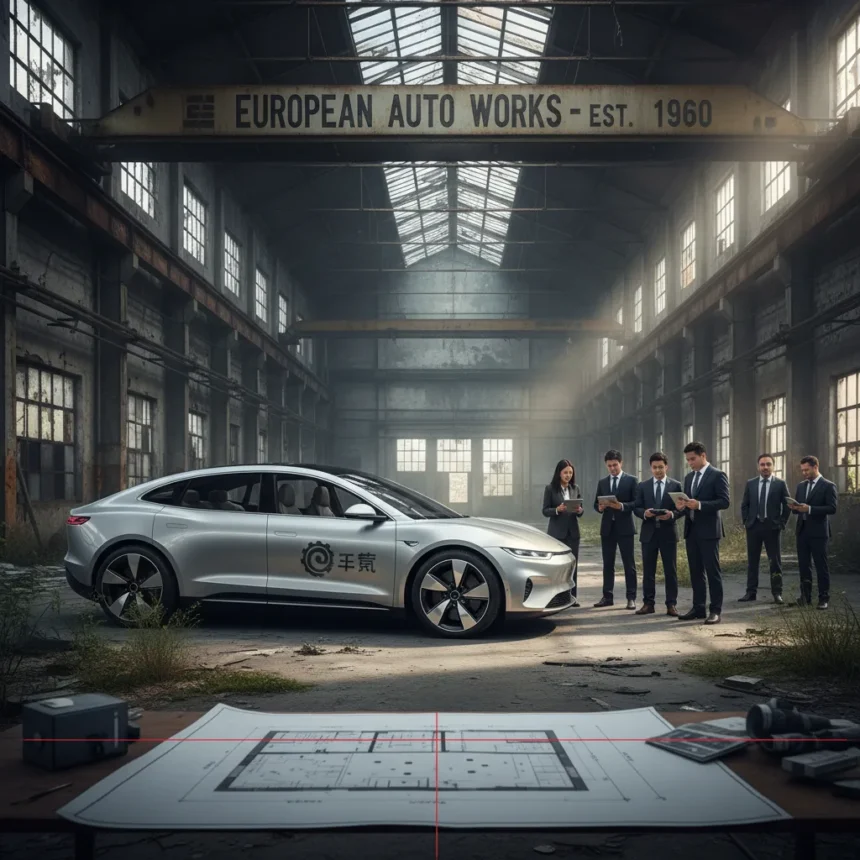
Chinese EV manufacturers Europe represents one of the most consequential industrial shifts unfolding in the automotive sector right now. Chinese electric vehicle makers are actively pursuing idle and underutilized manufacturing facilities across Europe, a strategic expansion that industry experts warn could fundamentally alter the continent’s control over its own automotive future.
Key Takeaways
- Chinese EV makers are targeting idle European manufacturing plants as expansion hubs.
- Industry experts describe this trend as potentially a point of no return for European auto manufacturing.
- The strategy focuses on acquiring underused facilities rather than building new plants from scratch.
- European automakers face pressure as Chinese competitors gain manufacturing foothold on the continent.
- Long-term industrial control of Europe’s EV sector hangs in the balance as Chinese investment accelerates.
Why Chinese EV manufacturers Europe matters now
The expansion of Chinese EV manufacturers into Europe is not a distant possibility—it is happening now. Chinese automakers are snapping up idle manufacturing facilities across the continent, converting underutilized assets into production hubs for their vehicles. This represents a fundamental shift in global automotive manufacturing geography, moving Chinese production capacity directly into Europe’s industrial heartland rather than serving European markets from Asia.
The urgency here stems from Europe’s current manufacturing vulnerability. The continent has numerous idle or struggling factories left behind by traditional automakers transitioning to electric vehicle production. Chinese manufacturers see these facilities as strategic assets, offering immediate production capacity, established supply chains, and direct access to European markets without tariff barriers. For Chinese EV makers, this is an efficiency play. For Europe, it signals a loss of industrial autonomy that experts believe could be irreversible.
The expert warning: A point of no return
Industry experts quoted in recent analysis describe this trend as potentially representing a point of no return for European manufacturing control. Once Chinese manufacturers establish production footprints on the continent, they gain permanent competitive advantages: local supply chains, labor relationships, regulatory familiarity, and customer proximity. European automakers would then compete on their own turf against entrenched Chinese competitors with lower costs and modern EV platforms.

The concern extends beyond individual plant acquisitions. If Chinese EV manufacturers successfully establish multiple manufacturing bases across Europe, the continent risks ceding long-term strategic control of its automotive sector. European companies built their dominance on manufacturing excellence and brand heritage. That advantage erodes significantly if Chinese competitors produce vehicles locally with European labor and infrastructure, undermining the cost and quality arguments that traditionally protected European automakers from Asian competition.
Chinese EV manufacturers Europe versus traditional European automakers
The competitive dynamic reveals a stark asymmetry. Traditional European automakers are managing a painful transition from internal combustion engines to electric vehicles, stranding factories and workforces in the process. Chinese EV manufacturers, by contrast, were born in the EV era and operate without legacy manufacturing baggage. They move decisively into idle European plants, converting them rapidly to EV production and undercutting European competitors on price and innovation speed.



European automakers must simultaneously manage legacy business wind-downs while investing billions in EV transformation. Chinese manufacturers face no such burden. When they acquire a European factory, they deploy modern EV production lines into existing infrastructure, achieving rapid profitability. This structural advantage—born from China’s late entry into automotive manufacturing—now becomes a competitive weapon in Europe itself.
What happens if Chinese EV manufacturers Europe gains foothold?
If Chinese manufacturers successfully establish manufacturing presence across multiple European locations, the continent’s automotive future shifts fundamentally. European regulators lose leverage over Chinese companies operating locally. Supply chains become intertwined with Chinese suppliers and logistics networks. European workers increasingly produce Chinese-branded vehicles rather than European ones. Over time, the intellectual property, design expertise, and manufacturing knowledge that once belonged exclusively to European companies becomes distributed across Chinese operations.
The phrase point of no return captures this irreversibility. Industrial capacity, once lost to foreign competitors, rarely returns. Workers retrain for new employers. Supply chains reorganize around new anchor companies. Regulatory relationships shift. European governments may find themselves unable to reclaim manufacturing dominance even if they wanted to, because the economic infrastructure supporting it has been dismantled and relocated.
Why Europe’s idle factories matter
Europe’s abundance of idle manufacturing capacity is both a vulnerability and an opportunity for Chinese manufacturers. Traditional automakers closed or mothballed factories as they consolidated EV production into fewer, more efficient facilities. These idle plants represent sunk capital: buildings, equipment, trained workforces, and established logistics networks. For Chinese EV makers with capital and production ambitions, they are ready-made manufacturing bases requiring minimal infrastructure investment.



This is fundamentally different from Chinese manufacturers building greenfield factories in Europe. Acquiring and converting idle plants happens faster, costs less, and faces fewer regulatory hurdles. It also sends a clear signal: Chinese manufacturers are not visiting Europe temporarily. They are establishing permanent industrial presence, converting European assets into Chinese production capacity.
Is Chinese EV manufacturers Europe expansion inevitable?
The trend appears well underway, driven by economic logic that favors Chinese expansion. Chinese EV makers have superior cost structures, modern platforms, and aggressive pricing that European competitors struggle to match. Europe’s manufacturing overcapacity and tariff barriers create incentives for Chinese companies to produce locally rather than export. The combination of idle factories, skilled labor, and market access makes European manufacturing expansion an obvious strategic move for any Chinese EV manufacturer with global ambitions.
Whether this expansion accelerates or slows depends partly on regulatory responses and partly on how quickly European automakers can transition to competitive EV production. But the underlying dynamic—Chinese manufacturers seeking European manufacturing footholds—appears structural and difficult to reverse once established.
Can Europe stop Chinese EV manufacturers from expanding?
European governments and regulators face limited options. Direct bans on Chinese acquisitions of manufacturing assets would trigger trade disputes and likely violate international agreements. Tariffs can slow imports but cannot prevent Chinese manufacturers from producing inside Europe. Subsidies for European automakers help but do not eliminate the structural cost advantages Chinese competitors enjoy.
The most realistic European response involves accelerating its own EV transition, supporting domestic manufacturers in becoming cost-competitive, and potentially negotiating terms around Chinese manufacturing presence—requiring technology transfer, local supply chain development, or employment commitments. But these are negotiating positions, not preventative measures. Once Chinese manufacturers establish European production, Europe’s leverage diminishes significantly.
FAQ
What are Chinese EV manufacturers looking for in European plants?
Chinese EV manufacturers are targeting idle or underutilized manufacturing facilities that offer established infrastructure, skilled workforces, and proximity to European markets. These facilities allow rapid conversion to EV production without building from scratch, reducing time to market and capital requirements while providing local manufacturing presence to navigate tariffs and regulations.
Why is this trend described as a point of no return?
Once Chinese manufacturers establish production footprints in Europe, they gain permanent competitive advantages including local supply chains, regulatory relationships, and customer proximity. European governments and competitors would struggle to reclaim manufacturing capacity and industrial control even if they wanted to, making the shift largely irreversible.
How does this affect European automakers?
European automakers face intensifying competition from Chinese manufacturers producing locally with lower costs and modern EV platforms. Traditional European advantages in manufacturing excellence and brand heritage erode when competitors produce vehicles in Europe using European labor and infrastructure, directly challenging European companies in their home markets.
The expansion of Chinese EV manufacturers into European manufacturing represents a structural shift in global automotive power. Europe built its automotive dominance on manufacturing excellence and brand heritage. That dominance now faces a competitor with neither legacy baggage nor geographical constraints, armed with superior EV platforms and cost structures. If Chinese manufacturers successfully establish multiple production bases across Europe, the continent may find itself permanently ceding control of its own automotive future to competitors it cannot easily dislodge. The window to respond remains open, but it is closing faster than most European policymakers appear to realize.
Edited by the All Things Geek team.
Source: TechRadar