





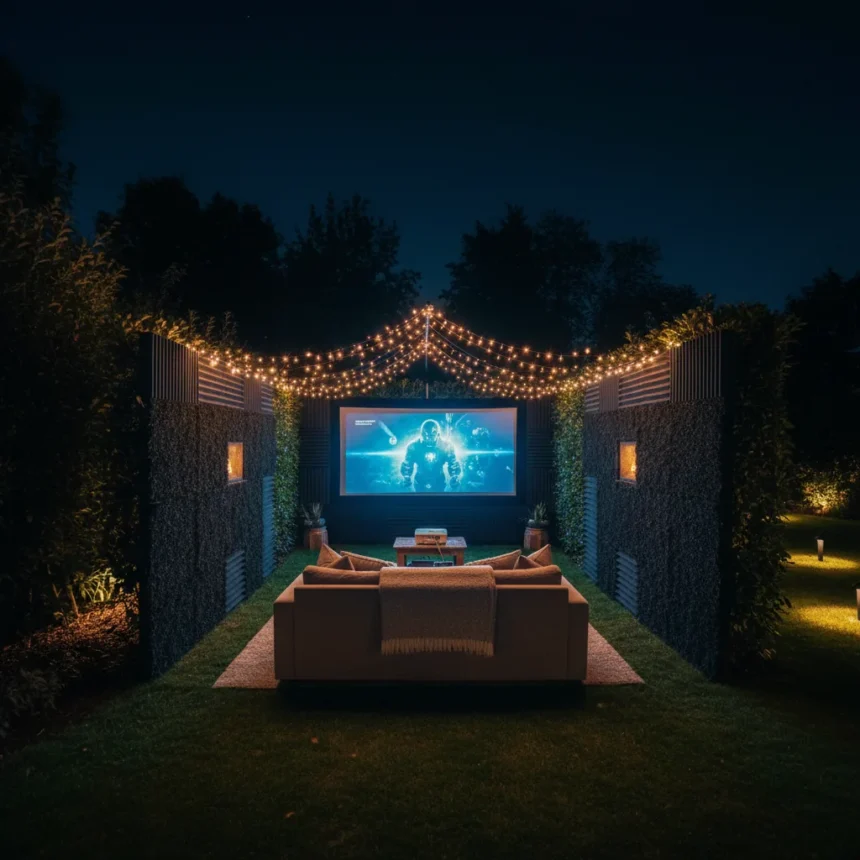
Outdoor home cinema has become a popular way to enjoy films under the stars, but most setups fail because people focus on the wrong priorities. The central insight from experienced outdoor cinema builders is simple yet transformative: in the great outdoors, isolation is key. This principle separates mediocre backyard screenings from genuinely immersive outdoor home cinema experiences.
Key Takeaways
- Isolation is the single most important factor for outdoor home cinema success, not equipment quality
- Outdoor environments present unique challenges that indoor cinemas never face
- Controlling your viewing space requires strategic planning before investing in projectors or screens
- Sound management and environmental isolation deliver better results than chasing premium gear specs
- Practical outdoor cinema setup prioritizes environment control over technological perfection
Why Outdoor Home Cinema Fails Without Isolation
Most people building an outdoor home cinema make a fundamental mistake: they treat it like an indoor setup transplanted outdoors. They buy a projector, hang a screen, set up speakers, and expect cinema-quality results. What they discover instead is that outdoor environments are hostile to the viewing experience. Ambient light, wind noise, insect sounds, neighbor activity, and weather all conspire against immersion. Isolation addresses these problems directly.
The difference between outdoor home cinema that works and outdoor home cinema that disappoints comes down to environmental control. When you prioritize isolation—blocking light pollution, dampening external noise, and creating a contained viewing space—the actual quality of your projector or audio gear becomes secondary. A modest projector in an isolated backyard beats a premium projector in an open, exposed one.
Outdoor Home Cinema vs. Indoor Viewing: The Isolation Gap
Indoor home cinema systems benefit from built-in isolation: walls block outside noise, controlled lighting eliminates ambient glare, and the room’s architecture contains sound. Outdoor home cinema has none of these advantages. You are competing against the entire natural environment. This is why isolation transforms from a nice-to-have feature into the foundation of any successful outdoor setup.



Creating isolation for outdoor home cinema means thinking strategically about your space. Can you position the viewing area away from street-facing sides? Can you add screening or landscaping to block light and sound sources? Can you choose a time and season when environmental interference is lowest? These questions matter far more than whether you buy a 2000-lumen or 3000-lumen projector.
Building Isolation Into Your Outdoor Home Cinema Plan
Practical outdoor home cinema setup begins with site assessment. Walk your potential viewing area at different times of day and night. Note where light bleeds in, where noise originates, and where weather exposure is greatest. This reconnaissance reveals what isolation measures will actually help. A fence that blocks neighbor noise might be your best investment—more valuable than upgrading to a premium screen.



Isolation strategies for outdoor home cinema don’t require expensive construction. Strategic placement of trees or shrubs, temporary fabric barriers, or even simple shade structures can dramatically improve the experience. The goal is creating a contained environment where your equipment operates without fighting external forces. Once isolation is handled, your projector, screen, and audio system can deliver their intended performance.
Outdoor Home Cinema: Isolation Before Equipment Investment
The conventional approach to outdoor home cinema—researching projector lumens, screen materials, and speaker wattage—puts the cart before the horse. Without isolation, superior equipment delivers only marginally better results. A 4K projector in a poorly isolated space still competes with glare and ambient noise. The same projector in an isolated environment performs dramatically better because it isn’t fighting its surroundings.
This principle applies whether you’re building a temporary outdoor home cinema for occasional use or a permanent installation. Seasonal setups benefit from choosing low-interference times and locations. Permanent installations justify investment in isolation infrastructure—landscaping, structures, or screening—that improves every movie night going forward. Either way, isolation comes first in the planning hierarchy.
Practical Expectations for Outdoor Home Cinema
Accepting that outdoor home cinema operates under different constraints than indoor viewing reduces frustration. You won’t achieve perfect darkness or complete silence outdoors. The goal isn’t replicating an indoor cinema—it’s maximizing the unique appeal of watching films under the stars while minimizing environmental interference. Isolation lets you reach that balance.



When isolation is properly handled, outdoor home cinema becomes genuinely enjoyable. The experience shifts from fighting your environment to working within it. Viewers relax, the movie becomes the focus, and the outdoor setting enhances rather than detracts from the experience. This transformation happens not through equipment upgrades but through environmental control.
Is isolation really more important than projector quality for outdoor home cinema?
Yes. A moderately bright projector in an isolated space outperforms a premium projector in an exposed one because isolation removes the environmental interference that degrades image quality and immersion. Isolation directly solves the core problems outdoor environments create—light pollution, external noise, and visual distractions.
What are the easiest isolation improvements for outdoor home cinema?
Strategic timing (screening during darker hours or seasons), positioning the viewing area away from light sources and noise sources, and using simple barriers like fences, hedges, or temporary fabric screening all improve isolation without major construction. These changes often deliver more noticeable results than equipment upgrades.
Can outdoor home cinema work without perfect isolation?
Outdoor home cinema can be enjoyable with partial isolation, but the experience improves dramatically as isolation increases. Even modest improvements in blocking light and dampening external noise measurably enhance viewing. The more isolation you achieve, the more your equipment can perform as intended.
Building a successful outdoor home cinema means resisting the urge to chase the latest projector or most expensive screen. Instead, start by honestly assessing your space and prioritizing isolation. Block the light, contain the noise, and create a focused viewing environment. Once isolation is handled, your equipment—whatever its price point—will deliver a genuinely immersive outdoor movie experience. That’s the real formula for better movie nights under the stars.
Where to Buy
Anker SOLIX C300X power bank | 70-inch, portable Xgimi screen | Lay-Z-Spa Boy hot tub | a floating party tray | Friday The 13th
Edited by the All Things Geek team.
Source: What Hi-Fi?




