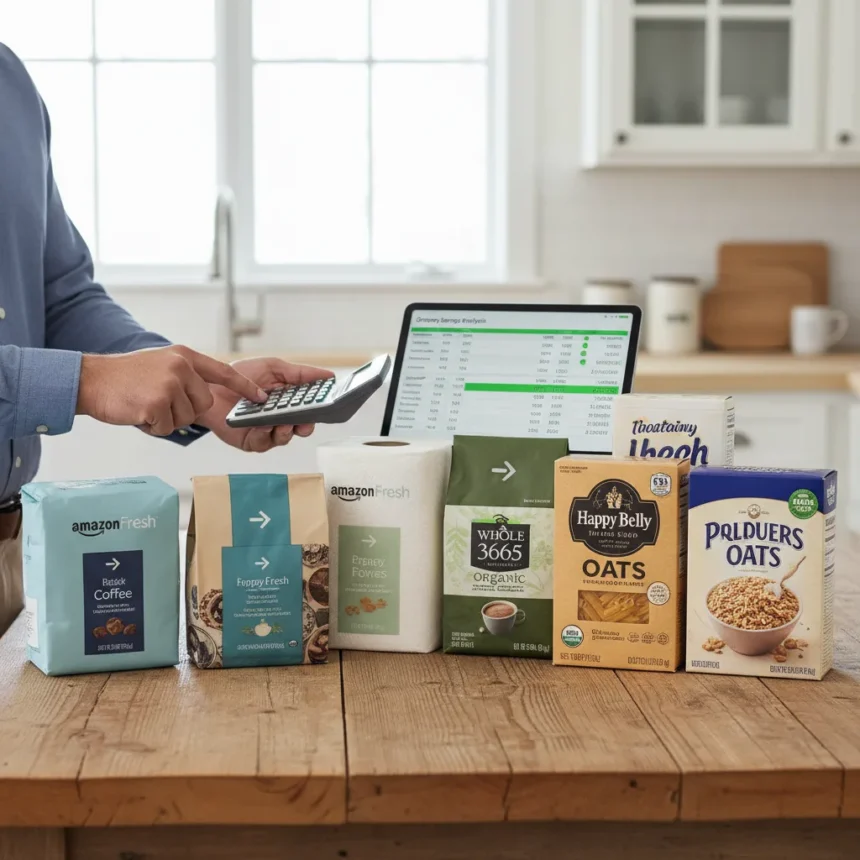
Amazon household brands represent a growing opportunity for cost-conscious shoppers looking to trim grocery expenses without settling for poor quality. The premise is straightforward: replacing name-brand household products with Amazon’s generic alternatives can deliver meaningful savings on everyday purchases.
Key Takeaways
- Amazon household brands offer significant savings compared to traditional name-brand products
- Store brands compete directly with premium brands across cleaning, personal care, and kitchen categories
- Switching to Amazon generics requires minimal lifestyle adjustment while reducing monthly grocery bills
- Budget shopping trends are accelerating as consumers seek ways to offset rising costs
- Private label products now represent a viable alternative to established household names
Why Amazon Household Brands Matter Now
The shift toward Amazon household brands reflects a broader consumer trend: the willingness to trade premium branding for genuine savings. As grocery costs continue climbing, shoppers are reconsidering where they spend money on everyday essentials. The economics are compelling—generic versions of household staples typically cost significantly less than their branded counterparts, yet deliver comparable performance.
This is not a new phenomenon, but it is gaining momentum. Consumers increasingly recognize that private-label products have closed the quality gap with established brands. For household items like cleaning supplies, paper products, and personal care goods, the functional differences between a premium brand and an Amazon alternative are often negligible. What differs is price.
The Case for Switching to Amazon Household Brands
The decision to switch hinges on a simple calculation: does the product perform its intended function adequately? For most household categories, the answer is yes. Amazon household brands are engineered to meet baseline performance standards without the marketing overhead and premium pricing of established brands.

Consider the practical advantages. Buying Amazon household brands through Prime membership streamlines shopping—items arrive consistently without trips to multiple retailers. The convenience factor compounds the savings. Additionally, many Amazon household brands come in bulk quantities that lower per-unit costs further, amplifying the budget impact over time.
The risk of switching is minimal. If an Amazon household brand falls short, the return policy is straightforward. Most shoppers find that once they identify which product categories work well with generics, they stick with the switch indefinitely. The initial experiment often becomes a permanent habit.



Where Amazon Household Brands Excel
Certain product categories are ideal for switching. Cleaning supplies, paper towels, trash bags, and basic personal care items are prime candidates—these products have clear functional standards, and performance differences between brands are minimal. Kitchen staples, laundry detergent, and storage solutions also transition well.
The success rate climbs when shoppers approach the switch strategically. Testing one or two categories first, rather than overhauling an entire shopping list at once, reduces the risk of disappointment. Once confidence builds, expanding to additional Amazon household brands becomes easier.
What makes the shift sustainable is that quality has improved substantially. Amazon household brands are no longer synonymous with corner-cutting. They represent a calculated trade-off: accepting simpler packaging and no brand premium in exchange for lower prices.
The Broader Savings Opportunity
The cumulative effect of switching to Amazon household brands across multiple product categories can be substantial. A household that replaces five to ten regularly purchased items with Amazon generics might see monthly savings ranging from modest to significant, depending on shopping volume and current brand loyalty.



This strategy fits within a larger framework of intentional spending. Pairing Amazon household brand purchases with other cost-reduction tactics—meal planning, bulk buying, or using AI tools to identify savings opportunities—compounds the effect. The goal is not deprivation but conscious allocation of resources toward priorities that matter more.
Is switching to Amazon household brands worth it?
Yes, for most household essentials. The quality gap between Amazon household brands and premium alternatives has narrowed significantly, while price differences remain substantial. The barrier to switching is psychological, not practical—once you try a few categories and confirm they work, the switch becomes automatic.
Which product categories work best with Amazon household brands?
Cleaning supplies, paper products, trash bags, laundry detergent, and basic personal care items transition most smoothly. These categories have clear performance standards and minimal variation between brands. Specialty or premium-positioned items may require more careful evaluation.
How much can you actually save by switching?
Savings depend on current shopping habits and which items you replace. Households that regularly purchase multiple name-brand products across several categories can see meaningful monthly reductions, though exact figures vary by shopping volume and current brand preferences.
The decision to switch to Amazon household brands is ultimately about recognizing that price and quality are not always linked. By testing a few categories and measuring results against your own standards, you gain control over grocery spending without sacrificing the products you rely on daily. For budget-conscious shoppers, this shift represents one of the simplest ways to reduce monthly expenses while maintaining lifestyle quality.
Where to Buy
Amazon Basics Reclosable Gallon Food Storage Bags: | Amazon Basics Glass Cleaner, Streak-Free Shine: | Amazon Basics Aluminum Foil (250 Sq Ft): | Amazon Basics Disinfecting Wipes: | Amazon Basics 2-Ply Flex-Sheets Paper Towels (Pack of 12):
Edited by the All Things Geek team.
Source: Tom's Guide