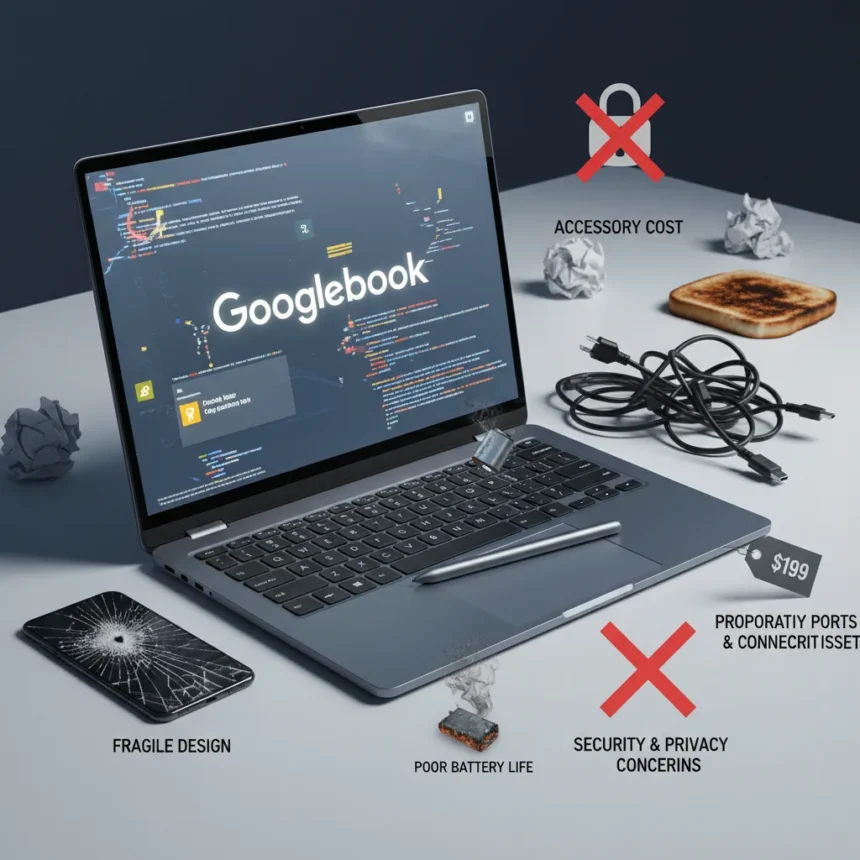
The Googlebook laptop has only just been revealed, yet the Googlebook laptop is already facing significant criticism from early observers. Within days of its announcement, complaints have surfaced across tech communities and social media, raising questions about whether Google’s latest hardware venture might follow the fate of previous discontinued products. The device arrives as Google attempts to compete directly with Apple’s MacBook lineup, but initial reactions suggest the company may have stumbled on several fundamental design and feature decisions.
Key Takeaways
- Googlebook laptop faces five major complaints from early reviewers and users within days of reveal.
- Critics compare the device unfavorably to established MacBook alternatives in key areas.
- Early backlash raises concerns about the product’s long-term viability in Google’s hardware lineup.
- Design choices and feature limitations are the primary sources of negative sentiment.
- The Googlebook laptop enters a crowded market with skeptical initial reception.
Why the Googlebook Laptop Is Already Facing Skepticism
Tech enthusiasts and industry observers have wasted no time dissecting the Googlebook laptop since its reveal. The device arrived with considerable fanfare as Google’s answer to premium laptop computing, yet immediate reactions reveal a disconnect between what Google promised and what users actually wanted. The skepticism stems not from isolated complaints but from a pattern of design decisions that prioritize certain use cases while alienating others. This early negativity is particularly notable because it suggests the Googlebook laptop may struggle to find its audience in a market where MacBooks and other established competitors have already cemented their positions.
The timing of these complaints matters. A newly revealed product typically enjoys a grace period where early adopters defend design choices and overlook minor flaws. That the Googlebook laptop is drawing sustained criticism so quickly indicates the issues run deeper than surface-level preferences. Whether these complaints reflect genuine product shortcomings or simply represent vocal minority perspectives remains to be seen, but they signal a credibility challenge for Google’s hardware division.
The Five Main Complaints About the Googlebook Laptop
Early critics have identified five specific areas where the Googlebook laptop falls short of expectations. These complaints span design philosophy, feature implementation, and competitive positioning. While the exact nature of each complaint varies, they collectively paint a picture of a device that prioritizes certain design principles at the expense of practical functionality. The Googlebook laptop’s approach differs markedly from how competitors like Apple structure their premium laptop offerings, and that difference is proving controversial among the early audience.


The complaints focus on tangible aspects of the device rather than abstract concerns. Users and reviewers cite specific missing features, design choices that seem counterintuitive, and positioning decisions that undercut the Googlebook laptop’s value proposition. Each complaint has generated its own conversation thread across tech forums and social media platforms, suggesting these are not isolated grievances but rather widespread frustrations with how Google approached this product category. The consistency of the criticism across different communities indicates the Googlebook laptop’s designers may have misjudged what premium laptop buyers actually prioritize.
Googlebook Laptop Compared to MacBook and Competitors
The Googlebook laptop enters a market where Apple’s MacBook has established dominant mindshare among premium laptop buyers. Comparisons between the two devices are inevitable, and early reviews consistently frame the Googlebook laptop as the underdog in that matchup. Where MacBooks emphasize ecosystem integration, refined build quality, and a curated set of features, the Googlebook laptop apparently takes a different approach that some view as less cohesive. The comparison is not merely about specifications or price but about overall product philosophy and execution.



Google’s hardware strategy has historically been complicated by the company’s tendency to discontinue products that fail to achieve immediate traction. The Googlebook laptop’s early backlash raises concerns about whether the device will receive the long-term support and refinement that competing products enjoy. Users investing in a new laptop want assurance that their choice will remain viable and supported for years. The shadow of Google’s product discontinuation history hangs over the Googlebook laptop’s launch, and early criticism may amplify those concerns among potential buyers who remember previous Google hardware failures.
What These Complaints Mean for Google’s Hardware Future
The early backlash against the Googlebook laptop carries implications beyond this single device. It signals whether Google can successfully compete in premium hardware categories where brand loyalty and ecosystem lock-in matter tremendously. Apple’s MacBook success rests partly on the MacBook’s integration with iPhones, iPads, and other Apple devices. The Googlebook laptop must prove it offers comparable ecosystem advantages or superior functionality to justify its existence. The five complaints suggest Google may not have successfully made that case to early evaluators.
Industry observers will watch how Google responds to this criticism. Does the company defend its design choices, or does it acknowledge the feedback and promise improvements? The Googlebook laptop’s trajectory over the coming months will reveal whether these early complaints represent genuine product failures or simply the inevitable friction of launching something new in a skeptical market. For potential buyers, the question is whether to wait for potential revisions or accept the device as it currently exists.
Should you buy the Googlebook laptop right now?
The early criticism surrounding the Googlebook laptop suggests caution is warranted. If the five main complaints align with your own priorities and use cases, you may want to wait for a second-generation version or explore alternatives. The Googlebook laptop may still appeal to users deeply invested in Google’s ecosystem or those who prioritize specific features that outweigh the criticized aspects. However, if you have flexibility in your timeline, the initial backlash indicates the device may be refined in future iterations.



How does the Googlebook laptop compare to previous Google hardware launches?
Google’s history with hardware products includes both successes and notable discontinuations. The Googlebook laptop’s early reception raises questions about whether it will follow the path of successful devices or join Google’s history of discontinued products. Early backlash does not guarantee failure, but it does suggest the Googlebook laptop faces an uphill battle in establishing itself as an essential premium laptop option. User sentiment in the first weeks after a product reveal can shift significantly as more people gain hands-on experience.
The Googlebook laptop’s early criticism reflects a broader challenge Google faces in hardware: establishing genuine differentiation in categories where competitors have already won consumer trust. Whether the device’s five main complaints prove insurmountable or represent fixable issues remains uncertain. What is clear is that the Googlebook laptop has not achieved the enthusiastic reception Google likely hoped for at launch. The coming weeks will reveal whether this early skepticism fades as more users experience the device or whether the complaints prove prophetic about its long-term viability.
Edited by the All Things Geek team.
Source: TechRadar