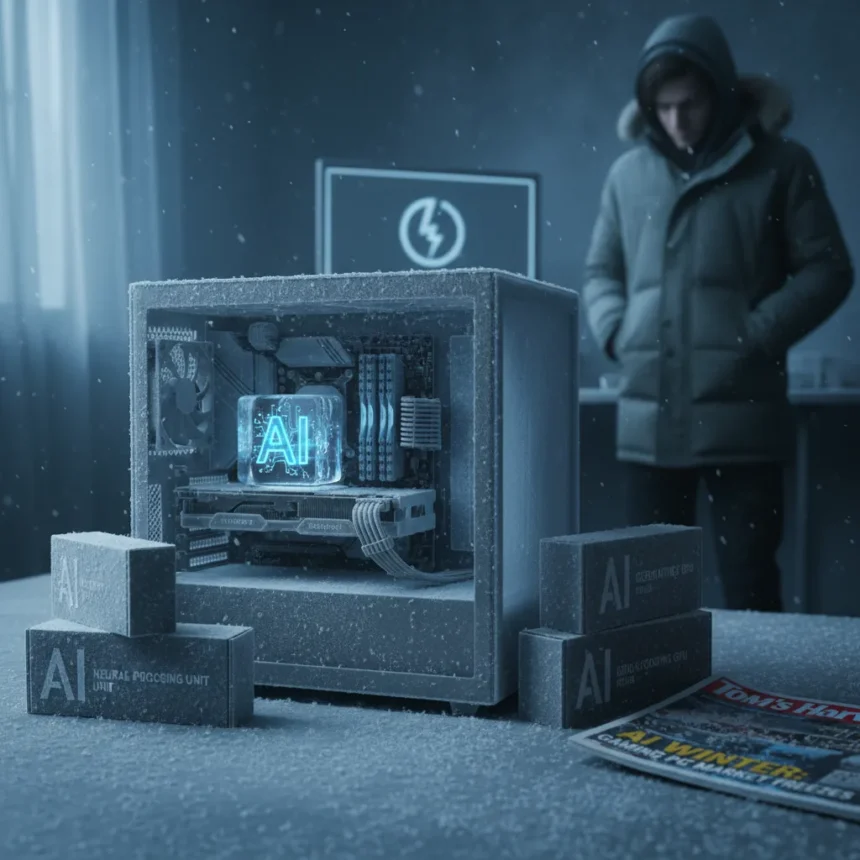
PC gamers component pricing has reached a breaking point. According to a Tom’s Hardware reader survey, 60% of PC gamers said they have no plans to build a new PC in the next two years, a staggering figure that exposes how rising component costs—particularly RAM—are freezing the enthusiast PC market just as AI demand is reshaping hardware economics.
Key Takeaways
- 60% of PC gamers surveyed plan no new PC builds in the next two years
- AI-driven demand is inflating prices for RAM and other core components
- The pricing crunch extends beyond memory to processors, circuit boards, and plastic materials
- Enthusiast builders are postponing upgrades, signaling a potential market slowdown
- Component cost inflation is outpacing consumer willingness to invest in new systems
Why PC gamers are sitting out the upgrade cycle
The reluctance to build is not casual hesitation—it is a calculated rejection of current market conditions. PC gamers component pricing has become prohibitive enough that a decisive majority would rather keep existing systems than pay inflated prices for new ones. This is not a temporary sentiment. The two-year timeline suggests builders expect no relief in the near term, meaning they are planning to extract maximum lifespan from aging hardware rather than chase the latest specs.
The core culprit is memory. RAM pricing has surged as AI data centers and AI-capable PC demand compete for the same supply chains. But the problem runs deeper than DRAM. PC makers are reporting cost increases across processors, circuit boards, plastic materials, and other components that do not make headlines but directly impact build costs. A gamer considering a mid-range refresh now faces not a 10% price bump but a structural shift in component economics that makes new builds feel like poor value.
How AI is reshaping PC component markets
The timing is brutal for enthusiasts. Just as GPU makers and CPU vendors are promoting AI-capable gaming PCs—machines that can run local AI models alongside games—the underlying components needed to build those systems are becoming unaffordable. This creates a paradox: the hardware industry is pushing AI features that require new builds, but the cost of those builds is pushing gamers away.



Memory shortage is the visible symptom. Data centers are hoarding DRAM for AI training and inference workloads, reducing consumer-grade supply and driving prices up. But manufacturers are also competing for other constrained materials. Plastic casings, power supply components, and circuit board materials are all experiencing cost pressure. A gamer who would have spent $1,200 on a solid mid-range build two years ago now faces $1,500 or more for equivalent performance, a delta that is hard to justify when the existing system still plays games.
What this means for the PC gaming and hardware industry
The survey result is a warning signal. When 60% of your core market—enthusiasts who actually care enough to build custom systems—says they are sitting out the next two years, you are looking at a potential contraction in the most profitable segment of the PC market. Builders are the early adopters who drive innovation interest, set upgrade cycles, and generate retailer traffic. When they stop buying, the ripple effects extend to component makers, case manufacturers, power supply vendors, and GPU sellers.



This is not the first time PC gaming has faced a pricing crisis. GPU shortages during the crypto boom froze the market for 18 months. But that was a supply problem with an eventual solution. The current crunch is structural—it is driven by a shift in what the semiconductor industry considers valuable. AI workloads are more profitable per chip than gaming workloads, so manufacturers and data centers will continue prioritizing them. Gamers are caught in the middle, priced out of upgrades by demand they do not control.
Are PC gamers delaying builds or abandoning them entirely?
The survey captures stated intent, not future behavior. Some of the 60% may eventually upgrade when prices stabilize or when their hardware becomes genuinely obsolete. Others may migrate to console gaming or cloud-based services rather than wait. What is clear is that the traditional PC gaming upgrade cycle—the two-to-three-year refresh pattern that has defined the market for decades—is breaking down under cost pressure. Gamers are choosing longevity over performance gains, a shift that suggests they no longer believe new builds offer compelling value.
Will component prices drop in the next two years?
Industry analysts are not optimistic. The AI data center boom is expected to sustain memory demand for years, not quarters. Unless DRAM production capacity expands dramatically or AI demand cools, prices are unlikely to return to pre-2023 levels within the survey’s two-year window. Some forecasts suggest PC market contraction of 5-9% in 2026 due to skyrocketing RAM pricing, a sign that the survey sentiment may translate into actual market decline.
How does this compare to previous PC market downturns?
Past PC market slowdowns were typically driven by product maturity—systems became powerful enough that gamers did not need annual upgrades. The current freeze is different. It is not that gamers do not want to upgrade; it is that they cannot afford to at current prices. This is a demand-destruction scenario, not a saturation scenario. Gamers would upgrade if prices were reasonable. The market is not choosing restraint; it is being priced out of choice.



The PC gaming market is at an inflection point. AI demand is reshaping component economics in ways that benefit data centers and harm consumer builders. The 60% figure from Tom’s Hardware is not just a survey result—it is a market signal that the enthusiast PC segment is freezing until costs come down. For component makers and retailers, the message is clear: until memory prices and broader component costs stabilize, the upgrade cycle will remain frozen, and the most engaged segment of the PC market will sit on the sidelines.
Edited by the All Things Geek team.
Source: Tom's Hardware