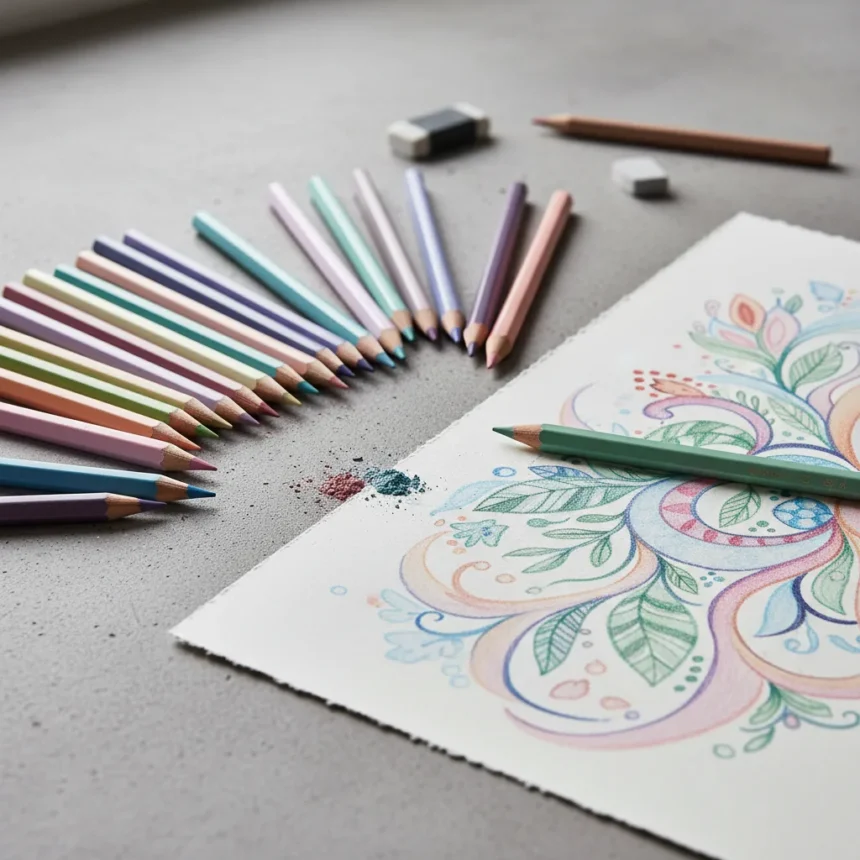
Pastel pencils are a hybrid drawing medium that combines the rich, vibrant color saturation of traditional pastels with the precision and control of sharpened pencils. Unlike soft pastels—which are sticks of pure powdered pigment with a binder, essentially the artist’s version of pavement chalk—pastel pencils deliver the same intense pigmentation in a contained, mess-free format. They sit between regular pencils and regular pastels on the spectrum of artistic expression, offering something neither pure medium can match alone.
Key Takeaways
- Pastel pencils combine pastel pigment with pencil form, eliminating the mess of loose powders.
- Soft pastels are pure pigment sticks; oil pastels use an oil binder for a rich, buttery effect.
- Pastel pencils offer precision control impossible with traditional soft pastels.
- This hybrid medium lets artists work at smaller scales without dust and cleanup.
- Pastel pencils refresh creative workflows for both experienced and emerging artists.
Why Pastel Pencils Win Over Traditional Pastels
Traditional soft pastels create stunning, layered effects—but they come with real friction. Your hands get covered in pigment dust. Finished work requires fixative spray to prevent smudging. Blending requires constant cleanup of your tools and workspace. Pastel pencils eliminate this friction entirely. You sharpen them like any pencil, apply color with precision, and walk away without a powder cloud. The pigment is identical to soft pastels—rich, saturated, vibrant—but contained in a wood casing that gives you control over where the color lands.
Oil pastels, which use the same pigments as soft pastels but with an oil binder to create a rich, buttery crayon effect, offer their own appeal. But they’re even messier than soft pastels and require solvents for cleanup. Pastel pencils avoid both the powder problem and the oil-stain problem while preserving the color intensity that makes pastels worth using in the first place.
How Pastel Pencils Compare to Regular Colored Pencils
Regular colored pencils are clean and precise—but they’re also limiting. The pigment load is lower, the color is more muted, and layering requires heavy pressure that can damage paper or create a waxy, built-up appearance. Pastel pencils deliver the saturation of soft pastels with the sharpness and control of a pencil. You can work at smaller scales, add fine details, and blend colors smoothly without the paper degradation that comes from grinding hard pencil wax into the surface. For artists who love the precision of pencil work but crave the expressive color of pastels, this is the obvious choice.

The Creative Advantage: Precision Meets Expression
What makes pastel pencils genuinely useful is how they expand what’s possible in a single piece. You can sketch a detailed foundation with the pencil tip, then layer in bold pastel color without losing that structure. You can work in tight spaces—a small corner of a larger composition, a detailed face, a fine line of color—without the dust scatter that makes traditional soft pastels impractical for detail work. You can carry them in a regular pencil case, not a dedicated pastel box. You can work at your desk without worrying about pigment settling on everything nearby.
This simplicity is why pastel pencils are described as a way to shake up your creative life. They lower the barrier to experimentation. There’s no special setup, no cleanup ritual, no fixative spray. You just draw. For artists returning to the medium after years away, or newcomers intimidated by the mess of traditional pastels, pastel pencils make entry effortless. For experienced pastel artists, they’re a tool to add to your arsenal for work that demands control alongside color.



When to Reach for Pastel Pencils
Pastel pencils shine in specific scenarios. Use them for detailed illustration where color matters but precision is non-negotiable. Use them for mixed-media work where you’re layering over ink, watercolor, or collage. Use them for plein-air sketching—they’re portable and require zero setup. Use them when you’re working on delicate paper that can’t handle the aggressive blending of soft pastels. Use them when you need to preserve fine lines and sharp edges that soft pastels would blur or obliterate.
They’re not a complete replacement for soft pastels if your work depends on large, sweeping blends and bold gestural marks. But for most artists, they’re a revelation. They do what soft pastels do—deliver rich, saturated color—without the mess. They do what colored pencils do—offer precision and control—without the muted, waxy result. That’s the real advantage: they’re not a compromise between two mediums. They’re the best of both.
Should I switch entirely to pastel pencils if I love soft pastels?
No. Soft pastels and pastel pencils serve different purposes. Soft pastels excel at large-scale work, atmospheric blending, and bold gestural mark-making. Pastel pencils are for detail, precision, and mess-free creativity. Most artists benefit from keeping both in their toolkit and reaching for whichever suits the current piece.
Are pastel pencils as vibrant as regular soft pastels?
Yes. Pastel pencils use the same pure pigment formulas as soft pastels, so the color saturation is identical. The only difference is the delivery method—pencil form instead of stick form—which doesn’t reduce vibrancy at all.



Can you blend pastel pencils like soft pastels?
You can blend pastel pencils, but less dramatically than soft pastels. A blending stump, tissue, or even your finger will soften edges and merge colors. The tighter pigment load means you won’t achieve the same seamless gradations as you would with soft pastels, but blending is absolutely possible and often more controlled.
Pastel pencils deserve a place in any artist’s studio. They’re not a trend or a gimmick—they’re a practical solution to a real problem. Soft pastels are beautiful but messy. Regular pencils are clean but limited. Pastel pencils split the difference, giving you expressive, saturated color without the cleanup nightmare. If you’ve been hesitant about pastels because of the mess, or bored with colored pencils because of the muted results, pastel pencils are exactly what you’ve been waiting for.
Where to Buy
RubensPastel Pencils, 12 Colors$26.99shop now | 31% OFFFaber-CastellPastel Pencils in a Metal Tin (36 Pack)$67.14$96.75shop now | DerwentPastel Pencils, Skintone, 12 Count$33.63shop now | 5% OFFKALOURPro Pastel Chalk Colored Pencils, 24 Colors $18.99$19.99shop now | Conté à ParisPastel Pencils, 12 Colors$25.23shop now
Edited by the All Things Geek team.
Source: Creativebloq