The Fender Telecaster history stretches back three-quarters of a century, and this anniversary moment offers a rare chance to ask why one guitar design has outlasted countless competitors and remained relevant across every genre from country to punk to metal.
Key Takeaways
- The Fender Telecaster marks 75 years as one of electric music’s most iconic instruments.
- The guitar’s rich history shows how simplicity in design can create lasting appeal across generations.
- Nashville’s all-star celebration event highlights the Telecaster’s continued relevance among major artists.
- The instrument’s success stems from versatility, reliability, and a design that resists obsolescence.
- Few guitars have maintained cultural significance across as many musical genres as the Telecaster.
The Fender Telecaster History and Why It Matters Now
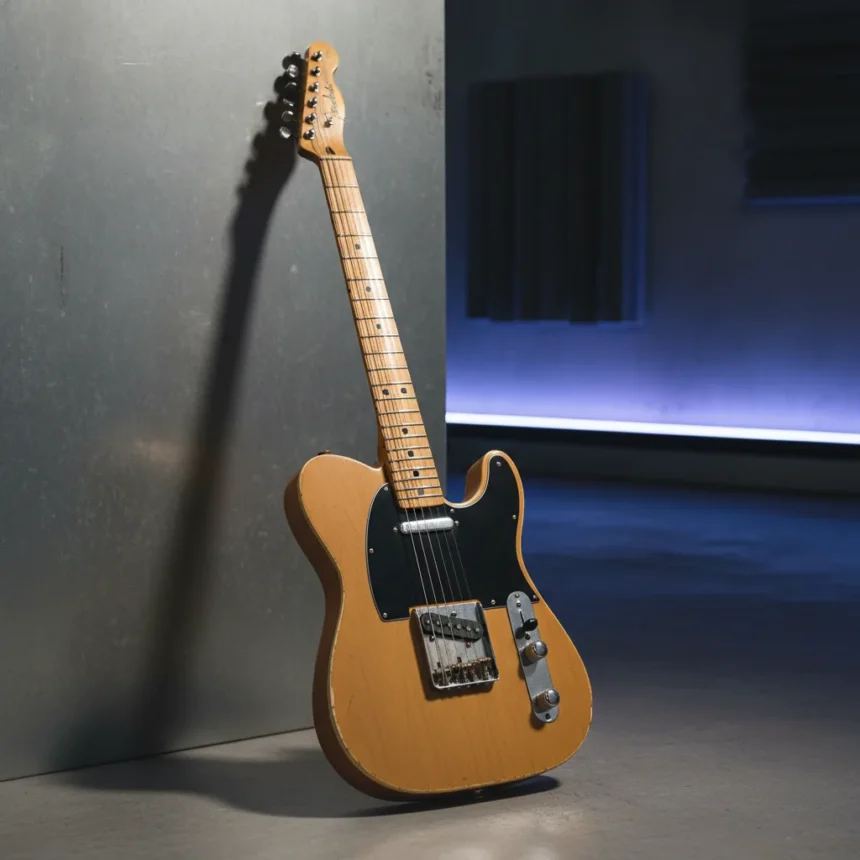
The Fender Telecaster history is the story of how a straightforward design choice became the foundation for decades of musical innovation. When Fender introduced this instrument, the company was not aiming to create a timeless classic—it was solving a practical problem: musicians needed a reliable, affordable electric guitar that could cut through live sound. What emerged was a tool so effective that it never needed fundamental reinvention. The Telecaster’s slab body, single-cutaway shape, and dual-pickup configuration proved so versatile that artists across country, rock, blues, and alternative music adopted it as a primary instrument.
This anniversary moment arrives as Fender celebrates with an all-star show in Nashville, the city most closely associated with the Telecaster’s origins and cultural identity. The event itself signals something important: the guitar remains relevant not as a nostalgic artifact but as a working instrument for contemporary musicians. That distinction matters. Many vintage instruments survive as museum pieces or collector’s items. The Telecaster survives because people still want to play it, record with it, and perform on it.
What Made the Fender Telecaster History a Success Story
The Fender Telecaster history reveals a pattern that applies beyond guitars: constraints breed creativity. The instrument’s straightforward design—no fancy curves, no excessive ornamentation, no unnecessary complexity—meant that manufacturers could produce it consistently and affordably. Players could afford one, maintain one, and modify one without specialized knowledge. That accessibility mattered enormously in the decades when electric guitars were still new and expensive.

But simplicity alone does not explain the Telecaster’s 75-year dominance. The guitar sounds distinctive. Its bright, twangy tone cuts through a mix without needing heavy effects or processing. That tonal character proved perfect for country music, where clarity and articulation are essential. Yet the same guitar also powered some of punk’s most aggressive recordings and provided the backbone for blues-rock innovation. Few instruments adapt so readily across such different musical contexts. The Fender Telecaster history is partly a history of how versatility trumps specialization in the long run.
The Fender Telecaster History in the Hands of Major Artists
The Fender Telecaster history is inseparable from the artists who chose it. Some of the world’s biggest names have relied on the Telecaster as a signature instrument, lending it credibility that no marketing campaign could manufacture. When influential musicians adopt a tool and make it central to their sound, that tool becomes culturally significant. The Telecaster achieved this status not through luck but through genuine utility and tonal character that major artists recognized and valued.



The Nashville celebration underscores this point. An all-star event brings together musicians who represent different eras and genres, all connected by their choice to play a Telecaster. That convergence illustrates something the Fender Telecaster history proves repeatedly: this is not a niche instrument for purists or collectors. It is a working guitar for professionals, from session musicians to arena performers. The fact that such an event can draw major talent speaks to the instrument’s enduring appeal and its place in contemporary music.
How the Fender Telecaster History Compares to Other Icons
The Fender Telecaster history stands apart from other iconic guitars partly because of how it has evolved without losing its essential identity. While some legendary instruments became locked in their original form—preserved as historical artifacts—the Telecaster has been refined, reissued, and reimagined across its 75 years while maintaining design continuity. Players can choose from countless variants, finishes, and configurations, yet the core instrument remains recognizable and functionally unchanged from decades past.
This balance between consistency and adaptation is rare. Many products either stagnate under the weight of tradition or lose their identity in pursuit of novelty. The Fender Telecaster history demonstrates a third path: respect the original while allowing it to grow. That philosophy has kept the instrument relevant through technological shifts, genre changes, and generational turnover in music.
Why the 75-Year Mark Matters for Electric Guitar Culture
Seventy-five years is long enough to span multiple generations of musicians, yet short enough to feel immediate and connected to living history. The Fender Telecaster history is not ancient—people who played the original 1950 model are still alive, and many contemporary players learned on vintage Telecasters. That continuity creates a unique cultural position. The guitar is old enough to carry historical weight yet young enough to feel present and vital.



The Nashville celebration acknowledges this moment. Fender is not treating the Telecaster as a relic to be dusted off and admired. Instead, the company is showcasing it as an active, evolving part of modern music. That approach respects the Fender Telecaster history while asserting its future. In an era of digital instruments, modeling technology, and software-based music production, a 75-year-old design remains genuinely competitive. That resilience says something profound about good design—it transcends its era.
What Has the Fender Telecaster History Taught the Music Industry
The Fender Telecaster history offers lessons that extend beyond guitars. The instrument proves that durability, simplicity, and tonal character matter more than latest features or flashy aesthetics. It shows that affordability and accessibility can coexist with quality and prestige. It demonstrates that a tool designed for practical purposes can become culturally significant without ever losing its utility. These principles apply to any creative field where tools and instruments matter.
The 75-year milestone also illustrates the power of consistency. Fender did not reinvent the Telecaster every few years to chase trends. The company refined it, offered variations, and listened to players—but the core design remained stable. That stability allowed musicians to develop deep familiarity with their instruments and build mastery that could span decades. In a world obsessed with novelty, the Telecaster’s longevity stands as a counterargument: sometimes the best product is one that works so well that nobody feels the need to replace it.
Is the Fender Telecaster still relevant for modern musicians?
Yes. The Fender Telecaster remains a primary choice for professional and amateur musicians across genres. Its presence in contemporary recording studios, live performances, and music education programs confirms its continued relevance. The all-star Nashville event celebrating its 75th anniversary further demonstrates that major artists actively choose to play and promote the instrument rather than viewing it as a historical curiosity.
What makes the Fender Telecaster different from other electric guitars?
The Telecaster’s straightforward design, bright tonal character, and dual-pickup configuration distinguish it from other electric guitars. Its simplicity makes it affordable and maintainable, while its versatility allows it to work across country, rock, blues, punk, and alternative music. The instrument’s ability to cut through a mix without heavy processing has made it a studio and live performance favorite for decades.
How has the Fender Telecaster design changed over 75 years?
While specific design evolution details require access to the full source material, the Fender Telecaster history shows that the instrument has been refined and reissued in various configurations while maintaining its core identity. The basic shape, pickup arrangement, and fundamental character have remained consistent, allowing players to recognize a Telecaster instantly regardless of when it was manufactured.
The Fender Telecaster history demonstrates that certain designs achieve a kind of permanence not through perfection but through honesty. The guitar solves its core problem—producing clear, reliable electric sound—so effectively that it never needed fundamental reinvention. That principle, applied across 75 years and countless musicians, explains why an instrument from the 1950s still matters today. The Nashville celebration is not nostalgia. It is recognition that good design endures.
Where to Buy
Fender 75th Anniversary Telecaster
Edited by the All Things Geek team.
Source: T3