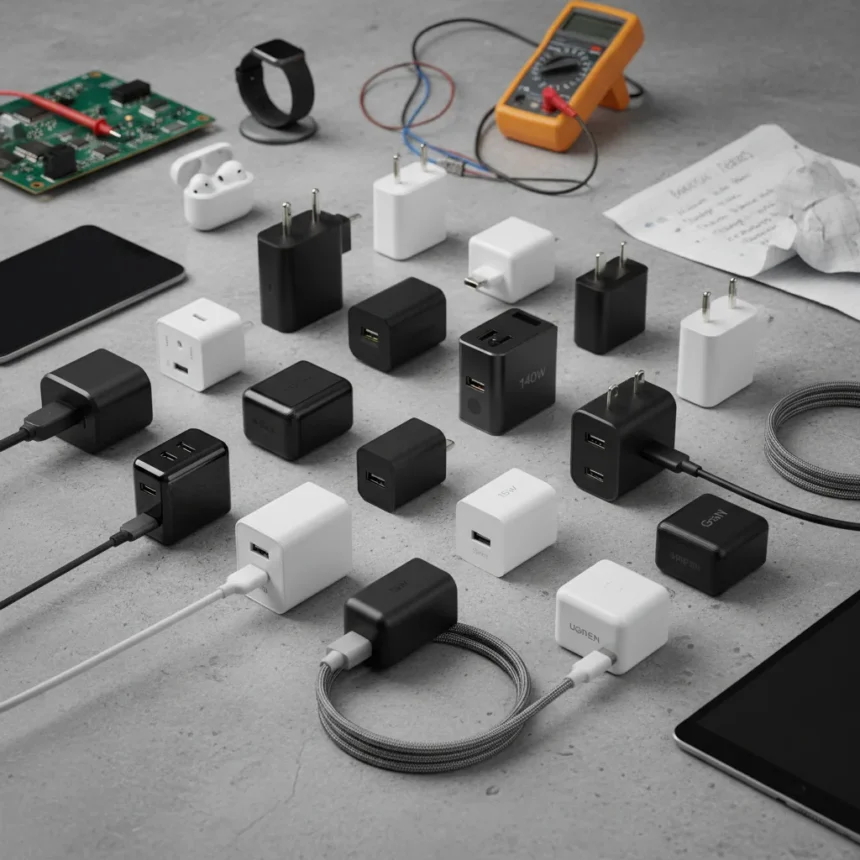
USB wall chargers are not all created equal. Tom’s Hardware tested 20 USB wall chargers spanning 15W to 140W output, with and without integrated screens, to cut through the noise in a market drowning in mediocre options. The goal: arm readers with real knowledge to pick a charger that actually works.
Key Takeaways
- Tom’s Hardware evaluated 20 USB wall chargers across budget and premium price tiers.
- Tested chargers range from 15W to 140W output capacity.
- The roundup includes chargers with display screens and basic models without screens.
- The comparison aims to identify genuinely good chargers in a crowded, low-quality market.
- Power output, build quality, and feature set vary dramatically across tested models.
Why USB Wall Charger Quality Matters More Than You Think
Most people grab whatever charger came in the box or buy the cheapest option online. That approach costs money in the long run. A bad charger charges slower, generates heat, and dies within months. A good USB wall charger delivers consistent power, handles multiple devices, and lasts years. The difference between a $15 charger and a $60 one often shows up not in speed tests but in reliability and cable longevity.
The USB wall chargers market has exploded in the past five years. Phone makers stopped including chargers in boxes. Suddenly, buyers needed to choose from thousands of options with wildly inconsistent quality. Some chargers advertise 65W but deliver half that. Others overheat under load. Tom’s Hardware’s decision to test 20 models across the full spectrum—from budget basics to premium multi-port units—reflects this real consumer confusion. The article addresses a genuine pain point: how do you actually know which charger won’t waste your money?
What Makes a USB Wall Charger Worth Buying
Not all USB wall chargers are equal, and the differences matter. Output wattage is the most obvious metric. A 15W charger suits older phones or tablets. A 65W charger handles modern laptops and multiple phones simultaneously. A 140W charger is overkill for most people but useful for power users juggling a laptop, tablet, and phone at once. But wattage alone tells only part of the story.

Build quality separates good chargers from bad ones. Cheap chargers use thin plastic casings that crack or melt under stress. Premium USB wall chargers use reinforced materials and better internal components that dissipate heat properly. Integrated screens, found on some tested models, let users see real-time wattage output and input voltage—useful for diagnosing charging problems or verifying that a charger is delivering promised power. Without a screen, you’re flying blind.
Port configuration matters too. Single-port chargers are simple and portable. Multi-port chargers let you charge a phone, tablet, and laptop simultaneously from one outlet, reducing cable clutter. The trade-off: multi-port units are bulkier and more expensive. Tom’s Hardware’s decision to test chargers across this entire spectrum—15W single-port basics through 140W multi-port powerhouses—reflects the real choices buyers face.



Chargers With Screens vs. Without: The Trade-Off
One trend the Tom’s Hardware testing highlights is the rise of USB wall chargers with integrated display screens. These chargers show real-time wattage, voltage, and sometimes current draw. They cost more—typically 30 to 50 percent more than equivalent chargers without screens. Are they worth it?
For casual users, no. A screen adds complexity, battery drain (though minimal), and another potential failure point. For power users and tech enthusiasts, a screen is invaluable. It confirms that your 65W charger is actually delivering 65W, not 45W. It helps troubleshoot slow charging issues. It satisfies curiosity. If you’re the type who cares about charging efficiency and wants data, a screened charger is worth the premium. If you just want your phone charged by morning, save the money.
Budget vs. Premium: Where the Real Difference Lies
Budget USB wall chargers—typically under $30—work fine for light use. They charge phones adequately. They’re portable. But they often run hot, lack safety certifications, and fail within a year or two. Premium chargers—$50 and up—include better components, multiple safety certifications, and longer warranties. They charge faster and stay cooler under load.
The jump from budget to mid-range (around $40–$60) is where you get the best value. These chargers offer solid build quality, reliable power delivery, and multi-port options without the premium price tag. Tom’s Hardware’s testing across 20 models, from cheap to expensive, likely reveals this sweet spot clearly. Spending an extra $20 to $30 on a charger you’ll use daily for three to five years is smarter than buying a new cheap charger every year.



How to Choose the Right USB Wall Charger for Your Needs
Start with wattage. Count your devices. If you charge one phone, 20W is plenty. If you charge a phone and tablet, aim for 30W. If you charge a laptop plus phone plus tablet, jump to 65W or higher. Tom’s Hardware’s test of 15W through 140W units covers every realistic scenario.
Next, consider portability. A 15W single-port charger fits in a pocket. A 140W multi-port charger stays on a desk. If you travel, lighter is better. If you work from home, multi-port capacity matters more than weight. Check the number of ports. Two USB-C ports beat one if you have multiple devices. Look for safety certifications like FCC, CE, or UL marks—they indicate the charger has passed basic safety tests.
Finally, decide if a screen adds value for you. If you troubleshoot charging issues or care about real-time power metrics, yes. If you just want your devices charged, a screen is unnecessary expense. Tom’s Hardware’s inclusion of both screened and non-screened models in their 20-charger test makes this comparison concrete.
Frequently Asked Questions
What wattage USB wall charger do I actually need?
For a single smartphone, 20W is sufficient. For a phone and tablet, 30–45W works well. For a laptop plus phone, aim for 65W or higher. Tom’s Hardware’s test spanning 15W to 140W shows that overkill wattage wastes money—pick the lowest wattage that covers your devices.
Are expensive USB wall chargers really better than cheap ones?
Yes, usually. Premium chargers run cooler, include better safety features, and last longer. The jump from a $15 charger to a $50 charger is substantial. The jump from $50 to $100 offers diminishing returns unless you need extreme wattage or many ports.
Do USB wall chargers with screens charge faster?
No. A screen does not affect charging speed—it only displays real-time power data. Screens are for information and troubleshooting, not performance. Speed depends on the charger’s wattage and the device’s charging capabilities.
The USB wall chargers market is crowded with mediocre options, but good chargers exist if you know what to look for. Tom’s Hardware’s test of 20 models across wattages, port counts, and features provides the roadmap. Spend a little more than you think you should, prioritize build quality and safety certifications, and choose wattage based on your actual devices. Your phone, tablet, and wallet will thank you.
Where to Buy
Chargelab Power-Z KM003C ($109.99) | HDC-085C ($12.15) | Bit Trade One Cable Checker2 ($60.00) | Anker Solix C300 ($179.99) | TempPro TP30 ($19.99)
Edited by the All Things Geek team.
Source: Tom's Hardware