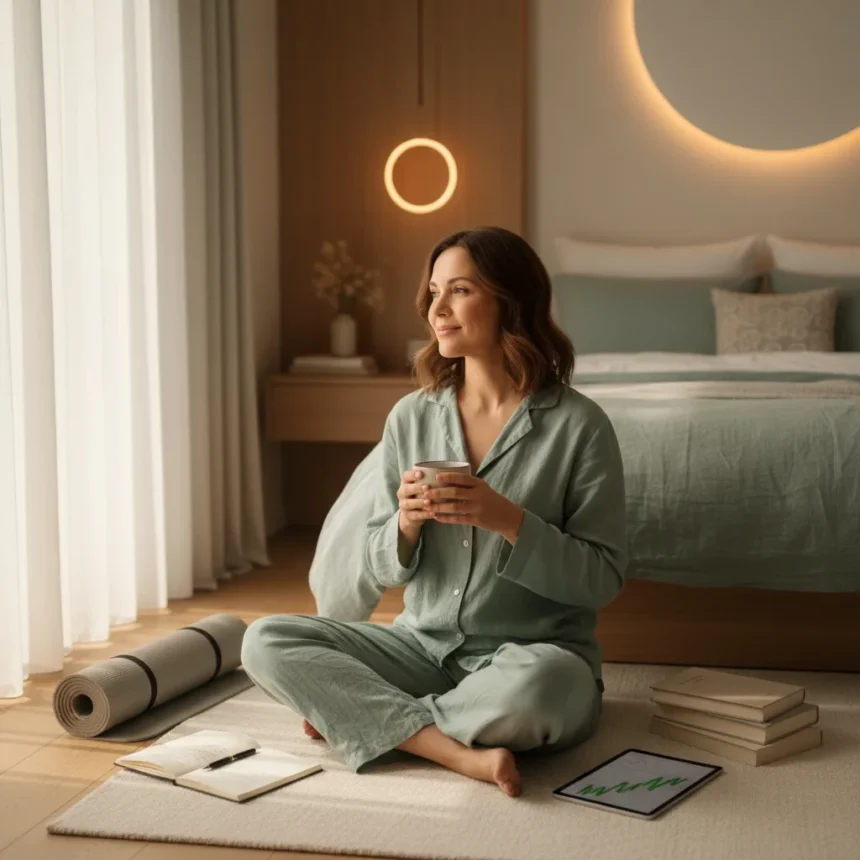
A nighttime routine for better sleep does not require expensive gadgets, supplements, or pharmaceutical interventions. According to a sleep coach who spent years battling chronic insomnia, the shift from chasing perfect sleep to building consistent habits transformed everything. She stopped fighting her body and started working with its natural rhythms instead.
Key Takeaways
- Dim indoor lights early evening to signal melatonin release and regulate your body clock.
- Turn off all screens at least one hour before bed to allow natural melatonin rise.
- Keep your bedroom cool (65-70°F or 18-21°C), dark, and quiet for optimal sleep conditions.
- Practice relaxation techniques like progressive muscle relaxation or scheduled worry time to reduce bedtime anxiety.
- Maintain consistent bedtime and wake times daily to align your circadian rhythm.
Why Consistency Beats Willpower in Sleep Recovery
The circadian rhythm—your body’s internal 24-hour clock—thrives on predictability. Most people assume they need to force themselves to sleep better through sheer determination. The opposite is true. According to sleep expert Dr. Lindsay Browning, your body falls asleep and stays asleep better when you consistently go to bed and wake up at the same time each day. A nighttime routine for better sleep works precisely because it removes the guesswork. Your nervous system learns what to expect, and resistance drops.
The author’s breakthrough came when she stopped treating sleep as something to conquer and started treating it as a skill to practice. This mindset shift matters. When you approach a nighttime routine for better sleep as a non-negotiable ritual rather than a temporary fix, you remove the anxiety that often keeps people awake. Erin Clifford, a licensed professional counselor and health coach, notes that many busy professionals struggle with sleep because they have too much on their mind to fall asleep or wake thinking about the upcoming day. A structured routine offloads that mental burden before bedtime even arrives.
Five Habits That Rewire Your Sleep-Wake Cycle
A nighttime routine for better sleep starts hours before your head touches the pillow. The first step is managing light exposure. Pull your curtains in the morning to catch daylight—this suppresses melatonin and releases cortisol for daytime alertness. Then, as evening approaches, dim your indoor lights. This signals your body to begin melatonin production, the hormone that makes sleep possible. You are not fighting your biology; you are cooperating with it.

The second habit addresses hydration with precision. Dehydration causes sleep disruptions including headaches, muscle cramps, and snoring. Drink enough water throughout the day, but taper your intake in the evening to avoid waking for bathroom trips. This balance is crucial—too little water hurts sleep quality, but too much disrupts it.
Third: eliminate screens one hour before bed. Blue light from phones, tablets, and laptops prevents melatonin levels from rising, delaying sleep onset and reducing sleep depth. Replace screens with a physical book. This swap does more than block blue light; it signals a transition from work mode to rest mode. Your brain recognizes the shift.



Fourth: practice a relaxation technique. The author uses scheduled worry time, an evidence-based method where you set aside 15-20 minutes in the early evening to write down concerns and mentally postpone them until tomorrow. This prevents anxious thoughts from hijacking sleep. Alternatively, progressive muscle relaxation—tensing and releasing muscle groups systematically—activates the parasympathetic nervous system and prepares your body for sleep. Most healthy adults take 10-20 minutes to fall asleep naturally; these techniques speed that process without medication.
Fifth: optimize your sleep environment. Keep your bedroom cool—between 65-70°F (18-21°C)—and use blackout blinds or a sleep mask to eliminate light. End your routine with a warm shower followed by guided meditation. The temperature drop after a warm shower signals sleep time to your body, and guided audio provides structure for a wandering mind.
How Long Does It Take to See Results?
Do not expect instant results. The Military Sleep Method—combining deep breathing with progressive muscle relaxation—claims sleep onset in two minutes, but that requires weeks of nightly practice. A sleep coach and certified sleep science coach note that nightly repetition is like learning any skill: the more you practice it, the more powerful and automatic it becomes. Most people notice improved sleep quality within one to three weeks of consistent routine application. Patience is part of the protocol.
The author’s own experience illustrates this timeline. After three weeks of consistent guided meditation before bed, she reported falling asleep within 10 minutes. That was not luck; it was the result of teaching her nervous system to recognize and respond to a predictable sequence of cues. Your body is trainable, but training takes repetition.



A Nighttime Routine for Better Sleep vs. Other Methods
Sleep technology and supplements flood the market, but a nighttime routine for better sleep built on behavioral habits outperforms most alternatives. Bedtime yoga, cognitive shuffling, and even smart beds have been tested against simple routines—and the simple routines win. Why? Because habits are free, accessible immediately, and do not depend on devices that might fail or apps that require subscriptions. A consistent routine works whether you are traveling, stressed, or broke.
The anxiety-insomnia connection runs deep. Research from 2003 shows anxiety and insomnia go hand in hand. A nighttime routine for better sleep addresses this directly by offloading worries early evening and using relaxation techniques to calm your nervous system. You are not just changing sleep behavior; you are changing your mental state before sleep even begins.
What Makes This Routine Stick
The author’s success hinged on one realization: she was trying to achieve perfect sleep instead of consistent sleep. Perfect sleep is a myth. Consistent sleep is achievable. A nighttime routine for better sleep works because it is repeatable, requires no special equipment, and delivers measurable results. You do not need to be a sleep scientist to benefit—you just need to show up every night and follow the same sequence.
Start with one habit. Do not overhaul your entire evening at once. Add dimmed lights this week. Skip screens next week. Build the routine in layers. This approach prevents overwhelm and lets each habit settle before the next arrives. Within a month, these five elements compound into a sleep system so automatic that you barely think about it.
Can a nighttime routine for better sleep work for everyone?
A nighttime routine for better sleep works best for people willing to commit to consistency. If you change your bedtime every night or skip relaxation techniques on busy days, results will be inconsistent. The routine requires 30-60 minutes of dedicated time before bed, which is not feasible for everyone. However, even partial adoption—dimming lights and skipping screens—delivers measurable benefits for most people.
How quickly will a nighttime routine for better sleep improve my energy levels?
Sleep quality improvements typically appear within one to three weeks. Energy levels follow about one week later, once your body has accumulated several nights of deeper, more restorative sleep. Do not expect dramatic change after a single night. The compounding effect of consistent sleep is what transforms morning energy.
Should I use a sleep app or guided meditation for my nighttime routine for better sleep?
Guided meditation accelerates sleep onset for many people, but it is not mandatory. A physical book, breathing exercises, or simple silence work equally well if practiced consistently. Choose whichever method you will actually use every night. The routine itself matters more than the specific tool.
A nighttime routine for better sleep is not revolutionary. It is simple, science-backed, and proven by someone who lived through chronic insomnia. The real power lies in showing up, night after night, and letting your body learn that sleep is safe and predictable. Energy follows naturally once your nervous system trusts the routine.
Edited by the All Things Geek team.
Source: Tom's Guide