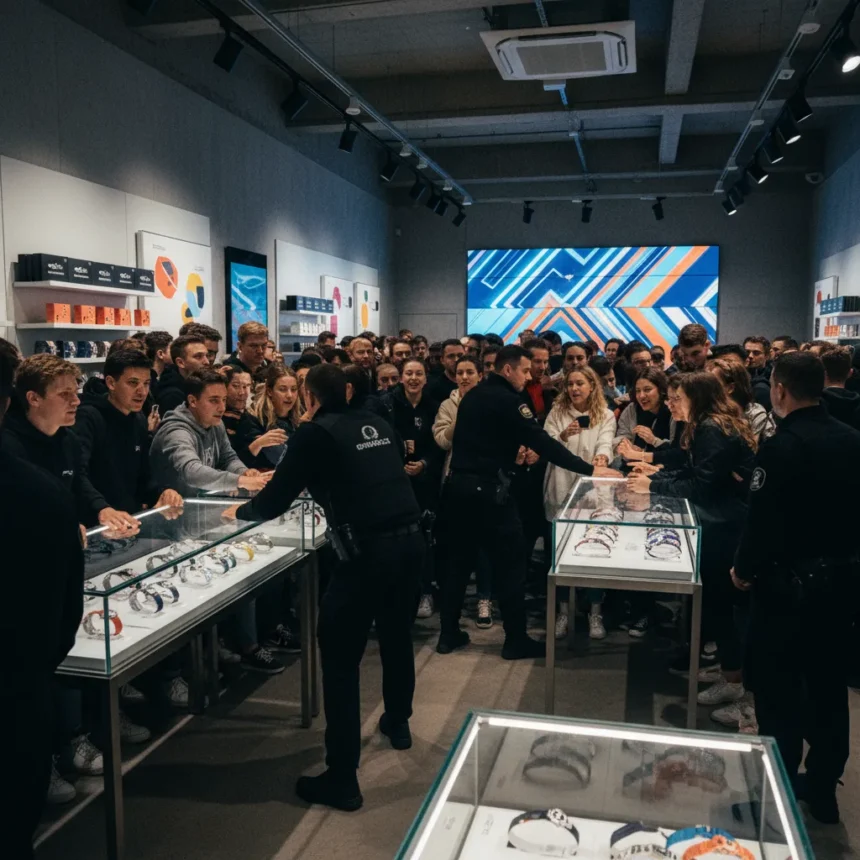
Swatch store chaos marketing isn’t a failure of logistics—it’s the entire point. What appears to be disorder at Swatch retail locations is actually a calculated strategy to amplify demand and create cultural momentum around limited-edition releases, particularly high-demand collaborations that position the brand as an entry point to luxury watchmaking.
Key Takeaways
- Swatch store crowding is intentional marketing strategy, not poor planning or supply chain failure.
- The chaos drives demand by creating scarcity perception and social proof through visible queues.
- Limited-edition collaborations, especially affordable luxury partnerships, fuel the store traffic phenomenon.
- The strategy generates free media coverage and organic social sharing from frustrated and excited consumers.
- Store chaos positions Swatch as accessible luxury, competing against traditional high-end watch positioning.
Why Swatch embraces retail chaos as a feature
Retail disorder that would traditionally signal operational failure actually functions as a demand amplifier for Swatch. When customers queue outside stores or encounter crowded conditions, the visible scarcity creates urgency and social proof—two of the most powerful drivers of consumer behavior. This isn’t accidental mismanagement; it’s a deliberate strategy to make limited releases feel genuinely limited, even when production volumes are substantial. The chaos generates conversation, social media posts, and free press coverage that no traditional advertising budget could replicate.
The strategy works because it taps into fundamental retail psychology. When a consumer sees others waiting in line or hears about store crowds from friends, they perceive the product as more valuable and desirable than they might if it were simply stocked on shelves. The friction of scarcity—even if artificially created—transforms a watch purchase from a rational transaction into a status moment. Swatch leverages this by allowing the chaos to happen, sometimes even amplifying it through limited store hours, controlled stock allocation, or staggered releases.
The luxury watch collaboration angle
The core of this strategy centers on positioning Swatch as the entry point to luxury watchmaking through high-profile collaborations. By releasing affordable versions of or partnerships with prestigious brands, Swatch creates a collision between mass-market accessibility and luxury aspiration. Consumers who cannot afford a traditional luxury watch suddenly have a pathway to own something with prestige cachet at a fraction of the price. This positioning generates demand from two distinct audiences: collectors seeking value and aspirational buyers seeking status.

The store chaos becomes the physical manifestation of this collision. It signals to consumers that what they’re buying is genuinely limited and genuinely desired, even if the price point is accessible. The crowd becomes proof of the product’s desirability. When a consumer finally secures the watch after waiting, they’ve earned it through effort, which increases perceived value and satisfaction. The chaos isn’t a problem to solve—it’s a feature that enhances the product’s perceived worth.
How store crowding generates media and social momentum
Traditional retail strategies aim to maximize transaction efficiency: fast checkout, clear pathways, minimal friction. Swatch inverts this. By allowing—or even encouraging—crowded conditions, the brand transforms the store experience into an event worth documenting. Customers post about long waits, crowded shelves, and sold-out inventory on social media. News outlets cover the phenomenon as a cultural moment. The chaos becomes the story, and the story becomes free marketing that reaches audiences far beyond the store walls.



This approach is particularly effective for watch enthusiasts and luxury-adjacent consumers who actively discuss releases online. A crowded store generates discussion threads, TikTok videos, and Instagram posts that wouldn’t exist if the purchase were frictionless. The chaos creates narrative tension—will I get one? Did I miss out?—that drives engagement. Each post amplifies the perception of demand, which in turn drives more consumers to attempt purchase, creating a self-reinforcing cycle. The brand doesn’t need to spend marketing dollars when the chaos itself is the marketing.
Swatch vs. traditional luxury retail models
Traditional luxury watch brands maintain controlled, appointment-based retail experiences designed to preserve exclusivity and brand prestige. They limit store traffic, curate customer access, and maintain artificial scarcity through price and distribution control. Swatch inverts this model by embracing high traffic and visible chaos while maintaining scarcity through limited production or timed releases. Where luxury brands hide demand behind velvet ropes, Swatch puts demand on display in crowded stores and viral social posts.
This creates a distinct positioning: Swatch is luxury that’s aspirational but accessible, exclusive but not gatekept, desirable but not unattainable. The chaos reinforces this positioning by making the brand feel democratic—anyone can show up and try to buy—while the scarcity ensures that not everyone will succeed. It’s a middle ground between mass-market retail and traditional luxury, and the store experience is the physical proof of that positioning.
Is the chaos sustainable as a marketing strategy?
The effectiveness of store chaos as marketing depends on sustained demand and genuine scarcity. If releases become predictable or stock becomes abundant, the chaos dissipates and the strategy fails. Swatch maintains the dynamic by carefully timing releases, controlling production volumes, and rotating which products become the focal point of demand. As long as new collaborations and limited editions arrive regularly, the cycle continues. The brand is essentially managing demand through controlled scarcity and media momentum rather than managing supply through logistics.



The risk is that the chaos eventually becomes negative—customer frustration, poor service, safety concerns, or accessibility issues could flip the narrative from exciting scarcity to poor operations. Swatch must balance the benefits of visible demand against the costs of genuinely poor customer experience. So far, the brand has navigated this by keeping chaos contained to specific releases rather than making it the permanent store condition, which preserves the strategy’s novelty and effectiveness.
Does Swatch intentionally create store crowds?
The research available does not provide explicit confirmation from Swatch leadership stating that store chaos is a deliberate marketing tactic. However, the pattern of crowded stores, limited inventory, timed releases, and high-profile collaborations suggests the chaos is at minimum tolerated and potentially encouraged as part of the brand’s positioning strategy. Whether chaos is actively engineered or simply allowed to develop is less important than the fact that Swatch has chosen not to eliminate it, which indicates acceptance of its marketing value.
How do limited-edition watch releases drive store traffic?
Limited-edition releases create artificial urgency by establishing a finite window and quantity. When consumers believe a product will sell out, they prioritize purchase over deliberation. Swatch amplifies this by releasing products in waves, controlling which stores receive stock, and creating regional or time-based exclusivity. The scarcity is often more perceived than real—production may be substantial—but the perception is what drives behavior. Store chaos becomes the visible proof that scarcity is real, which reinforces the perception and drives more consumers to attempt purchase during the limited window.
What’s the long-term impact of this strategy on brand perception?
Swatch store chaos marketing positions the brand as culturally relevant and desirable, which strengthens its appeal to younger and aspirational consumers. The chaos signals that Swatch is worth the effort, that owning a Swatch product means something. Over time, this perception can elevate the brand’s status and justify premium pricing on future releases. The strategy also creates a loyal community of enthusiasts who view Swatch not as a mass-market brand but as a limited-edition player with genuine cultural cachet. This shift in perception is difficult for competitors to replicate, as it requires sustained cultural momentum and media attention that cannot be bought directly.
Swatch store chaos is not a problem to be solved but a strategy to be managed. The brand has discovered that visible scarcity and crowded retail experiences amplify demand and generate cultural momentum in ways that traditional marketing cannot. As long as Swatch continues to release genuinely desirable limited editions and maintains the perception of scarcity, the chaos will remain a feature rather than a bug—and a remarkably effective one at that.
Where to Buy
Edited by the All Things Geek team.
Source: T3