





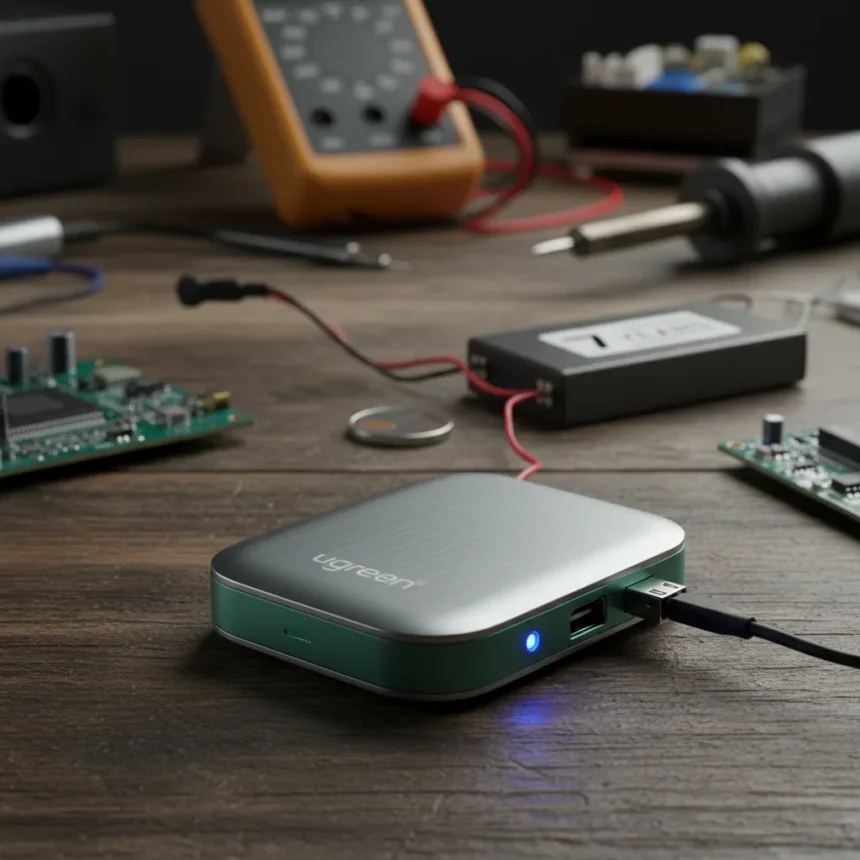
The Ugreen Bluetooth tracker stands out in a crowded item-finder market with a headline claim that sounds almost too good to be true: up to seven years of battery life on a single charge. In a category where most competitors require monthly or quarterly battery swaps, this football-shaped tracker promises a fundamentally different ownership experience. But like any compelling tech claim, there’s a catch worth understanding before you decide whether this tracker deserves a place in your bag or pocket.
Key Takeaways
- Ugreen Bluetooth tracker delivers up to seven years of battery life on one charge.
- The tracker features a distinctive football-shaped design.
- Extremely long battery life comes with a tradeoff that limits certain functionality.
- Item trackers like this compete in a market dominated by ecosystem-specific alternatives.
- Seven-year battery claims require understanding the specific use case and limitations.
What Makes the Ugreen Bluetooth Tracker Different
Most Bluetooth item trackers operate on a fundamental compromise: frequent battery replacement or regular recharging in exchange for continuous connectivity and responsive tracking. The Ugreen Bluetooth tracker breaks this pattern by claiming to stretch battery life to seven years, a specification that immediately raises questions about how such longevity is possible without significant tradeoffs in performance or features.
The tracker’s football-shaped design hints at its positioning as a compact, portable accessory for bags, keys, or luggage. This form factor is practical for travel and everyday carry, placing it in direct competition with other compact trackers in the market. Unlike some ecosystem-locked alternatives that only work within a specific brand’s network, a Bluetooth tracker offers broader compatibility potential—though the exact supported platforms and integration options require verification from the full product documentation.
The Battery Life Claim and Its Catch
Seven years on a single battery charge is genuinely unusual in the Bluetooth tracker space. This extreme longevity almost certainly comes with a meaningful limitation—the article’s title explicitly promises a catch, and in the world of consumer electronics, exceptional battery life typically means reduced functionality, lower power consumption, or less frequent updates and connectivity checks.

The catch likely involves a tradeoff between battery endurance and feature set or responsiveness. Some trackers achieve extended battery life by reducing the frequency of location updates, limiting real-time tracking capabilities, or disabling certain smart features that would drain power more quickly. Understanding what you’re giving up for that seven-year lifespan is essential before purchase. A tracker that updates location every few hours will last longer than one that updates constantly, but it will also be less useful if you need immediate, precise location data.
How This Compares to Other Item Trackers
The Bluetooth tracker market includes everything from ecosystem-specific options that integrate tightly with smartphone platforms to independent trackers designed for broader compatibility. Most mainstream alternatives in this space require battery replacement or charging at least annually, and many require it more frequently. A seven-year battery claim, even with limitations, represents a significant departure from the typical ownership experience.



The football shape and positioning suggest this tracker targets practical users who prioritize durability and long-term reliability over latest features. That’s a valid market position—not everyone needs real-time tracking with constant location updates. For travelers, frequent movers, or anyone tired of managing small-device batteries, a tracker that simply works for years without intervention has obvious appeal. The tradeoff is that you’re likely accepting reduced real-time responsiveness or feature depth in exchange for that convenience.
Is the Ugreen Bluetooth Tracker Worth Considering
The value proposition hinges entirely on whether the seven-year battery life’s catch aligns with your actual needs. If you’re looking for a set-it-and-forget-it tracker for a travel bag or a backup item-finder that doesn’t demand constant attention, this tracker’s extreme battery life becomes a genuine advantage. If you need real-time, always-on tracking with instant location updates, the limitations built into that battery life claim might be a dealbreaker.
Price, compatibility with your devices, and the specific nature of the catch—which the full article presumably clarifies—will determine whether this tracker justifies a purchase. The football shape suggests it’s designed for practical, everyday use rather than aesthetic appeal, which means it’s targeting function-first buyers who don’t mind a utilitarian appearance.
What does the catch mean for Ugreen Bluetooth tracker performance
The catch almost certainly involves reduced real-time tracking frequency, limited feature set, or less aggressive connectivity checks compared to trackers designed for shorter battery life. Seven-year battery life requires the tracker to consume minimal power, which inevitably means it cannot deliver the same level of responsiveness or constant connectivity as a tracker that needs recharging every few months.



How long do other Bluetooth trackers typically last on a battery
Most mainstream Bluetooth item trackers require battery replacement or recharging between three and twelve months, depending on design and use. Some premium options push toward annual battery life, but seven years represents a dramatic outlier. This extreme difference explains why the Ugreen tracker’s claim deserves scrutiny—it’s operating in a different category of longevity than what consumers typically expect.
Can you use the Ugreen Bluetooth tracker with any smartphone
The research brief does not specify which platforms the Ugreen Bluetooth tracker supports or whether it works with both iOS and Android devices. Compatibility details are essential before purchase, so check the product documentation or manufacturer specifications to confirm the tracker works with your phone before committing.
The Ugreen Bluetooth tracker’s seven-year battery claim is genuinely impressive, but it’s a feature that only matters if the catch—whatever it is—doesn’t eliminate the tracker’s usefulness for your specific needs. For practical users who value long-term reliability over latest features, this tracker represents a compelling alternative to the constant battery-swapping cycle that defines most of the item-finder market. The real question is whether you’re willing to accept the limitations that make such extraordinary battery life possible.
Where to Buy
Amazon for £19.99 | costing £29.99 for a pack of four
Edited by the All Things Geek team.
Source: T3




