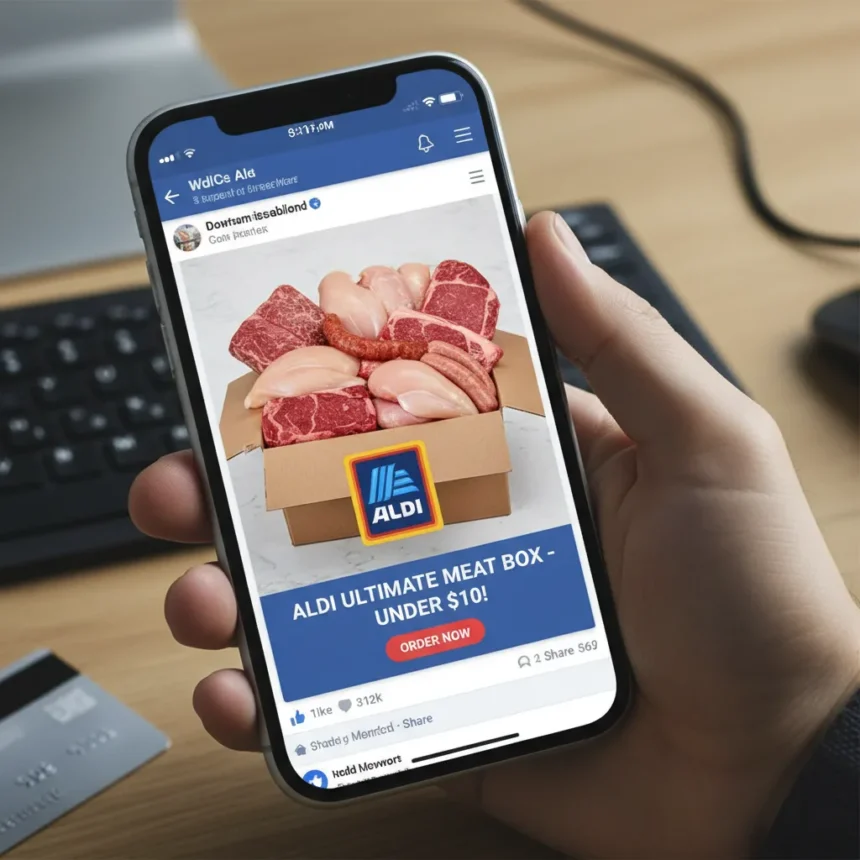
The Aldi meat box scam is a fraudulent Facebook campaign that lures shoppers with an absurdly cheap meat box offer to steal their payment card details. Scammers impersonate Aldi, the global supermarket chain, posting ads that promise meat boxes for under $10—a price described as roughly equivalent to a sandwich. The offer is designed to seem so unrealistic that it triggers clicks, and once shoppers enter their card information, the criminals capture it for fraud or resale.
Key Takeaways
- The Aldi meat box scam uses fake Facebook ads impersonating the supermarket brand to harvest payment card details.
- The fraudulent offer prices meat boxes at under $10, framed as an absurdly cheap deal to drive urgency.
- Legitimate Aldi promotions never ask for card details through suspicious social media ads or links.
- Scammers exploit trust in recognizable grocery brands and use social proof to appear credible.
- Verify any unusual grocery deal directly through the official Aldi website or app before entering payment information.
How the Aldi meat box scam works on Facebook
The scam operates through a straightforward but effective social engineering tactic. Fraudsters create fake Facebook pages or run ads using Aldi branding, then post an offer for a meat box priced under $10. The price point is intentionally unrealistic—so cheap that it functions as a psychological trigger. Shoppers see the deal, assume it is a limited-time promotion, and click through without verifying the source. Once on the fake landing page, they are prompted to enter payment card details to complete the purchase. The scammers then capture this information and use it for unauthorized transactions or sell it on the dark web.
The Aldi meat box scam exploits a fundamental weakness in how people interact with social media. Facebook’s algorithm spreads the ads to users who have engaged with grocery or food content, making the targeting feel legitimate. The fake pages often copy Aldi’s branding, logos, and messaging, creating just enough visual authenticity to bypass skepticism. Victims do not realize they have been compromised until fraudulent charges appear on their statements—sometimes weeks later.
Why this Aldi meat box scam is so effective
The Aldi meat box scam succeeds because it exploits trust in a major, recognizable brand. Aldi operates globally and has built a reputation for value and affordability, making the promise of a cheap meat box feel plausible to shoppers familiar with the chain. Scammers weaponize this trust by copying Aldi’s visual identity and using the brand name directly in ads, making the offer appear semi-official. The price point—under $10—is so absurdly low that it creates artificial urgency. Shoppers assume the deal will sell out or expire, prompting them to act without thinking.

Researchers have noted that if you are getting a box of meat for a price of a sandwich, it is probably a scam. This simple heuristic cuts through the noise. Legitimate grocery discounts, even during sales, do not reduce meat prices to sandwich-level affordability. The scammers are counting on the fact that many people will ignore this red flag in the moment, driven by the prospect of saving money.
Protecting yourself from the Aldi meat box scam
The first defense against the Aldi meat box scam is skepticism toward any grocery deal that seems unrealistic. If a meat box costs less than $10, stop and verify the offer through official channels. Visit Aldi’s website directly or open the Aldi mobile app to check for current promotions. Do not click links from Facebook ads unless you have independently confirmed the promotion exists. Official Aldi promotions are advertised through the company’s owned channels, not through third-party Facebook pages or suspicious ads.



Never enter payment card details into a page you reached through a social media ad, especially if the offer seems too good to be true. Legitimate retailers guide you through secure checkout processes on their official websites or apps, not through Facebook landing pages. If you receive a Facebook ad for an Aldi meat box, report it to Facebook as fraudulent. Screenshot the ad and the fake page, then report both to Aldi’s official customer service channels so the company can take action against the scammers.
Use a credit card rather than a debit card for online purchases whenever possible. Credit cards offer fraud protection and dispute resolution mechanisms that debit cards often lack. If you do enter your card information on a fake page, contact your card issuer immediately to report the compromise and request a replacement card. Most banks will reverse fraudulent charges, but acting quickly minimizes exposure.
What makes social media scams like the Aldi meat box scam so common
The Aldi meat box scam is one of hundreds of similar campaigns running on Facebook at any given time. Social media platforms remain attractive targets for scammers because they offer massive reach, minimal verification barriers, and anonymity. A fake ad can reach thousands of people in minutes, and by the time Facebook removes it, the scammers have already captured dozens or hundreds of card details. The platform’s ad system does not reliably catch fake pages impersonating legitimate brands, especially when the scammers use slight variations in branding or obscure the fake page with a new account.
Grocery and food delivery scams are particularly prevalent because they exploit everyday consumer behavior. People routinely buy groceries online, and the category feels low-risk compared to, say, electronics or travel. When a familiar brand like Aldi appears in a social feed with a food offer, the cognitive friction is minimal. Scammers also know that grocery shoppers are often in a hurry, making them less likely to verify before entering payment information. The combination of brand trust, urgency, and low perceived risk creates a perfect storm for fraud.



Is Aldi aware of the meat box scam?
Aldi has warned customers about fake Facebook ads and pages impersonating the brand. The supermarket chain regularly advises shoppers to verify promotions through official channels and to report suspicious pages to both Facebook and Aldi directly. However, scammers operate faster than takedown notices can spread. By the time Aldi and Facebook remove one fake page, another has already launched under a slightly different name or URL. The cat-and-mouse game continues because the barrier to entry for scammers is so low.
If you encounter a fake Aldi page or ad, report it immediately to Facebook through the platform’s reporting tools and to Aldi through the company’s official website or customer service email. Provide as much detail as possible: the URL of the fake page, screenshots of the ad, and the exact offer being promoted. This information helps both Facebook and Aldi identify and remove the scam more quickly, protecting other shoppers.
FAQ
How do I know if an Aldi promotion is real?
Visit Aldi’s official website or mobile app to check for current promotions. Legitimate Aldi offers are advertised through these owned channels first, not through Facebook ads or third-party pages. If you see an Aldi promotion on Facebook, verify it on the official Aldi site before clicking or entering any information.
What should I do if I already entered my card details into the fake Aldi meat box page?
Contact your card issuer immediately and report the potential compromise. Request a replacement card and monitor your account for unauthorized charges. Most banks will reverse fraudulent transactions if you report them promptly. File a report with the Federal Trade Commission (FTC) if you are in the US, or your local consumer protection agency in other countries.
Why does the Aldi meat box scam offer such a low price?
The artificially low price is a psychological manipulation tactic designed to create urgency and bypass rational thinking. Scammers know that a meat box for under $10 is obviously unrealistic, but that absurdity is the point—it makes the offer feel like a limited-time steal, prompting quick action before shoppers can verify the legitimacy of the deal.
The Aldi meat box scam is a reminder that trust in a brand name is not the same as verification of an offer. Scammers count on shoppers recognizing Aldi and assuming any promotion bearing the name must be legitimate. By taking an extra 30 seconds to verify an unusual deal through official channels, you can avoid handing your payment card details to criminals. Stay skeptical of deals that seem too good to be true—because on social media, they almost always are.
Edited by the All Things Geek team.
Source: TechRadar