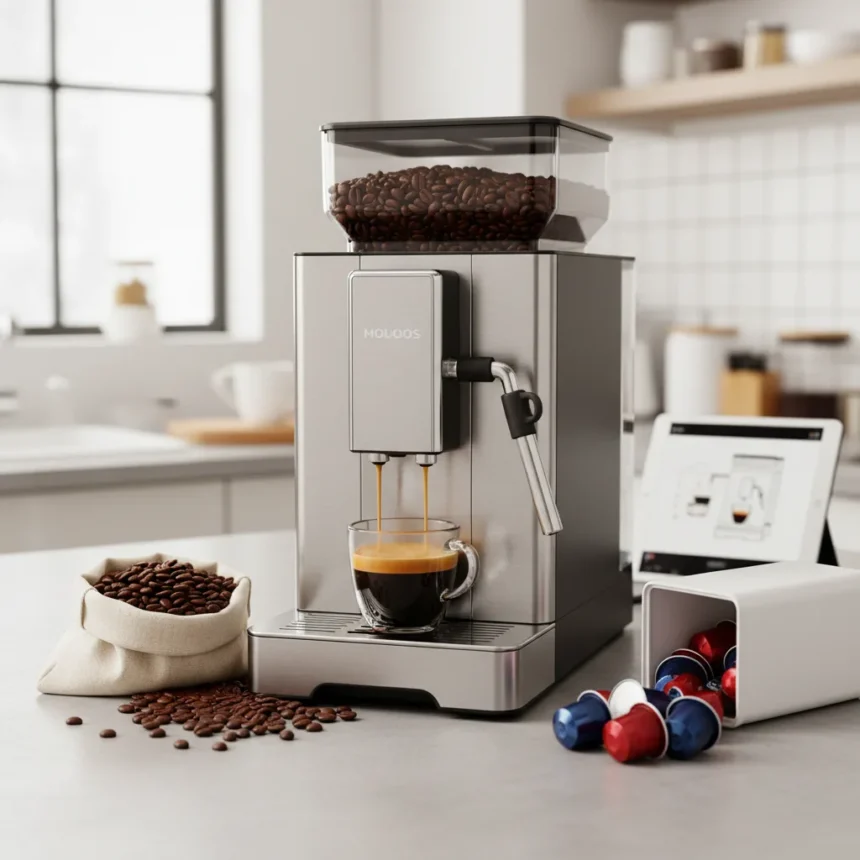
Fresh-bean espresso has a reputation for complexity—grind size, tamping pressure, water temperature, extraction time. But that reputation is outdated. Modern espresso machines designed for home use can deliver café-quality shots in roughly the same time it takes to pop a capsule into a pod machine, and the flavor difference is dramatic.
Key Takeaways
- Fresh-bean espresso machines can match capsule convenience when properly designed for simplicity.
- Semi-automatic and automatic espresso machines reduce the learning curve significantly.
- ESE pods offer a middle ground between fresh beans and traditional capsules.
- Compact espresso machines fit small kitchens without sacrificing brewing quality.
- Bean-based brewing produces richer flavor and better crema than capsule systems.
Why Fresh-Bean Espresso Deserves a Second Look
Coffee capsules dominate because they eliminate decision-making. Drop a pod, press a button, get coffee. But capsule systems lock you into proprietary pods, limit flavor variety, and generate plastic waste. Fresh-bean espresso, by contrast, gives you complete control over bean origin, roast level, and grind—yet modern machines have stripped away the intimidation factor that kept home brewers reaching for capsules instead.
The core insight is simple: convenience isn’t about having zero steps. It’s about having steps that don’t require skill or guesswork. A well-designed espresso machine automates the hard parts—consistent grinding, precise dosing, stable temperature—while keeping the easy parts in your hands. You choose the beans. The machine handles the rest.
Machines That Bridge the Capsule-to-Fresh-Bean Gap
Not all espresso machines are created equal. Some demand barista-level technique. Others do the thinking for you. The De’Longhi Dedica Style, for instance, accepts both ground coffee and ESE pods, making it a practical entry point for anyone hesitant about committing fully to fresh beans. This flexibility matters because it removes the all-or-nothing decision that keeps people locked into capsule systems.

ESE pods—Easy Serving Espresso—deserve special mention here. They’re not the same as Nespresso-style capsules. ESE pods are paper-wrapped, compostable, and compatible with any ESE-equipped espresso machine. You get the speed and simplicity of pod brewing without the locked-in ecosystem or plastic waste. For someone accustomed to capsule convenience, ESE pods are a genuine halfway house that doesn’t sacrifice flavor.
Nespresso-style machines themselves represent another compromise. They’re designed around convenience and consistency, which appeals to people who find manual espresso intimidating. But if you’re willing to spend five extra minutes per week learning a semi-automatic machine, you’ll unlock access to thousands of bean varieties at a fraction of capsule-per-shot costs.

The Real Speed Advantage of Fresh Beans
Here’s what capsule marketing doesn’t tell you: a semi-automatic espresso machine with a built-in grinder can deliver a shot from bean to cup in under three minutes. Some machines are even faster. The workflow is straightforward—fill the hopper with beans, press a button for grinding, tamp if required (or let the machine do it), and pull the shot. That’s genuinely not slower than hunting for the right capsule, loading it, and waiting for the machine to heat up.
The difference is that your three minutes produces a shot with visible crema, complex flavor notes, and the ability to adjust for your taste preferences next time. A capsule machine’s three minutes produces something consistent but flat, limited by whatever the pod manufacturer decided was acceptable.
Compact Design for Real Kitchens
A common objection to fresh-bean espresso is space. Capsule machines are small. Traditional espresso setups are bulky. But modern compact espresso machines—like the De’Longhi Dedica Style—occupy barely more counter space than a capsule machine while offering dramatically more capability. They’re engineered for apartments and small kitchens, not just for coffee shops with dedicated bar space.
This matters because accessibility determines adoption. If your espresso machine requires a dedicated corner of your kitchen, you’ll resent using it. If it fits in the gap between your toaster and your kettle, you’ll actually brew fresh-bean espresso regularly instead of defaulting to capsules out of convenience.


The Economics Actually Favor Fresh Beans
Capsule coffee costs roughly 50 cents to a dollar per shot depending on the system. Fresh-bean espresso, even with a quality machine, costs 10 to 20 cents per shot. That gap compounds fast. A household drinking three shots daily saves hundreds of dollars per year by switching to fresh beans. Add in the environmental cost of capsule waste, and the financial argument becomes overwhelming.
The upfront machine cost ($300–$600 for a reliable semi-automatic) pays for itself within a year for regular espresso drinkers. After that, every shot is cheaper and better-tasting than anything a capsule can deliver.
Can fresh-bean espresso really be as fast as capsules?
Yes, if you choose the right machine. Semi-automatic espresso machines with integrated grinders can deliver a shot in two to three minutes from bean to cup, matching capsule speed. The workflow becomes automatic once you’ve made a dozen shots—muscle memory handles tamping and timing without conscious effort.
What’s the difference between ESE pods and Nespresso capsules?
ESE pods are paper-wrapped, compostable, and compatible with any ESE-equipped machine. Nespresso capsules are proprietary, plastic, and locked to Nespresso machines. ESE pods cost less, generate less waste, and work with affordable machines that also accept ground coffee. Nespresso offers convenience but at the cost of ecosystem lock-in.
Do I need to learn barista skills to use a fresh-bean espresso machine?
Not with modern machines. Semi-automatic espresso machines with automatic grinding and dosing handle the technical complexity. Your only real decision is bean choice. After a few shots, tamping becomes intuitive. You don’t need formal training—just willingness to spend ten minutes learning your specific machine.
The capsule-versus-fresh-bean debate is really a false choice. Capsules won because they arrived first and marketed convenience aggressively. But fresh-bean espresso has caught up. Modern machines deliver speed, simplicity, and flavor that capsules can’t match. If you’ve been putting off the switch because you thought fresh-bean brewing meant complexity, it’s time to reconsider. The barrier isn’t technical anymore—it’s just habit.
Where to Buy
Edited by the All Things Geek team.
Source: TechRadar