Samsung SmartThings IKEA integration just solved the biggest friction point in affordable smart home setup: the need for multiple hubs. As of April 2026, 25 IKEA Matter-over-Thread devices now connect directly to Samsung’s SmartThings hub, eliminating the separate IKEA DIRIGERA hub that users previously needed alongside their SmartThings hardware.
Key Takeaways
- 25 IKEA devices including smart bulbs, plugs, sensors, and remotes now connect directly to SmartThings via Matter-over-Thread protocol.
- No longer requires a separate IKEA DIRIGERA hub—single SmartThings hub manages everything.
- IKEA smart bulbs start at $5.99, undercutting competitor pricing by roughly 50 percent.
- Works with Samsung TVs, soundbars, appliances, and third-party devices on compatible protocols.
- Lighting control fully supported now; blind and shade control rolling out later in 2026.
Samsung SmartThings IKEA integration eliminates the dual-hub nightmare
The core problem Samsung and IKEA solved is deceptively simple: most smart home beginners buy an affordable IKEA device, then discover it won’t talk to their Samsung hub without buying a second piece of hardware. That friction point killed countless smart home projects before they started. Now, Samsung SmartThings IKEA integration removes that barrier entirely. Jaeyeon Jung, Executive Vice President of SmartThings at Samsung Electronics, framed it bluntly: “By connecting IKEA devices to SmartThings, even first-time smart home users can enjoy a familiar and easy connectivity experience without financial burden”.
The technical foundation is Thread, a low-power IPv6 mesh networking protocol that Samsung adopted first among smart home platforms with Thread 1.4 support. Samsung TVs, soundbars, and appliances manufactured since 2022 already contain Thread border routers—the hardware that lets Matter devices communicate without Wi-Fi dependency. That existing infrastructure means millions of Samsung households already have the backbone in place to adopt IKEA devices without any additional purchases.
Why IKEA’s affordability changes the smart home game
IKEA smart bulbs start at $5.99, a price point that cuts competitor costs roughly in half. For someone building their first smart home, that matters enormously. A starter bundle of five bulbs, a plug, and a motion sensor costs less than a single premium competitor bulb. That affordability has always been IKEA’s strength, but it meant nothing if the devices wouldn’t integrate cleanly with existing hubs. Samsung SmartThings IKEA integration flips that equation: cheap devices now work smoothly with the ecosystem most Samsung users already own.


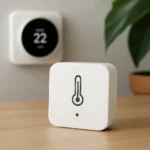
The partnership includes 25 devices across multiple categories: smart bulbs, plugs, a scroll wheel remote, temperature and humidity sensors, air quality sensors, motion sensors, door sensors, water leak sensors, and switches. Not all features are live yet—lighting control is fully supported as of April 2026, while blind and shade control arrives later in the year—but the foundation covers the most common smart home use cases.
How Samsung SmartThings IKEA integration compares to other platforms
IKEA devices also work with Apple HomeKit, Google Home, and Amazon Alexa via Matter and Thread, so users are not locked into Samsung’s ecosystem. That said, Samsung SmartThings IKEA integration offers a distinct advantage for Samsung households: no additional hub purchase. Apple users still need a HomePod mini or Apple TV as a Thread border router; Google users need a Nest hub or Nest WiFi Pro; Amazon users need an Echo device with Thread. Samsung users who bought a compatible TV or appliance since 2022 already have Thread built in.


The comparison reveals why this partnership matters for market growth. The global smart home market is projected to reach 800 million Matter devices by year-end and expand to a $537 billion industry by 2030. Most of that growth will come from first-time adopters buying affordable entry-level devices. Removing friction at that price point—eliminating the dual-hub cost—accelerates adoption across the entire ecosystem.
What still requires a separate hub
One caveat: some IKEA sensors may still require a dedicated hub, either the IKEA DIRIGERA or a third-party option. This limitation primarily affects users who want full sensor coverage without investing in compatible Samsung hardware. For households already using Samsung TVs or appliances with Thread support, this is a non-issue. For others, it represents a partial rather than complete solution to the multi-hub problem.
Samsung SmartThings IKEA integration also supports third-party devices and protocols beyond Matter, allowing users to gradually expand their ecosystem without vendor lock-in. Jaeyeon Jung signaled Samsung’s broader strategy: “SmartThings will continue to expand its ecosystem through partnerships, enabling more consumers to enjoy seamless and convenient smart home experience within the SmartThings ecosystem regardless of brand or communication protocol”.
Is Samsung SmartThings IKEA integration worth the switch?
If you own a Samsung TV or appliance made since 2022, the answer is straightforward: yes. You already have Thread hardware, and IKEA devices cost half what competitors charge. If you do not own Samsung hardware, the value proposition depends on whether you plan to buy compatible devices anyway. The partnership does not force you into Samsung’s ecosystem, but it rewards users who are already there.



Do I need to replace my IKEA DIRIGERA hub?
Not immediately. Your existing IKEA DIRIGERA hub continues to work. However, if you are building a new smart home or replacing your hub, connecting IKEA devices directly to SmartThings eliminates the need to buy a separate IKEA hub, saving money and reducing clutter.
What IKEA devices work with Samsung SmartThings right now?
Lighting control is fully supported across smart bulbs, plugs, and switches as of April 2026. Blind and shade control rolls out later in 2026. Temperature, humidity, air quality, motion, door, and water leak sensors are available but may require a hub depending on your setup.
Samsung SmartThings IKEA integration is not a revolutionary breakthrough—it is the opposite. It is the kind of unglamorous, necessary work that should have happened years ago: making cheap devices work with existing hubs so first-time smart home buyers do not get stuck. By removing the dual-hub requirement and leveraging Thread infrastructure already in millions of Samsung devices, this partnership finally delivers on the promise of affordable, friction-free smart home adoption. For budget-conscious users with Samsung hardware, IKEA devices just became the obvious starting point.
Edited by the All Things Geek team.
Source: Tom's Guide