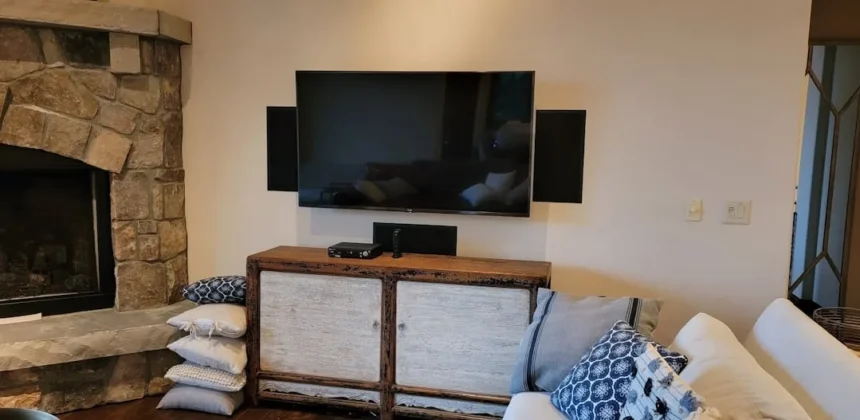
In-ceiling speakers are my latest AV obsession, and it happened in a single afternoon. I walked into a crash course on custom-install home cinema expecting a technical lecture. I left wanting to drill holes in my ceiling.
Key Takeaways
- In-ceiling speakers require architectural planning and room remodelling, not impulse installation.
- Custom-install AV prioritizes acoustic integration over furniture-based speaker placement.
- The RA7300 demonstrates how over-engineered design serves embedded speaker applications.
- Ceiling drilling converts casual AV enthusiasts into home cinema planners.
- In-wall and in-ceiling speakers appeal to owners willing to commit to permanent installations.
Why In-ceiling Speakers Changed My Perspective on Home Cinema
Custom-install speakers operate on a completely different philosophy than traditional AV setups. Instead of placing speakers around a room like furniture, in-ceiling speakers integrate into the architecture itself. This means walls, ceilings, and structural planning come first. The speakers follow. It is the inverse of how most people approach home cinema, and it is also the reason I became instantly obsessed.
The shift from portable to permanent thinking happened when I saw how in-ceiling speakers actually sit within a room’s acoustic environment. They are not afterthoughts. They demand respect for the space itself. When you commit to drilling holes in your ceiling, you are not buying a product—you are redesigning how sound moves through your home. That is a fundamentally different conversation than whether to upgrade your soundbar.
In-ceiling Speakers Demand Real Commitment
These are not impulse ceiling speaker purchases. The RA7300 exemplifies this principle—described as ridiculously over-engineered, it was designed specifically for room remodelling scenarios where installation precision matters more than ease of setup. When a speaker manufacturer builds a product that assumes you will be cutting into your ceiling, they are not targeting casual buyers. They are building for people who have already decided to commit.



This commitment changes everything about the decision-making process. You cannot install in-ceiling speakers and then move them next year. You cannot test them in a different room. The installation is permanent, structural, and visible only to those who know where to look. That permanence is exactly why it appeals to serious AV enthusiasts—it forces genuine planning rather than incremental upgrades.
How Custom-Install AV Differs from Conventional Speaker Placement
Conventional home cinema setups prioritize flexibility. Speakers sit on shelves, stands, or furniture. You can move them, swap them, or replace them without touching your walls. Custom-install speakers eliminate this flexibility entirely. In-ceiling and in-wall speakers become part of your home’s infrastructure, like electrical wiring or HVAC ducts.



This architectural approach solves problems that freestanding speakers cannot. Sound integration becomes seamless because the speakers are embedded in the room itself rather than sitting in front of it. Aesthetics change dramatically—no visible speaker boxes cluttering shelves or corners. The trade-off is obvious: you sacrifice portability and reversibility for permanent acoustic optimization. For someone willing to make that trade, the appeal is immediate and overwhelming.
What Changed My Mind About Ceiling Drilling
Before this crash course, I viewed ceiling drilling as destructive and risky. After seeing how custom-install speakers actually work, I see it as the entry point to a completely different category of home cinema. The drilling is not the problem—it is the commitment. Once you accept that you are modifying your home’s structure, everything else follows logically.
The enthusiasm is not about the novelty of holes in the ceiling. It is about the shift from treating AV as a collection of products to treating it as an integrated system. In-ceiling speakers force you to think about room acoustics, structural placement, and long-term design. That thinking is addictive to anyone who cares about how their home sounds.
Should I install in-ceiling speakers in my home?
In-ceiling speakers make sense if you are willing to commit to a permanent installation and your home’s construction allows for it. They are not suitable for renters, frequent movers, or anyone who values flexibility over acoustic integration. If you own your space and plan to stay for years, the investment in custom-install speakers becomes much more compelling.



What is the difference between in-ceiling and in-wall speakers?
In-ceiling speakers are mounted horizontally above the listening area, while in-wall speakers are mounted vertically into wall cavities. Both require structural modification, but in-ceiling speakers are typically used for ambient or surround sound, while in-wall speakers often serve as main speakers. The choice depends on your room layout and acoustic goals.
Do in-ceiling speakers require professional installation?
While DIY installation is technically possible, professional installation ensures proper placement, acoustic calibration, and structural safety. Custom-install speakers like the RA7300 are designed with professional installation in mind, and the complexity of ceiling work makes professional help a practical choice for most homeowners.
The takeaway is simple: in-ceiling speakers represent a fundamental shift in how you think about home cinema. They stop being products and start being commitments. Once you accept that, the appeal becomes undeniable. The ceiling holes are just the beginning.
Edited by the All Things Geek team.
Source: What Hi-Fi?