






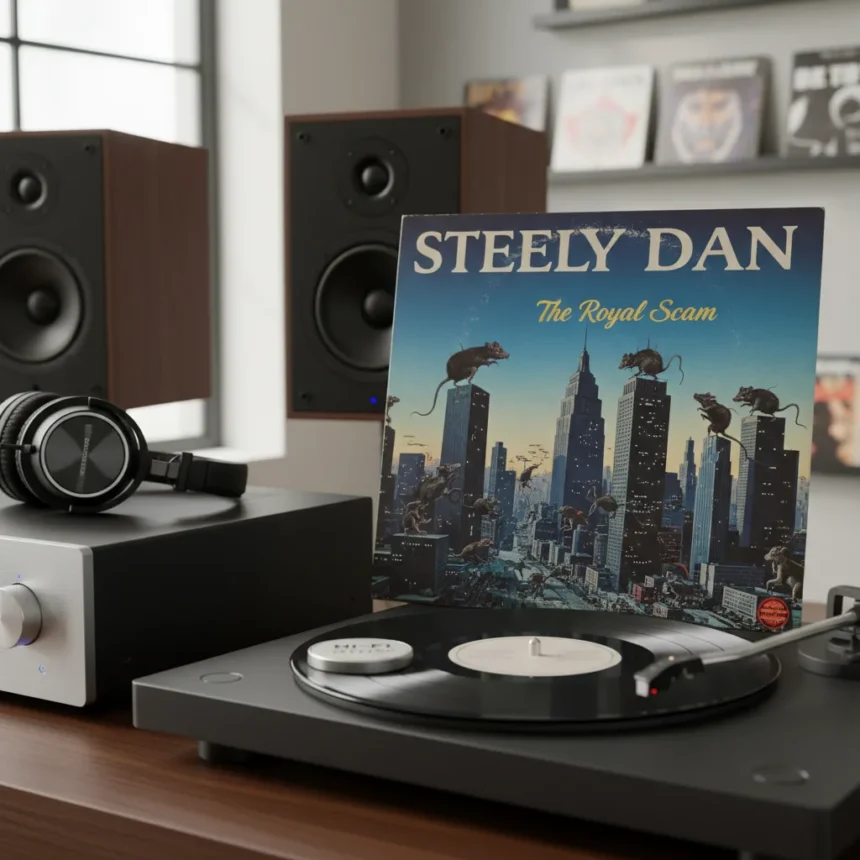
The Royal Scam hi-fi test has become the gold standard for audiophiles who want to truly understand their equipment’s capabilities. This month marks the 50th anniversary of Steely Dan’s 1976 masterpiece, a record that deserves far more attention than the perpetually overstated Aja when evaluating sound quality.
Key Takeaways
- The Royal Scam turns 50 this month, marking five decades of sonic revelations for discerning listeners.
- While Aja dominates conversations about Steely Dan’s audio quality, The Royal Scam presents equally demanding challenges to hi-fi systems.
- The album exposes weaknesses in audio equipment that mainstream records simply cannot reveal.
- The Royal Scam hi-fi test remains relevant because its production complexity rewards superior equipment investment.
- Overlooking this album means missing a crucial reference point for true audio assessment.
Why The Royal Scam Deserves Recognition as a Hi-Fi Benchmark
The Royal Scam hi-fi test stands as a formidable challenge to any audio system, yet it remains perpetually overshadowed by Aja in conversations about Steely Dan’s sonic prowess. This oversight stems partly from marketing and partly from casual listening habits. Aja has become the default answer when audiophiles discuss Steely Dan’s sound quality, but The Royal Scam contains production techniques and instrumental arrangements that expose equipment limitations in ways Aja sometimes glosses over. The album’s layered arrangements, precise vocal placement, and dynamic range demand far more from a speaker system than many listeners realize. When you play The Royal Scam through a competent hi-fi setup, every mixing choice becomes audible—and every weakness in your equipment becomes undeniable.
The distinction matters because The Royal Scam hi-fi test reveals what separates adequate audio systems from truly excellent ones. A mediocre speaker will struggle with the album’s complexity in ways that become immediately apparent to anyone listening critically. The interplay between drums, bass, horns, and keyboards requires clean separation and precise timing reproduction. If your system collapses these elements into a muddy blur, The Royal Scam will expose that failure relentlessly. This is precisely why serious audiophiles should prioritize it alongside—or even ahead of—Aja when evaluating equipment.
The Royal Scam vs. Aja: Breaking the Myth
Aja has dominated the conversation about Steely Dan’s audio quality for decades, but this dominance reflects marketing success rather than sonic supremacy. The Royal Scam hi-fi test actually presents a more rigorous examination of audio fidelity because its production philosophy prioritizes clarity and separation over the glossy sheen that sometimes characterizes Aja. Where Aja rewards systems with a certain polish and presence, The Royal Scam demands precision. It does not forgive sloppy amplification, inadequate speaker design, or poor room acoustics. The album’s production reflects a band confident enough to let imperfections remain if they serve the song—and those imperfections become audible only through quality equipment.



Consider the fundamental difference in approach. Aja presents itself as a showcase for studio perfection, a monument to production technique. The Royal Scam, by contrast, functions as a diagnostic tool. Every element—every horn section entrance, every bass line inflection, every vocal harmony—serves as a test point for your system. This is not a weakness; it is precisely why The Royal Scam hi-fi test remains invaluable for anyone serious about audio. You cannot hide behind the album’s production; you can only hear how well your equipment reproduces what is actually there.
What Makes The Royal Scam Hi-Fi Test So Demanding
The Royal Scam hi-fi test succeeds because the album refuses to compromise on complexity. The production incorporates multiple vocal layers, intricate horn arrangements, and rhythmic precision that require excellent transient response and frequency separation. A system that cannot articulate the difference between a saxophone and a trumpet will fail The Royal Scam test immediately. A speaker that muddles the vocal harmonies will sound significantly worse on this album than on most others. The bass lines, recorded with clarity and punch, expose any weakness in a system’s low-frequency handling. The drums sit in a particular spatial position that demands proper imaging from your speakers.



This is why The Royal Scam hi-fi test has endured for five decades. The album was recorded and mixed with an understanding that great music demands great equipment to reveal its full character. It does not pander to casual listeners or forgive inadequate playback systems. Instead, it rewards investment in quality components with proportional improvements in listening experience. Play it through a budget system, and you hear a competent album. Play it through excellent equipment, and you hear why Steely Dan remains one of the most technically accomplished bands in rock history.
Why Now Matters: The 50th Anniversary Context
The Royal Scam turns 50 this month, making this an ideal moment to reassess its place in the audiophile canon. Five decades have passed, yet the album’s sonic demands have not diminished. If anything, modern streaming and digital playback have made The Royal Scam hi-fi test even more relevant. Many contemporary recordings prioritize loudness and compression over dynamic range and clarity. The Royal Scam stands as a reminder of what recorded music can achieve when technical excellence is not compromised. The album demonstrates that ambitious production choices and commercial appeal are not mutually exclusive.
For anyone building or upgrading an audio system in 2026, The Royal Scam hi-fi test deserves a permanent spot on the evaluation playlist. It offers something Aja, for all its merits, cannot consistently provide: an unrelenting examination of your equipment’s ability to handle complexity without fatigue or distortion. The 50th anniversary is not merely a milestone to acknowledge; it is an opportunity to rediscover why this album mattered sonically when it was released and why it remains essential today.
How to Use The Royal Scam as Your Hi-Fi Reference
If you are serious about evaluating audio equipment, The Royal Scam hi-fi test should become part of your standard listening protocol. Begin with a track that exposes your system’s weaknesses—any track will do, as the entire album functions as a diagnostic tool. Listen for clarity in the vocal layers, precision in the rhythm section, and separation between instrumental elements. If these qualities are present, your system is performing well. If they blur together or sound fatiguing, you have identified areas for improvement. The Royal Scam hi-fi test does not require extensive technical knowledge; it simply requires honest listening and awareness of what good sound actually is.



The album also serves as a long-term reference. As you upgrade components—speakers, amplifiers, cables, or room treatment—return to The Royal Scam and listen again. You will hear improvements that might not be obvious on other records. This is the album’s greatest strength as a hi-fi test: it responds proportionally to equipment improvements, rewarding investment with audible gains. Few records offer this combination of musical merit and technical rigor.
Does The Royal Scam hi-fi test work for all audio systems?
The Royal Scam hi-fi test functions across all quality tiers, but its value increases with system quality. Budget systems will still reveal whether they are functioning correctly, but the album’s full complexity emerges only through capable equipment. This is not a flaw; it is exactly why serious audiophiles prioritize it.
Should I prefer The Royal Scam over Aja for hi-fi evaluation?
The Royal Scam hi-fi test and Aja serve different purposes. Aja showcases polished production; The Royal Scam exposes system limitations. For genuine equipment evaluation, The Royal Scam is superior. For enjoying Steely Dan’s most commercially refined sound, Aja remains the choice.
How does The Royal Scam compare to modern hi-fi test records?
The Royal Scam hi-fi test remains competitive with contemporary reference albums because its production philosophy emphasizes clarity and separation rather than modern compression trends. Many modern recordings sacrifice dynamic range for loudness, making The Royal Scam’s balanced approach increasingly valuable as a reference point.
The Royal Scam at 50 deserves recognition as more than a nostalgic artifact. It remains a working hi-fi test that separates competent audio systems from truly excellent ones. If you have not used it as a reference album, this anniversary month is the perfect moment to begin. Your equipment—and your ears—will thank you for the honest assessment it provides.
Where to Buy
Quantum Criminals by Alex Pappademas and Joan Lemay | The Royal Scam by Steely Dan at Amazon
Edited by the All Things Geek team.
Source: What Hi-Fi?