





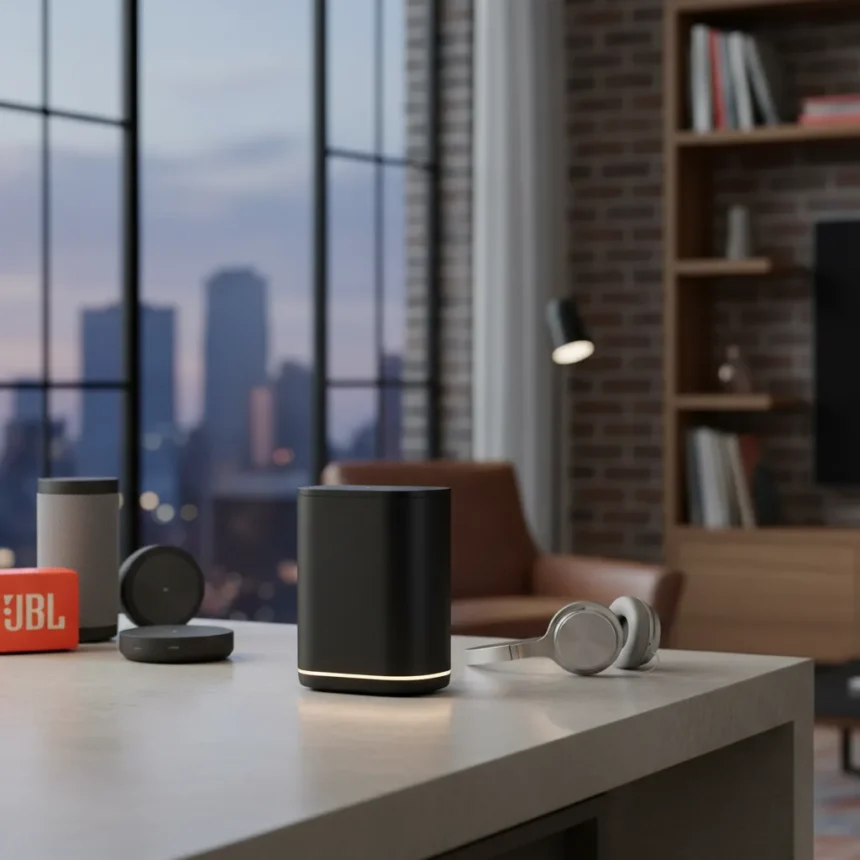
The Sonos Play speaker is a portable wireless audio device made by Sonos, designed to deliver high-fidelity sound in a compact form factor suitable for indoor and outdoor listening. After weeks of testing, this speaker occupies an awkward middle ground—too expensive for casual listeners, yet not quite powerful enough to justify its premium positioning against both budget alternatives and Sonos’s own existing lineup.
Key Takeaways
- The Sonos Play offers portable, multi-room audio integration with Sonos’s ecosystem
- Compact design makes it suitable for travel and outdoor use
- Premium pricing competes directly with cheaper portable speakers offering similar features
- Sound quality is solid but does not dramatically outperform mid-range competitors
- Best suited for existing Sonos ecosystem users, not standalone buyers
What Makes the Sonos Play Speaker Stand Out
The Sonos Play speaker represents Sonos’s attempt to crack the portable speaker market without abandoning its core strength: seamless multi-room audio integration. Unlike traditional Bluetooth speakers that treat connectivity as an afterthought, the Play integrates directly into Sonos’s ecosystem, allowing you to sync it with other Sonos devices throughout your home. This architectural advantage matters if you already own Sonos equipment—it does not matter if you do not.
The speaker’s compact design is genuinely practical. It fits easily into a backpack or carry-on without sacrificing build quality or audio performance. Sonos chose materials and engineering that feel intentional rather than cheap, which is refreshing in a market flooded with plasticky alternatives. However, this attention to build quality comes at a cost that undercuts the value proposition for buyers evaluating it purely on sound-per-dollar metrics.
Sound Quality and Real-World Performance
The Sonos Play speaker delivers clean, balanced audio across frequencies without the bass bloat that plagues many portable competitors. Vocals remain intelligible even at high volumes, and the soundstage is wider than you would expect from a speaker this size. For a living room or small outdoor gathering, it performs admirably.


The critical weakness is volume ceiling. The speaker reaches comfortable listening levels but struggles to fill large rooms or outdoor spaces with the same authority as larger Sonos models like the Move. If you are comparing it to the Sonos Move, the Play is noticeably quieter—a trade-off made intentional by Sonos’s design choices, but a trade-off nonetheless. This limitation becomes obvious the moment you try to use it as a primary speaker for entertaining.
Where the Sonos Play Speaker Loses Ground
Pricing is the elephant in the room. The Sonos Play sits at a price point where budget Bluetooth speakers from brands like Ultimate Ears and JBL offer 80 percent of the audio quality for 40 percent of the cost. That gap is real and measurable in listening tests. For listeners without existing Sonos infrastructure, the ecosystem integration argument disappears, leaving only audio quality to justify the premium—and audio quality alone does not close the value gap.



The speaker also lacks the ruggedness certifications that competing portable speakers advertise. While it handles normal use without complaint, it is not built for serious abuse or extended outdoor environments where water resistance and durability matter most. This positioning confusion—is it a premium portable speaker or a Sonos ecosystem extender?—undermines its appeal to both audiences.
Should You Buy the Sonos Play Speaker?
If you already own multiple Sonos devices and want to extend your multi-room audio system to a portable form factor, the Sonos Play makes sense. The ecosystem integration justifies the premium, and you are buying into consistency and convenience rather than raw audio specs. If you are shopping for your first portable speaker or evaluating it against standalone alternatives, cheaper options deliver comparable sound without the Sonos tax.
The Sonos Play speaker is not a bad product. It is a well-engineered device that solves a specific problem for a specific audience. The problem is that audience is smaller than Sonos’s marketing suggests, and the price reflects that narrower appeal rather than universal superiority.
How does the Sonos Play compare to the Sonos Move?
The Move is larger, louder, and better suited for outdoor entertaining. The Play is more portable and integrates more smoothly into indoor multi-room setups. The Move costs more and delivers more raw power; the Play sacrifices volume for portability. Choose based on your primary use case, not brand loyalty.



Is the Sonos Play speaker worth the price?
It depends on your existing setup. Sonos ecosystem users benefit from integration that justifies the premium. Buyers evaluating it as a standalone portable speaker should compare it directly to mid-range competitors from JBL and Ultimate Ears—the audio quality difference is smaller than the price difference.
Does the Sonos Play work with non-Sonos devices?
Yes, it connects via standard Bluetooth to any compatible device. However, you lose the multi-room integration benefits and reduced latency that come from using Sonos’s proprietary ecosystem. Using it as a standard Bluetooth speaker defeats much of its purpose.
The Sonos Play speaker occupies a defensible but narrow market position. It excels for existing Sonos users seeking portable audio integration. For everyone else, the premium pricing is difficult to justify against cheaper alternatives that deliver similar sound quality without ecosystem lock-in. It is a solid product for the right buyer—just not the right product for most buyers.
Where to Buy
No price information | Sonos Era 100 Wireless Speaker | Sonos Era 300 Wireless Speaker
Edited by the All Things Geek team.
Source: TechRadar




