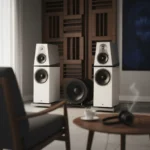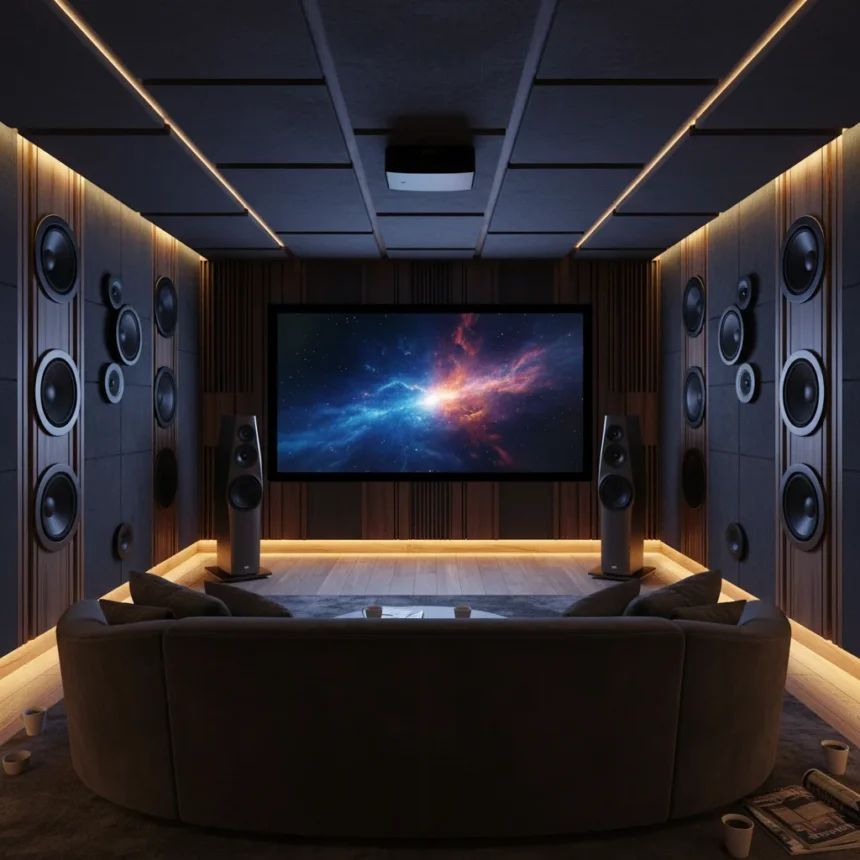
Immersive audio design is fundamentally about connecting listeners to the emotional core of sound—detail, depth, and feeling—rather than chasing specification numbers. KEF’s Ultimate Experience Room represents a shift in how premium audio brands demonstrate their philosophy, moving away from dry technical presentations toward experiential showcases that let people feel what great sound actually means.
Key Takeaways
- KEF’s Ultimate Experience Room prioritizes emotional impact over technical specifications in audio demonstrations.
- Immersive audio design emphasizes detail, depth, and connection rather than isolated component performance.
- Premium home cinema increasingly focuses on how sound makes viewers feel, not just what it measures.
- Dedicated experience rooms are becoming a key way audio brands differentiate from competitors.
- The approach suggests the future of high-end audio lies in holistic room design, not individual speaker specs.
Why immersive audio design is reshaping premium home cinema
For decades, home audio marketing relied on specifications: wattage, frequency response, impedance. Listeners could compare numbers across brands and make purchasing decisions based on charts. That approach misses something crucial—how sound actually feels in a room with you, how it moves around you, how it pulls you into a story. Immersive audio design flips this priority. Instead of starting with components, it starts with the listener’s experience. What emotions should this space create? How should sound move through the room? What level of detail should listeners discover on repeated exposure?
KEF’s Ultimate Experience Room embodies this philosophy by creating a space where visitors can experience immersive audio design firsthand, without a spec sheet in sight. The room is built around a central idea: bringing people closer to the detail, depth and emotion that great audio can unlock. This is not marketing language—it is a functional design principle. A room optimized for emotional connection requires different acoustic choices, speaker placement, and calibration than one optimized for measurement numbers.
The shift from specs to sensory experience
Traditional audio demonstrations isolate individual components. You listen to a speaker in a treated booth, measure its output, compare it to competitors. This method is scientifically clean but experientially hollow. You never hear that speaker in a living room with reflections, furniture, and the spatial complexity that defines real listening. Immersive audio design rejects this isolation. It asks: how does this system perform in the context where people actually use it?



This shift matters because immersive audio design changes what counts as success. A speaker that measures well in an anechoic chamber might sound thin in a home theater. One that excels at spatial precision might feel cold without the right room integration. KEF’s approach—demonstrating immersive audio design through a dedicated experience room rather than a spec comparison—acknowledges that great sound is a property of the whole system, not individual parts. The room itself becomes an instrument.
How immersive audio design differentiates premium brands
As audio becomes increasingly commoditized at the mid-range, premium brands face a differentiation problem. A $500 soundbar can now deliver respectable surround sound. Cheaper active speakers sound better than they did a decade ago. Competing purely on performance-per-dollar is a losing game for luxury brands. Immersive audio design offers an escape route: compete on the quality of the experience rather than the efficiency of the specification.



This explains why more premium audio companies are building dedicated experience spaces. These rooms serve multiple purposes. They showcase what immersive audio design can achieve when budget is not a constraint. They allow listeners to hear the difference between a system optimized for emotional impact versus one optimized for measurement. They create a memorable brand experience that a spec sheet never could. For KEF, the Ultimate Experience Room is not just a showroom—it is a statement about what the brand believes audio should do.
What immersive audio design reveals about the future of home cinema
The emphasis on immersive audio design suggests that high-end home cinema is moving toward holistic system thinking. Rather than buying a TV and bolting on speakers, listeners are starting to understand home cinema as a unified acoustic environment. This requires different choices at every stage: room dimensions, wall treatments, speaker placement, calibration methodology. A single premium speaker in a poorly treated room will disappoint. A well-integrated system in an acoustically considered space will astonish.
This shift has real implications for how people shop for audio. Spec-based purchasing—comparing frequency response curves and THD measurements—becomes less relevant. What matters is auditioning immersive audio design in a space that approximates your own home. This is why KEF’s Ultimate Experience Room exists. It is not enough to read that a system delivers immersive audio design. You need to sit in it, let your ears adjust, and feel how it changes your relationship to music and film.
Can immersive audio design work in typical home spaces?
The obvious question: if KEF’s Ultimate Experience Room represents the pinnacle of immersive audio design, how much of that philosophy translates to an ordinary living room? The answer is: more than you might think. Immersive audio design principles—prioritizing spatial accuracy, detail clarity, and emotional coherence—apply regardless of budget or room size. A smaller space may not achieve the same scale, but it can achieve the same intention. The difference is refinement, not category.



This is important because it means immersive audio design is not purely a luxury concept. The philosophy—detail, depth, emotion—is accessible to anyone willing to think about room acoustics and speaker placement. Premium brands like KEF use experience rooms to showcase the full potential, but the underlying principles scale down. A listener in a modest apartment who applies immersive audio design thinking to their space will hear a dramatic improvement over someone who simply buys expensive speakers and places them randomly.
What does immersive audio design mean for audio buyers right now?
If you are shopping for home cinema audio, immersive audio design should be your starting question, not your ending one. Before comparing specs, ask: what experience do I want? Do I want to feel immersed in film soundtracks? Do I want to rediscover the spatial detail in music? Do I want dialogue to feel natural and present? Once you answer that, specifications become tools to achieve it, not the goal itself. This reframing is what KEF’s Ultimate Experience Room demonstrates—that great audio is not about the numbers. It is about what you feel when the room goes dark and sound surrounds you.
How should I evaluate immersive audio design in my own home?
Listen for three things: detail (can you hear individual instruments clearly?), depth (does sound seem to come from various distances, not just front-to-back?), and emotion (do you feel drawn into the content, or are you aware of the speakers?). These qualities are what immersive audio design targets. If you can audition a system in a dedicated experience room before buying, do it—that is the closest you will get to understanding how immersive audio design translates to your space.
Can immersive audio design work with wireless speakers and streaming?
Yes. Immersive audio design is a philosophy about how sound interacts with space and listener, not a requirement for analog cables or physical media. Wireless systems and streaming services can deliver the detail, depth, and emotional clarity that immersive audio design emphasizes. The constraint is not the signal path but the acoustic environment and speaker placement. A well-designed room with wireless speakers will outperform a poorly treated room with premium wired equipment.
The lesson from KEF’s Ultimate Experience Room is clear: audio brands that compete on experience rather than specifications will define the premium market going forward. Immersive audio design is not a technical feature you can list on a box. It is a philosophy that reshapes how companies think about what they are selling—not speakers, but the feeling of being transported by sound. That shift, from specs to sensation, is where premium audio is headed.
Edited by the All Things Geek team.
Source: What Hi-Fi?