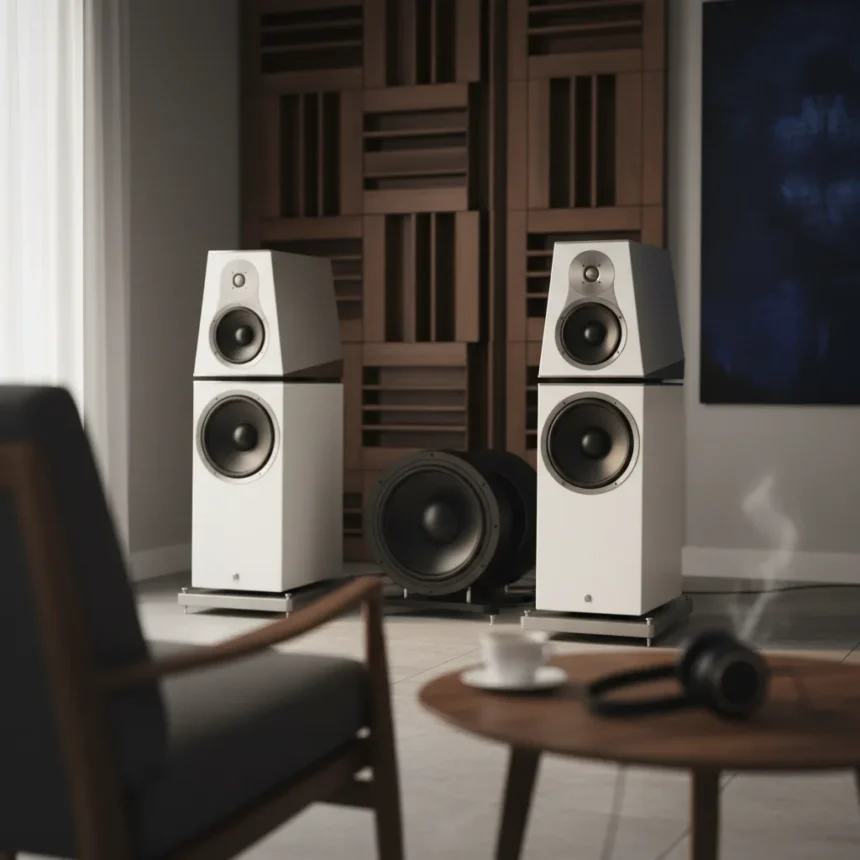
Bowers & Wilkins 800 Series Diamond speakers represent the company’s latest flagship offering, and one reviewer’s first listen has left them eager to spend more time with the range. The 800 Series Diamond is Bowers & Wilkins’ top-tier loudspeaker line, built to set a new standard for what the brand’s engineering can achieve at the pinnacle of its portfolio.
Key Takeaways
- Bowers & Wilkins 800 Series Diamond is the company’s new flagship speaker range.
- A first-listen review suggests the range may be a classic in the making.
- The reviewer’s enthusiasm indicates significant sonic qualities worth exploring further.
- This is an early impression, not a final long-term verdict.
- The flagship positioning signals major engineering and design updates from the previous generation.
What Makes the Bowers & Wilkins 800 Series Diamond Stand Out
The Bowers & Wilkins 800 Series Diamond occupies the summit of the brand’s speaker lineup, which means it carries the weight of decades of acoustic research and premium engineering. Flagship speakers at this tier are rarely refreshed—they represent a company’s clearest statement about what it believes sound should be. When a major manufacturer updates its flagship range, it signals that meaningful advances have been made in driver technology, cabinet design, crossover architecture, or all three.
What separates a flagship speaker from mid-tier alternatives is not just raw power or size. It is the obsessive attention to eliminating distortion across the entire frequency range, the precision of the crossover network that blends drivers smoothly, and the cabinet construction that prevents unwanted resonances from coloring the music. The 800 Series Diamond sits at the top because Bowers & Wilkins believes it represents the culmination of these disciplines.
First Impressions and the Reviewer’s Verdict
A first-listen experience with flagship speakers is rarely the moment for definitive conclusions. Instead, it is the moment when a reviewer encounters something that makes them want to return. The fact that this reviewer found themselves desperate to hear more from the Bowers & Wilkins 800 Series Diamond suggests the speakers delivered enough compelling qualities in that initial session to warrant extended exploration.



First-listen reviews serve a different purpose than long-term lab tests. They capture the emotional and sonic impression of encountering a new flagship for the first time—the moment when a listener discovers whether the engineering choices and design philosophy resonate with their ears. Enthusiasm at this stage is significant because it reflects genuine engagement rather than the measured analysis that comes after weeks of critical listening.
How Flagship Speakers Define a Brand’s Direction
Bowers & Wilkins has built its reputation on high-fidelity speaker design over decades. The 800 Series Diamond, as the flagship, does more than serve customers willing to invest at the premium end—it establishes the sonic signature that filters down through the brand’s entire product hierarchy. Competitors in the ultra-premium speaker market, such as established names in high-end audio, also use flagship designs to showcase their engineering philosophy, but each brand’s approach differs in cabinet materials, driver design, and acoustic tuning.



The positioning of the Bowers & Wilkins 800 Series Diamond as a potential classic speaks to the reviewer’s sense that this design may have longevity and relevance beyond the typical product cycle. In the world of high-end audio, a true classic is a speaker that sounds exceptional today and continues to be sought after and respected years later. The fact that a reviewer is already framing the 800 Series Diamond in these terms suggests the range has made a strong initial impression.
What a First Listen Cannot Tell You
A single session with any speaker, no matter how well-engineered, cannot reveal everything about its character. Room acoustics, amplification, source material, and listener fatigue all play roles in how speakers perform over extended listening sessions. A speaker that impresses in a controlled demo environment may behave differently in a home setting. Conversely, a speaker that seems overly bright or thin in a first listen might reveal its strengths after the listener’s ears have acclimated and they have heard it across a wider range of music genres.
This is why the reviewer’s statement that they are desperate to hear more is telling. It indicates the Bowers & Wilkins 800 Series Diamond passed the critical first test—it made the listener want to invest more time and attention. Whether that desire will be rewarded by deeper listening is the question that a full review, conducted over weeks with multiple amplifiers and source components, would answer.
Why Flagship Speaker Updates Matter
The high-end audio market moves slowly. Flagship speakers are not refreshed every year or even every few years. When Bowers & Wilkins introduces a new flagship 800 Series Diamond, it reflects genuine advances in the company’s understanding of speaker design and audio reproduction. These advances might be invisible to casual listeners but profound to those who care about the nuances of sound.



The Bowers & Wilkins 800 Series Diamond competes in a rarified space where speaker design is as much art as engineering. Other ultra-premium brands pursue different philosophies—some emphasize dynamic range, others prioritize midrange clarity, and still others focus on tonal warmth. The 800 Series Diamond’s place in this landscape will be determined not just by its technical capabilities but by whether its sonic character resonates with discerning listeners who have the means and desire to invest in truly exceptional audio equipment.
Could the 800 Series Diamond Become a Modern Classic?
The question posed in the original review—whether the Bowers & Wilkins 800 Series Diamond is a classic in the making—reflects a particular kind of optimism about audio equipment. A true classic in the speaker world is a design that transcends its era, that sounds good not because it was expensive when new but because its engineering was fundamentally sound. The Bowers & Wilkins 800 Series Diamond will earn that status only if it continues to impress listeners years from now, when newer, shinier alternatives have emerged.
What matters at this stage is that the reviewer encountered something compelling enough to want more time with it. In the world of flagship audio equipment, that is precisely the reaction designers hope to inspire.
What should I expect from a first-listen review of speakers?
A first-listen review captures initial impressions and emotional reactions rather than definitive conclusions. It reflects whether the speaker made a strong enough impression to warrant deeper investigation, but it does not account for how the speaker will perform in different rooms, with different amplifiers, or over extended listening sessions. Think of it as an invitation to learn more, not a final verdict.
How do flagship speakers differ from mid-range alternatives?
Flagship speakers prioritize the elimination of distortion, precision in crossover design, and cabinet construction that prevents unwanted resonances. They represent a brand’s clearest statement about its engineering philosophy and acoustic priorities. Mid-range speakers make different trade-offs, often emphasizing value and practicality over the obsessive refinement found in flagship designs.
Why does a reviewer want to hear more from the Bowers & Wilkins 800 Series Diamond?
The reviewer’s desire to spend more time with the speakers indicates they encountered compelling sonic qualities in the first listen that merit deeper exploration. This enthusiasm suggests the 800 Series Diamond delivered enough engaging sound to justify extended critical listening and multiple listening sessions across different music genres and settings.
The Bowers & Wilkins 800 Series Diamond has made a strong first impression, and whether it lives up to the potential hinted at in this early listen will depend on deeper, longer-term evaluation. For now, the reviewer’s enthusiasm offers a clear signal: these speakers are worth paying attention to.
Edited by the All Things Geek team.
Source: What Hi-Fi?