






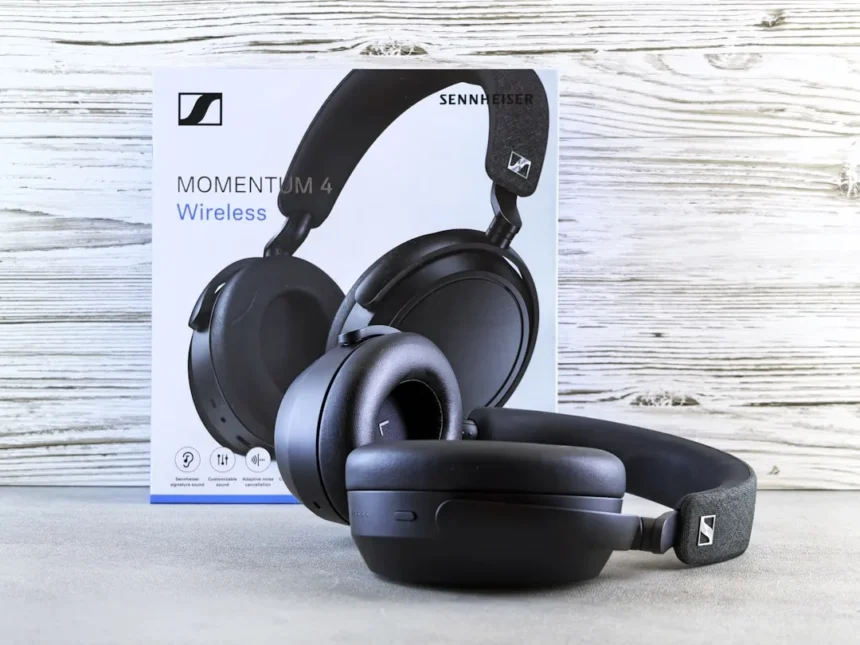
Sennheiser Momentum 5 headphones represent far more than a routine product refresh. They signal the audio brand’s determination to survive after a period when its consumer operations faced genuine discontinuation risk. For years, Sennheiser’s future looked uncertain. Parent company Sonova had shuttered the consumer division, and industry observers questioned whether the storied brand name might be sold off entirely. Now, with a redesigned flagship that undercuts both Sony and Apple on price while matching them on features, Sennheiser is making a credible case for relevance in the premium wireless headphone market.
Key Takeaways
- Sennheiser’s consumer operations faced discontinuation before the Momentum 5 launch, creating genuine uncertainty about the brand’s future
- The headphones promise 60 hours of battery life, nearly four times the previous generation’s endurance
- Leaked pricing suggests around US$350 / £285, significantly undercutting the Momentum 3’s US$399 / £349 RRP
- Advanced Adaptive Noise Cancellation and a 42mm audiophile-inspired transducer system target Sony WH-1000XM5 buyers
- New design prioritizes comfort alongside sound quality, addressing a key pain point in premium headphone category
Sennheiser Momentum 5 Headphones: A Brand Fighting for Survival
The Sennheiser Momentum 5 headphones arrive as more than hardware—they are a statement about brand persistence. When Sonova discontinued Sennheiser’s consumer operations, industry observers genuinely questioned whether the company would survive. The brand held a perpetual license for the Sennheiser name, but licenses alone do not guarantee a future. This new flagship represents Sennheiser’s answer to that existential pressure: prove the brand still matters by building headphones that compete directly with the market leaders.
That competitive positioning is not accidental. T3 has previously identified Sony’s WH-1000XM5 as the current best-in-class wireless headphones, and the Momentum 5 is explicitly engineered to challenge that dominance. Sennheiser is not trying to own a niche. It wants back into the mainstream premium segment, and the specs suggest the company understands what buyers in that space actually want.
Battery Life and Design: Where Sennheiser Breaks from Tradition
The leaked specifications reveal a dramatic improvement in endurance. The Momentum 5 promises 60 hours of battery life, nearly four times the battery capacity of the previous generation. That number matters because it separates the Momentum 5 from competitors in a way that pure sound quality cannot. Sony’s WH-1000XM5 delivers excellent noise cancellation but tops out at roughly 24 hours of battery life. Apple’s AirPods Max offer comparable performance but require more frequent charging. Sennheiser is betting that a four-day battery advantage will resonate with travelers, commuters, and anyone tired of managing cable anxiety.

The design shift is equally significant. Sennheiser has committed to an all-new form factor that prioritizes comfort alongside sound reproduction. Premium headphones have historically forced a trade-off: either you get studio-grade acoustics in a heavy, rigid chassis, or you sacrifice audio fidelity for wearability. The Momentum 5 aims to collapse that false choice. Whether it succeeds depends on execution, but the intent is clear.
Acoustic Architecture: 42mm Transducers and Adaptive Noise Cancellation
At the heart of the Momentum 5 sits a 42mm audiophile-inspired transducer system designed to deliver more natural sound reproduction than conventional drivers. Larger transducers typically handle lower frequencies with greater authority and produce less harmonic distortion, which is why studio monitors and high-end speakers favor them. Sennheiser is bringing that philosophy to portable wireless headphones, a rare move in a category dominated by smaller, lighter drivers optimized for form factor over acoustic purity.



The headphones also feature advanced Adaptive Noise Cancellation, a feature category where Sony has set the standard but where Sennheiser has historically held its own. Adaptive systems respond to ambient noise in real time, adjusting the cancellation profile as your environment changes. On a bus that shifts from highway rumble to urban street noise, adaptive ANC adjusts dynamically rather than applying a static filter. Sennheiser’s implementation promises to match Sony’s capability while the larger transducers handle the sonic playback more naturally.
Pricing Strategy: Undercutting Without Sacrificing Margin
The leaked Canadian pricing of C$449.95—roughly US$350 / £285—represents a calculated undercut against the Momentum 3’s RRP of US$399 / £349. That is a 12 percent price reduction on a product with dramatically improved battery life, new design, and enhanced audio architecture. From a business perspective, Sennheiser is signaling confidence. A brand in survival mode typically raises prices to protect margin. Sennheiser is doing the opposite, betting that volume and market share recovery justify lower per-unit revenue.
That strategy works only if the headphones deliver on their acoustic and feature promises. If the Momentum 5 sounds worse than the Momentum 3 despite the larger transducers, or if the adaptive ANC fails to match Sony’s performance, the lower price becomes a liability rather than an asset—it signals weakness rather than confidence. Sennheiser is taking a genuine risk here, but it is the right risk for a brand fighting to prove it belongs in the conversation.
Why This Matters Right Now
The headphone market has consolidated around Sony, Apple, and a handful of specialist brands. Bose has retreated. JBL competes in value segments. Sennheiser’s consumer business was literally discontinued. The Momentum 5 represents a direct challenge to that consolidation. If Sennheiser executes well, it could reclaim meaningful share in the premium segment. If it stumbles, the brand’s consumer future becomes genuinely uncertain once again.


That stakes-raising context is why the Momentum 5 matters beyond its spec sheet. This is not a routine iteration cycle. This is a brand fighting to survive by building better hardware than the incumbents and pricing it more aggressively. Whether that strategy succeeds depends on real-world performance, but the ambition is unmistakable.
How does the Sennheiser Momentum 5 compare to Sony WH-1000XM5?
Both offer advanced noise cancellation, but the Momentum 5 promises 60 hours of battery life versus Sony’s roughly 24 hours, and features larger 42mm transducers for more natural sound. Sony currently holds the best-in-class title for overall noise cancellation performance, but Sennheiser’s battery advantage and lower price make the Momentum 5 competitive for buyers who prioritize endurance and value.
What is the price difference between Momentum 5 and Momentum 3?
The Momentum 5 is expected to launch at approximately US$350 / £285, down from the Momentum 3’s US$399 / £349 RRP—a roughly 12 percent reduction. This price cut comes despite significant improvements in battery life and design, signaling Sennheiser’s confidence in the new model’s market appeal.
Does the Momentum 5 come with advanced noise cancellation?
Yes. The Momentum 5 features advanced Adaptive Noise Cancellation that adjusts dynamically to changing ambient noise, matching the feature set expected from premium wireless headphones in this category.
Sennheiser’s Momentum 5 headphones represent a calculated gamble: that a brand on the brink of discontinuation can rebuild by delivering better hardware at a fairer price than established rivals. The specs suggest confidence. The battery life, design ambition, and acoustic architecture all signal a company that has learned from its near-collapse and is willing to compete on substance rather than brand legacy alone. Whether the real-world experience matches the promise will determine whether Sennheiser has truly returned or merely delayed the inevitable.
Where to Buy
Sennheiser Momentum 4 Wireless | 1 Amazon customer review
Edited by the All Things Geek team.
Source: T3