






The Fitbit Air is a screenless, subscription-free fitness tracker made by Google, launched for purchase on May 26, priced at $99, and available globally through Amazon and other retailers. It represents a deliberate rejection of the smartwatch arms race—no screen, no buttons, no constant notifications. Just a lightweight band that tracks your sleep, steps, stress, and menstrual cycle without demanding your attention every five minutes.
Key Takeaways
- Fitbit Air is a screenless, subscription-free tracker priced at $99, available since May 26
- Battery lasts approximately one week between charges, making it genuinely low-maintenance
- Optional Google Health Premium subscription costs $9.99/month or $99/year for advanced coaching features
- No screen, GPS, NFC payments, or speaker means fewer distractions and lower price than smartwatches
- Competes directly with Whoop and Oura Ring by prioritizing passive tracking over notifications
Why the Fitbit Air Stands Out in a Crowded Market
The fitness tracker market has become bloated. Every device now wants to be a smartwatch—packed with screens, apps, notifications, and subscription requirements. The Fitbit Air takes the opposite approach. It is lightweight, easy-to-use, and seriously customizable without overwhelming you with data. This simplicity is precisely what makes it compelling for people exhausted by wearable complexity.
The device comes with a Performance Loop in Lavender and offers a hardy plastic Active Band as alternatives. Official Google Fitbit Air straps start at $34.99 and are available in silicone or woven knit materials. That flexibility matters because a tracker you actually wear beats a perfect tracker gathering dust on your nightstand.
What makes the Fitbit Air genuinely different from competitors like the Apple Watch 11 or Samsung Galaxy Watch 8 is what it deliberately omits. No onboard GPS. No NFC for mobile payments. No speaker or microphone for taking calls. These aren’t limitations—they are design choices that keep the device focused on one job: understanding your health patterns without interruption.

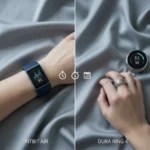
Fitbit Air vs. Subscription-Heavy Competitors
The Fitbit Air’s subscription-optional model sets it apart from trackers that demand monthly fees just to function. The Whoop 5.0 and similar screen-free trackers require subscriptions to unlock core features. Google instead built a device that works completely free, with an optional Google Health Premium tier for those who want personalized wellness coaching.
The subscription decision matters. At $99 upfront with zero mandatory recurring costs, the Fitbit Air reaches people who have already paid for multiple subscriptions elsewhere. If you want deeper insights—a personalized wellness Coach that turns health data into actionable recommendations—Google Health Premium is $9.99 per month or $99 per year. That’s genuinely optional, not baked into the device’s core functionality.



Compared to the Oura Ring, which focuses exclusively on sleep and stress without step tracking, the Fitbit Air casts a wider net. It tracks sleep, workout data, holistic insights, steps, stress, and menstrual cycle information—all without requiring you to learn a complex interface or navigate endless menus. The screenless design forces developers to prioritize what actually matters.
Battery Life and Everyday Usability
Battery life is where the Fitbit Air’s simplicity pays genuine dividends. The device lasts approximately one week between charges. That means you charge it once a week, roughly the same rhythm as your laundry or meal prep. No daily charging anxiety. No dead wearable in the middle of tracking your sleep.
The week-long battery is a direct consequence of the screenless design. Screens drain power. Constant connectivity drains power. Fitbit Air avoids both, which means you spend less time managing the device and more time using it. For people who have abandoned smartwatches specifically because they became another thing requiring daily charging, this matters enormously.
Is the Fitbit Air Worth $99?
At $99, the Fitbit Air costs roughly one-third the price of a typical smartwatch. For that price, you get a week of battery life, passive health tracking, and zero subscription requirements. You do not get a screen, GPS, or mobile payments. That trade-off is explicitly intentional, not a cost-cutting compromise.



The real question is whether you want a smartwatch or whether you want a health tracker. If you need navigation, app notifications, or mobile payments, buy a smartwatch. If you want sleep insights, step counts, and stress tracking without distraction, the Fitbit Air is the most straightforward option available right now. It does not try to be everything. It does one thing—passive health tracking—and executes it without friction.
FAQ
Does the Fitbit Air require a subscription?
No. The Fitbit Air works completely subscription-free out of the box. Google Health Premium is optional and costs $9.99 per month or $99 per year if you want personalized wellness coaching features.
How long does the Fitbit Air battery last?
The Fitbit Air battery lasts approximately one week between charges, making it one of the longest-lasting fitness trackers available. This eliminates the daily charging cycle that plagues most smartwatches.
Can the Fitbit Air replace my smartwatch?
The Fitbit Air has no screen, GPS, NFC payments, or speaker, so it cannot replace a full smartwatch. It is designed for passive health tracking, not navigation or notifications. If you need those features, a smartwatch like the Google Pixel Watch 4 is more appropriate.
The Fitbit Air succeeds because it refuses to compromise. It is not trying to be a smartwatch, a fitness tracker, and a payment device all at once. It is a straightforward health monitor for people who want insights without interruption—and at $99, it is the most affordable way to get there.
Where to Buy
$99.99 at Amazon | $99.99 at Amazon
Edited by the All Things Geek team.
Source: Tom's Guide