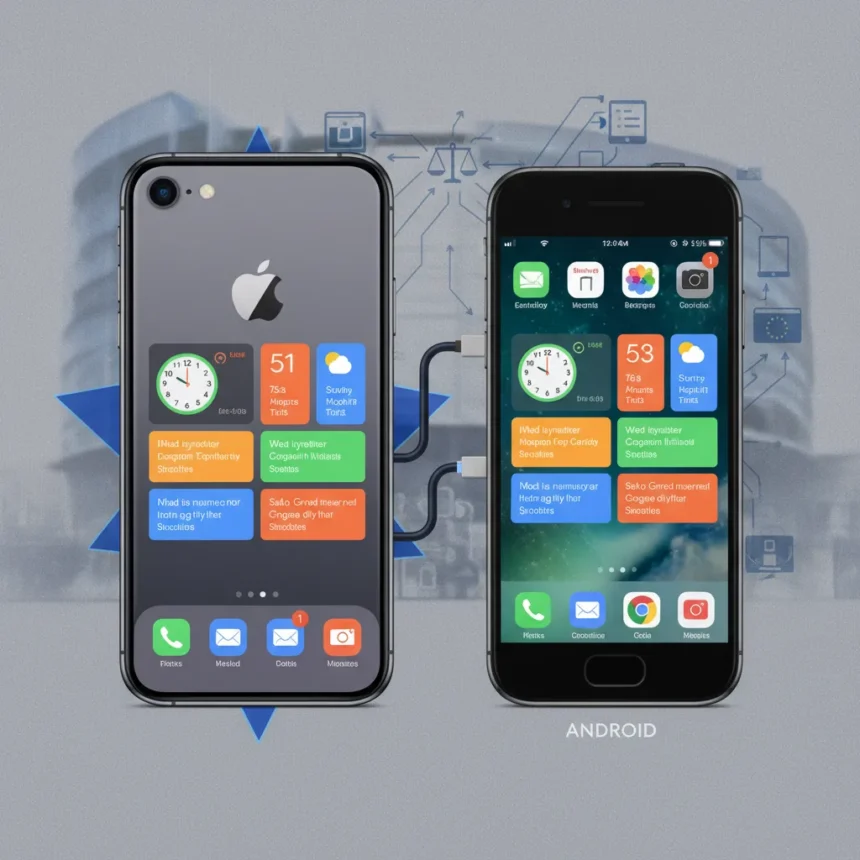
The iPhone is adopting Android features at an accelerating pace, driven by European regulatory pressure and seismic shifts in how Google itself is restructuring its platform. What was once an unthinkable convergence—Apple’s closed ecosystem mimicking Android’s openness—is now becoming inevitable.
Key Takeaways
- Apple’s iPhone is increasingly adopting Android-style features due to regulatory pressure from Europe.
- Google is overhauling Android with third-party app store support and alternative payment methods starting with Android 17.
- Google’s proposed changes will reduce standard fees to 20% or 9% depending on transaction type, versus Apple’s traditional 30% cut.
- The Android restructuring is global and will run through 2032, far broader than previous US-only court settlements.
- European regulation is forcing both platforms toward greater openness, blurring the practical differences between iOS and Android ecosystems.
How European Regulation is Reshaping Mobile Platforms
Europe’s Digital Markets Act and ongoing regulatory scrutiny have created an environment where neither Apple nor Google can maintain their historical walled-garden approaches. The iPhone’s shift toward Android-like functionality is not accidental—it is the direct result of compliance pressure. When regulators demand openness, even the most closed platform must adapt or face fines and forced structural changes. This is not a voluntary evolution; it is regulatory coercion, and it is working.
Apple has already begun making concessions in the European market that would have been unthinkable five years ago. The company now allows alternative payment methods and third-party app distribution in certain regions, features that were once core Android advantages. As these changes roll out, the practical distinction between owning an iPhone and owning an Android phone narrows. A user in Europe can now sideload apps and use alternative payment processors on an iPhone—capabilities that Android users have always taken for granted.
Google’s Android Overhaul: The Real Driver of Change
Google’s proposal to fundamentally restructure Android is the catalyst accelerating this convergence. The search giant has pledged to introduce a verified app store programme and enable one-click access to install third-party app stores, all while maintaining Google protections. This is not a minor tweak—it is a platform redesign that will begin rolling out with Android 17.


The fee structure tells the story. Google’s proposed changes will reduce the standard commission to 20% or 9%, depending on what users are purchasing, and will decouple service fees from Google Play Billing charges entirely. This undercuts Apple’s 30% cut and signals that the traditional revenue model for mobile platforms is crumbling. When Google itself is dismantling the gatekeeping mechanisms that made Android attractive to developers and users in the first place, Apple cannot afford to remain the last fortress of absolute control.
What makes Google’s proposal genuinely significant is its scope and duration. Unlike previous court-ordered changes that applied only to the United States, this restructuring is global and will remain in effect through 2032. That is a decade-long commitment to openness, not a temporary settlement. For Apple, this means the competitive landscape will remain fundamentally altered for years to come, making it increasingly difficult to justify a closed ecosystem when Android is moving in the opposite direction.



The Convergence: Why iPhone Cannot Stay Closed
The iPhone adopting Android features is not about Apple suddenly embracing open-source philosophy. It is about survival in a regulatory environment where closed platforms are becoming legally and commercially untenable. When Google opens Android to third-party app stores and alternative payment methods globally, Apple loses one of its strongest competitive moats—the perception that iOS is safer or more curated because it is closed.
Users will ask a logical question: if Android can support third-party stores with protections in place, why cannot iPhone? Regulators are already asking that question in Europe, and the answer is becoming clearer every quarter. Apple’s resistance to these changes is eroding not because the company lacks technical capability, but because the political and regulatory cost of resistance now exceeds the benefit of maintaining absolute control.
This convergence does not mean iPhone will become Android or vice versa. The underlying operating systems, design philosophies, and hardware ecosystems remain distinct. But the user-facing differences—app distribution, payment methods, customization options—are narrowing. That is the real story. The iPhone is not turning into Android. Rather, both platforms are being forced toward a middle ground where neither can claim absolute control over their ecosystem.
What This Means for Users and Developers
For iPhone users, the immediate impact is choice. More app stores, more payment options, and greater flexibility in how they interact with their device. For developers, the pressure on Apple’s 30% commission creates new opportunities to reach users without paying the traditional tax. For Google, the changes represent a strategic gamble that openness will drive adoption and developer loyalty even with lower margins.



The real winner in this scenario is the user who benefits from competition. When platforms cannot rely on lock-in and control, they must compete on quality, performance, and genuinely useful features. That is an outcome that benefits everyone except the platforms’ historical monopoly margins.
Is the iPhone really becoming an Android phone?
Not literally, but functionally, the gap is closing. The iPhone adopting Android features means users will experience similar flexibility around app stores and payments on both platforms. However, the underlying operating systems, design, and ecosystem remain distinct. The convergence is real but partial.
When will these changes reach iPhone users?
European iPhone users already have access to some of these features as a result of regulatory compliance. Global rollout depends on Apple’s timeline and regulatory requirements in each market. Google’s Android changes are set to begin with Android 17, but Apple’s equivalent timeline remains unclear.
Why is Europe driving these changes?
European regulators have been more aggressive than their US counterparts in enforcing platform openness. The Digital Markets Act and ongoing antitrust scrutiny have created legal and financial pressure that makes maintaining closed ecosystems increasingly costly. Apple and Google have chosen to adapt rather than fight indefinitely.
The iPhone adopting Android features represents a fundamental shift in how mobile platforms will operate for the next decade. Regulatory pressure and Google’s own restructuring have made convergence inevitable. Users will benefit from greater choice, but the historical distinction between iOS and Android ecosystems is eroding. This is not a story about technology—it is a story about power, regulation, and the limits of corporate control.
Where to Buy
Edited by the All Things Geek team.
Source: T3