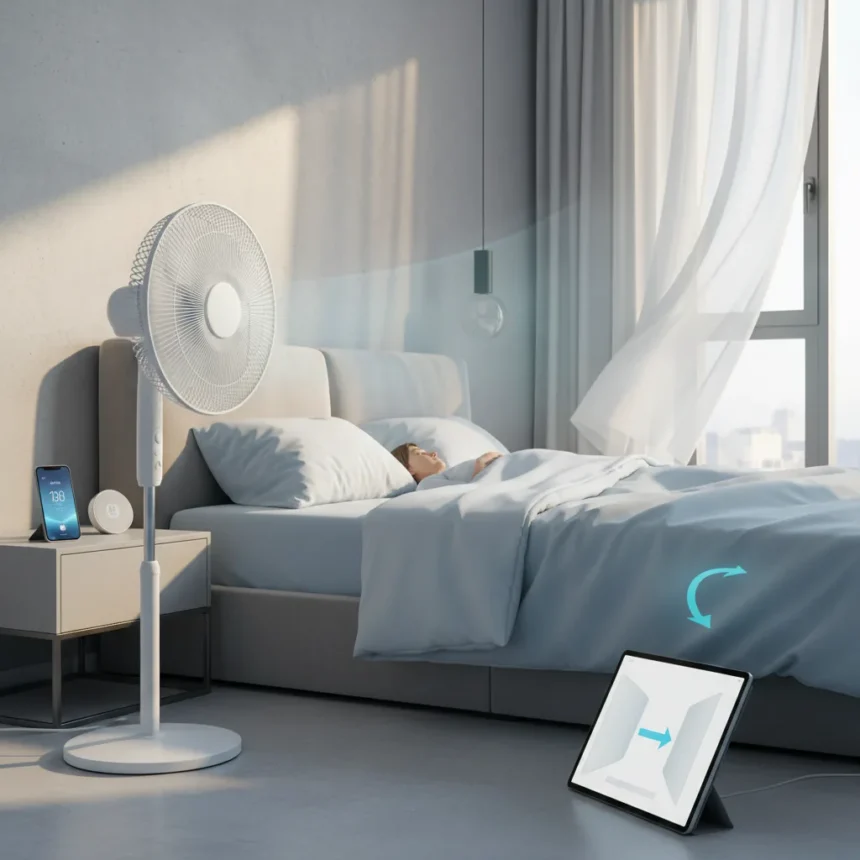
Position your fan away from bed to sleep better in heatwaves. The instinct to aim cooling directly at yourself feels logical when temperatures soar, but direct airflow creates its own problems: stiff necks, dry skin, achy muscles, and allergies. The smarter approach is angling your fan so the room cools down without blasting your body all night.
Key Takeaways
- Direct fan airflow causes sore necks, dry skin, and muscle aches while sleeping
- Positioning the fan away from your bed still cools the room effectively
- Angled airflow reduces morning discomfort while maintaining overnight temperature control
- Indirect cooling methods work better than direct body exposure
- UK heatwaves make smart fan placement essential for quality sleep
Why Direct Fan Airflow Disrupts Sleep
Sleeping with a fan pointed directly at you sounds refreshing but creates morning soreness and discomfort. The sustained cold air hitting your neck and shoulders through the night leaves sleepers with stiff, achy muscles and a sore neck. Beyond physical aches, direct airflow dries out skin and can trigger allergies in sensitive sleepers. The chill feels good in the moment, but the cost comes when you wake up.
The problem intensifies during UK heatwaves when people run fans all night seeking relief. Desperation to cool down overrides comfort sense, and by morning, the trade-off becomes obvious: you stayed cooler but woke up hurting. This is not a medical emergency, but it is preventable through smarter positioning.
The Three-Step Fan Positioning Strategy
The solution requires three simple adjustments. First, do not aim the fan directly at your bed. Instead, angle it so the airflow passes across the room rather than hitting you head-on. Second, position the fan away from your bed entirely. This maintains the cooling effect while eliminating direct contact with your body. Third, use the fan to cool the room as a whole space, not your body as a target. This indirect approach delivers the heatwave relief without the morning stiffness.

The shift from direct to indirect cooling sounds minor, but it changes everything about how you experience the night. You still get the temperature drop your bedroom needs. You still wake refreshed from better sleep. But you avoid the physical penalty of direct airflow. The room cools down evenly rather than creating a cold zone directly on your body.
Positioning Your Fan Away From Bed for Maximum Comfort
Place your fan on a shelf, dresser, or stand positioned to the side of your bed rather than facing it. Angle the unit so air circulates through the room instead of streaming across your sleeping position. If your bedroom is small, even a slight angle away from the bed makes a meaningful difference. The fan still moves air and lowers temperature; it simply does not weaponize that cooling against your neck and shoulders.



For larger bedrooms, positioning the fan near a window or opposite corner creates even better results. Air circulates through the entire space before reaching you, so it arrives as gentle ambient cooling rather than a direct blast. This setup also works if you share a bed—your partner does not wake up stiff either.
Alternative Cooling Methods That Pair With Angled Fans
If positioning alone does not deliver enough relief during extreme heatwaves, T3 recommends combining your angled fan with other techniques. Placing a bowl of ice in front of the fan cools the airflow before it enters the room. Running the fan near an open window pulls in cooler outside air, especially effective during early morning and evening hours. Positioning wet laundry near the fan adds moisture to the circulating air, creating a gentler cooling effect. These methods work because they cool the air itself rather than relying on direct body contact.
Why UK Heatwaves Demand Smart Fan Strategy
During heatwaves, sleep becomes precious and fragile. Overheating keeps you awake; direct fan airflow wakes you up stiff and sore. The middle ground—cool room, comfortable body—requires intentional positioning. UK homes often lack air conditioning, making fans the primary cooling tool. Getting that tool right determines whether you sleep through the night or wake exhausted and aching.
The beauty of this approach is simplicity. You do not need to buy new equipment or spend money on cooling systems. You just move the fan you already own to a smarter location. During the next heatwave, try it for one night and notice the difference in how you feel the next morning.



Does fan positioning really prevent neck stiffness?
Yes. Direct airflow causes the stiffness and soreness many people experience after sleeping with a fan on. Angling the fan away from your bed eliminates direct contact while still cooling the room, reducing morning discomfort significantly.
Can I use a fan on the lowest setting pointed at my bed?
Even on low settings, direct airflow causes dry skin, muscle aches, and stiff necks over time. Positioning the fan away from your bed at any speed delivers better results than direct exposure at lower power.
How long does it take to notice the difference in sleep quality?
You will notice the difference the first morning. Waking without a stiff neck and sore shoulders immediately improves how you feel, even if room temperature stays the same as with direct fan positioning.
Smart fan positioning transforms how you sleep through heatwaves. You keep the cooling you need without the morning aches that make the next day miserable. During the UK’s next hot spell, position your fan away from your bed and sleep better.
Where to Buy
446 Amazon customer reviews | £18.99
Edited by the All Things Geek team.
Source: T3