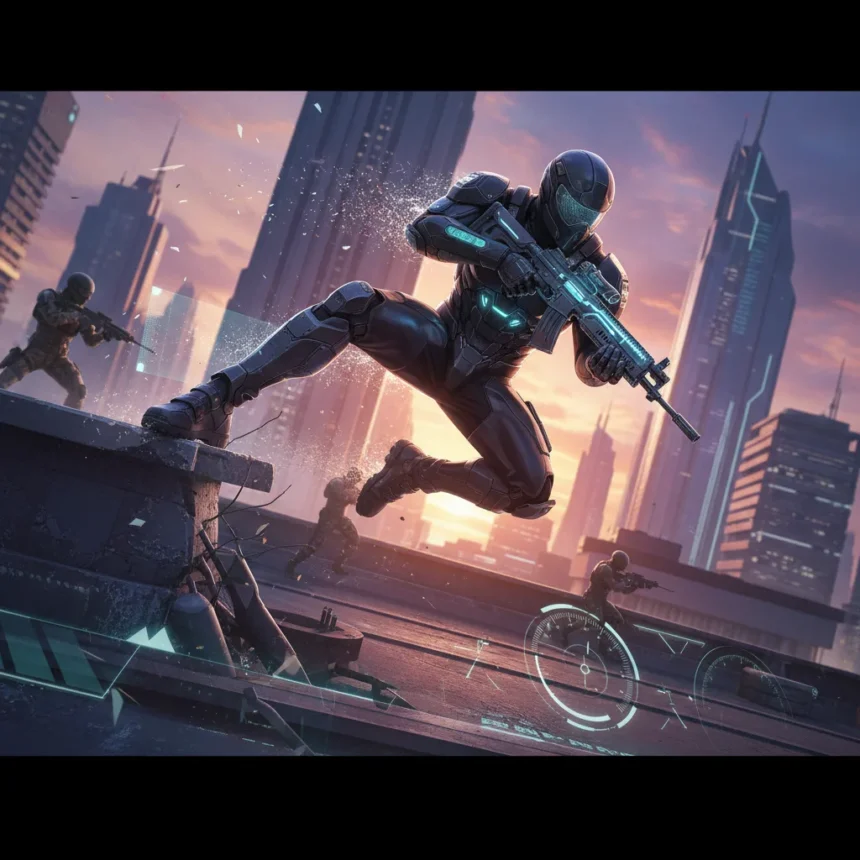
Call of Duty: Modern Warfare 4 movement is being redesigned around a fundamental tension: making traversal feel explosive and responsive while keeping gunfights grounded and fair. Infinity Ward described the goal as building “the most unrestricted and fluid movement system” the studio has ever shipped, but the real challenge is answering a harder question: How do we make a fluid, fast, responsive shooter that’s still grounded in realism?
Key Takeaways
- Modern Warfare 4 removes bloom and rebuilds recoil to make hipfire more predictable and direct.
- Expanded traversal includes mantling, climbing, hanging, jumping, and a new supine slide mechanic.
- Players can cancel mantles mid-animation and chain movement actions for momentum without becoming untouchable targets.
- The game supports both aggressive run-and-gun and methodical tactical playstyles through design choice, not forced balance.
- Weapon motion now includes a “jerk” input layer that makes recoil feel more reactive and natural.
The Core Design Problem: Speed Versus Shootability
The developers’ central balancing act is deceptively simple to state and brutally hard to execute. Aggressive players should feel like they can chain movement actions into constant momentum, vaulting over cover, sliding out of mantles, and repositioning with cinematic flair. Simultaneously, the person trying to shoot them shouldn’t feel cheated—their aim should matter, their shots should land predictably, and their weapon should respond to their input without lag or randomness. This isn’t a new problem in competitive shooters, but Modern Warfare 4’s movement overhaul makes it acute. The more options players have to move, the more ways they can evade, and the harder they become to track.
Infinity Ward’s response isn’t to nerf mobility—it’s to rebuild the gunplay around it. The studio implemented what it calls a “weapon-first technology stack” that unifies precision aiming, physical handling, realistic audio propagation, enhanced visibility, and smarter combat perception. Bloom has been removed entirely, making hipfire shots feel more direct and predictable rather than dependent on random spread. Recoil, convergence, and weapon handling have been rebuilt to reflect player input more directly, eliminating the feeling that your gun is fighting you while you’re trying to track a moving target.
Expanded Movement Without Breaking Competitive Fairness
The traversal redesign is extensive. Players can now mantle with the ability to cancel mid-animation, climb pipes smoothly, hang from ledges and dynamically lean, slide directly out of mantles, shimmy along ledges, and slide into ladder descents. A new “supine slide” mechanic lets operators slide on their backs into a prone position, adding another layer of repositioning options. On paper, this sounds like a movement system that would make stationary players easy prey.


The balancing trick is that Modern Warfare 4 is designed to support both methodical, tactical play and aggressive playstyles through architecture, not artificial nerfs. Aggressive players benefit from these expanded options—they can chain actions, maintain momentum, and use vertical space to their advantage. But the game’s grounded, precise combat philosophy means that tactical players aren’t left defenseless. Clearer sightlines, more direct weapon response, and the removal of random spread mean that a player holding an angle with a steady aim can still punish aggression. The game isn’t forcing one playstyle; it’s giving both archetypes the tools they need to succeed.
Physicality and Feedback: Making Movement Feel Real
One detail reveals how seriously Infinity Ward is taking the feel of movement: stamina is no longer a simple on/off toggle. Instead, the game visually represents player exhaustion through changes in movement posture and stride cadence. When you’ve been sprinting and vaulting, your operator’s stance shifts, their breathing becomes audible, and their stride shortens—you see and feel the fatigue without a stamina bar draining on screen. This keeps the action flowing while communicating to both the player and their opponent that they’re in a vulnerable state.



Weapon motion received similar attention. The developers added a third layer of input called “jerk,” intended to make recoil and weapon sway feel more natural and life-like. Rather than a weapon climbing in a predictable line or settling into a fixed pattern, it now responds to the micro-movements and momentum of your input. This makes controlling recoil feel more rewarding—you’re not just memorizing a spray pattern; you’re actively managing the weapon’s behavior in real time.
Grounded Realism Meets Cinematic Speed
The underlying philosophy is that Modern Warfare 4 preserves grounded realism, physicality, and combat intensity while still delivering fast, cinematic soldier movement. This is the opposite of some recent shooters that lean into either pure arcade speed or strict tactical simulation. Infinity Ward is trying to occupy the middle ground: movement that feels responsive and exciting without sacrificing the sense that you’re controlling a soldier with weight, momentum, and physical limitations.
The question developers faced wasn’t whether to add more movement options—it was how to add them without breaking the fundamental fairness that competitive multiplayer depends on. By rebuilding weapon response from the ground up, removing randomness, and designing the level architecture to support both aggressive and defensive playstyles, Modern Warfare 4 is attempting to answer that question. Whether it succeeds will depend on how these systems interact in actual multiplayer matches, but the design philosophy is clear: movement should feel incredible to execute, but not unfair to defend against.
How does the supine slide mechanic work in Modern Warfare 4?
The supine slide lets operators slide on their backs into a prone position, adding a new repositioning option during combat. It’s designed to give players another way to evade fire or reposition without standing up, creating additional tactical depth in close-quarters engagements.


Can you cancel mantles mid-animation in Modern Warfare 4?
Yes. Players can cancel mantles mid-animation, giving them more control over their movement and the ability to abort a climb if they spot an enemy or realize the path is blocked. This flexibility prevents players from being locked into animations that leave them vulnerable.
What does the removal of bloom mean for gunplay in Modern Warfare 4?
Bloom removal makes hipfire shots more direct and predictable, eliminating random spread that would otherwise make your aim feel unreliable. Combined with rebuilt recoil and convergence, this means your weapon responds to your input rather than fighting against you, which is especially important when tracking fast-moving targets.
Modern Warfare 4’s movement system redesign is fundamentally about trust: trusting players to have fun with expanded mobility, and trusting that the gunplay is fair enough that skill and positioning still matter. It’s a bet that you can have both explosive traversal and competitive integrity in the same game—and for a franchise built on millions of multiplayer matches, that balance is everything.
Edited by the All Things Geek team.
Source: TechRadar