





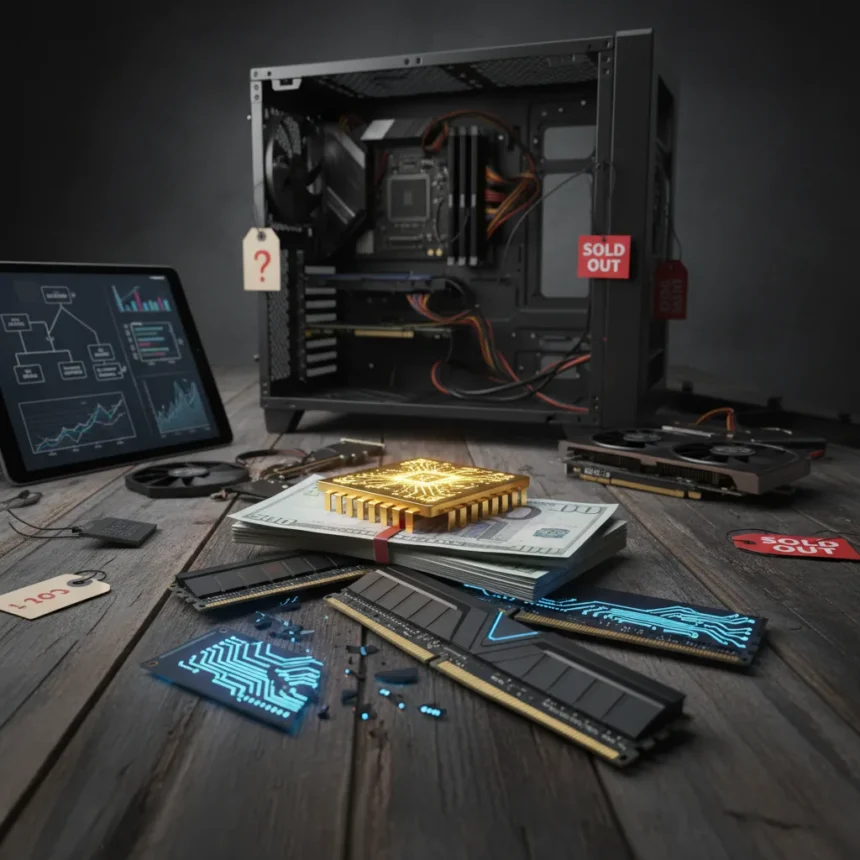
How to buy PC cheaper has become the question every budget-conscious buyer is asking right now. The current PC market is brutal, driven by a RAM crisis and an AI tax that has inflated component costs across the board. If you need a new computer but are horrified by today’s prices, you are not alone. The good news: there are strategic ways to get a capable machine without paying full retail.
Key Takeaways
- PC prices are elevated due to RAM shortages and AI-related cost increases affecting the entire market.
- Building your own PC or buying strategically can reduce total cost significantly compared to pre-built systems.
- Timing, component selection, and alternative buying channels are key to finding value.
- Understanding the current market drivers helps you make smarter purchasing decisions.
- Five distinct approaches exist for buyers who want to avoid overpaying for a new computer.
Understanding the current PC price problem
The PC market right now faces two major cost pressures that have made buying a new computer significantly more expensive than it was a year ago. A RAM crisis has constrained memory supply, pushing prices up across consumer and enterprise segments. Simultaneously, manufacturers are adding AI-related features and capabilities to new systems, creating what the industry calls an AI tax—essentially a premium built into new hardware that consumers must absorb. These two forces combined have made even mid-range PCs feel like luxury purchases.
This environment has created opportunity for savvy buyers. When prices are high across the board, the difference between a smart purchase and an overpaid one becomes substantial. The five approaches outlined below target different buyer profiles—whether you are comfortable building from components, prefer pre-built systems, or want to explore alternative purchasing channels.
Why how to buy PC cheaper matters right now
Timing is everything in the hardware market. Prices do not stay static, and neither do component availability or retailer promotions. Understanding how to navigate these variables can save hundreds of dollars on your next system. The current market conditions—high baseline costs plus inventory pressure—mean that passive buying (walking into a store and purchasing the first system you see) is more expensive than it has been in years.



For budget-conscious buyers, the difference between knowing these strategies and not knowing them can be the difference between affording an upgrade and postponing it another year. This is not about finding obscure discount codes or waiting for Black Friday; it is about understanding the structural factors driving prices and using that knowledge to make better decisions right now.
Five strategic approaches to reduce PC costs
The article from Tom’s Guide outlines five specific ways to build or buy for less. While the exact details of each method were not fully detailed in the available excerpt, the framework itself is valuable: there are multiple pathways to reducing your PC spending, and they do not all involve the same approach. Some buyers will benefit from building their own system. Others will find better value in refurbished or previous-generation pre-builts. Still others might discover that waiting for specific component price drops or shopping at alternative retailers yields the best results.


The key insight is that one-size-fits-all advice does not work in this market. Your best strategy depends on your technical comfort level, your timeline, and your specific performance needs. A gamer building a custom rig will have different cost-optimization opportunities than someone buying a general-purpose office PC.
Building versus buying: the cost tradeoff
Pre-built systems typically carry a markup for assembly, testing, and warranty support. In a normal market, this markup is 15-25 percent. In the current high-price environment, that markup often feels steeper because the base component costs are already elevated. Building your own PC eliminates the assembly premium, but it requires technical knowledge and time investment. For buyers with moderate technical confidence, this tradeoff often favors building—the savings can be substantial enough to justify the effort.
Buying pre-built makes sense if you value warranty support, do not want to troubleshoot compatibility issues, or lack the time to research and order components separately. The real decision point is whether the premium you are paying for that convenience is acceptable given current price levels. In today’s market, it often is not.
Making your move in a high-price market
The PC market will not return to pre-AI, pre-RAM-shortage prices anytime soon. Component manufacturers have no incentive to lower prices when demand remains strong, and the structural factors driving costs are not temporary. This means buyers need to shift their expectations: instead of waiting for prices to drop, focus on optimizing your purchase within the current market reality.



The five strategies outlined by Tom’s Guide represent different entry points into smarter buying. Whether you choose one approach or combine elements of several, the goal is the same: understand the market, avoid overpaying for features you do not need, and use available tools and channels to reduce your total cost of ownership. In a market where how to buy PC cheaper has become essential knowledge, taking the time to research your options is not optional—it is the difference between a good deal and a regrettable purchase.
Should I build my own PC or buy pre-built?
Building your own PC saves money on assembly and markup but requires technical knowledge and time. Buying pre-built offers convenience and warranty support but costs more upfront. In the current high-price market, building saves more money if you are comfortable with the process. If you lack technical confidence or need immediate support, pre-built remains the safer choice despite the premium.
What is the RAM crisis and how does it affect PC prices?
The RAM crisis refers to supply constraints in the memory market that have driven up component costs across the industry. These higher memory costs flow directly into both pre-built and custom PC pricing, making every new system more expensive. The shortage has been a major factor in the overall price increases affecting buyers in 2025.
Is it better to buy now or wait for prices to drop?
Waiting for significant price drops is not a reliable strategy in the current market. The structural factors driving prices—RAM scarcity and AI-related costs—are not expected to reverse quickly. If you need a PC now, focusing on smart buying strategies will serve you better than postponing the purchase hoping for lower prices that may not materialize.
The PC market has fundamentally shifted. Prices are higher, and they are likely to stay that way. Rather than fighting this reality, the smarter move is to accept it and focus on how to buy PC cheaper within the constraints of today’s market. The five strategies outlined by Tom’s Guide provide a roadmap for doing exactly that. Whether you build, buy refurbished, shop strategically, or time your purchase around component price movements, the key is making an informed decision instead of an emotional one. In a market where every dollar counts, that discipline is your best defense against overpaying.
Edited by the All Things Geek team.
Source: Tom's Guide